Eagleview Eye Clinic

Archives February 2025

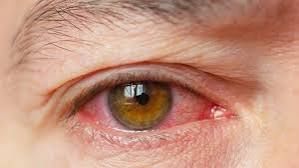
ISSUES THAT CAN AFFECT THE EYES FROM A PUNCH

A single punch can alter the structure and function of the entire eye.

Some of the changes that can occur from a punch to the eyes includes:

  • Ecchymosis (black eye)
  • Subconjunctival hemorrhage
  • Hyphema
  • Blow out fracture
  • Swollen eyelids and it’s surrounding tissues
  • Traumatic cataract
  • Ocular hypertension and secondary glaucoma
  • Retinal detachment

PREDISPOSING FACTORS FOR DRY EYE SYNDROME

Dry eye syndrome is becoming rampant today in our generation. One of the reasons is because currently there is an  increased screen time amongst individuals today.

Almost everything today revolves around PCs , mobile phones, TVs and LED monitors.

Dry eye syndrome simply means insufficient tear quality on the surface of the eyeball either due to underproduction of tears or quick evaporation of the produced tears due to a depletion in the integrity of the lipid layer of the tear film.

Some of the predisposing factors includes:

  • Increased screen time.
  • Lack of adequate sleep
  • Infection /or inflammation of the tear gland
  • Dry weather.
  • Allergies
  • Regular use of systemic antihistamines and corticosteroids.
SCOTOMA

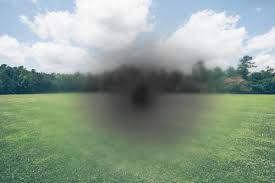
A scotoma is an area of partial or complete diminished vision in the visual field.

A scotoma is referred to as a Blindspot, an area without vision. Every human has a physiological Blindspot, which is an area where the optic nerves exits the retina.

Pathological Blindspot or scotomas can be caused by various, optic nerves diseases or diseases involving the visual pathway.

Treatment of scotomas involves treating the underlying cause of the scotoma.

TO RELIEVE YOURSELF FROM THE DISCOMFORTING SYMPTOMS OF COMPUTER VISION SYNDROME, DO THE FOLLOWING…..
  1. Adjust the height of your work chair to be compatible with your work desk.
  2. Use a very comfortable chair with a high and comfortable back rest.
  3. Ensure that your room lighting is bright and that there’s no interference from sunlight.
  4. Ensure to take short walks every 2 hours.
  5. After every 20minutes take a  break to stare at a distance of about 20feet for about 20secs.
  6. Apply artificial tears drop periodically to ensure continuous lubrication of the outer surface of the eye.
  7. Correct all refractive Errors if there’s any.
  8. Use photochromic or bluecut glasses when working.
AS YOU GROW OLDER……

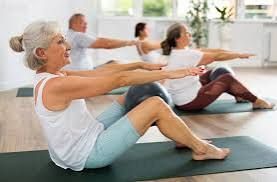
As you age, your body undergo changes,  It begins to disintegrate and as such, One becomes prone to lots of age related ailments.

To ensure that your body serves you even better in old age, Do the following.

  1. Eat less carbs and fats while consuming more protein and fruits
  2. Take long walks regularly.
  3. Take naps and Ensure to sleep atleast 8hrs daily.
  4. Have scheduled physical examination including eye Examination.
  5. Cut down on alcohol and avoid cigarettes.
  6. Join community services and hang out regularly with friends and family.
  7. Take lots of water.
  8. Avoid carrying heavy loads.

PRESENTATION  OF ASTIGMATISM
  1. Stubborn headaches that won’t go even with the strongest of pain killers.

2. Recurrent stye

3. Itching.

4. Double vision

4. Blurry vision at far and or near distance

5. Always feeling dizzy and unmotivated to read or work with your digital devices.

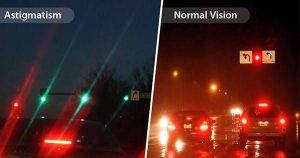
6. Photophobia ( discomforts when exposed to bright light)

7. Light appearing in streaks.

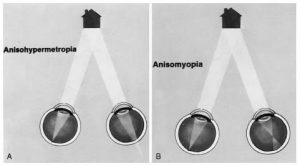
ANISOMETROPIA

This occurs when both eyes different degree of refractive Errors, with difference of up to 3:00D….

This condition is usually congenital. And it causes a sort varying retinal image sizes for both eyes and as a result the brain tend to suppress the weaker eye. Leading to amblyopia.

A rare type of anisometropia is antimetropia. Whereby one eye has myopia and the other has hyperopia.

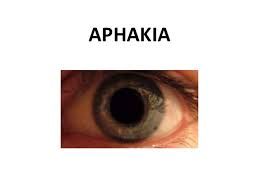
APHAKIA

This simply means the absence of crystalline lens of the eye,

Loss of crystalline lens can be as a result of surgery, cataract, penetrating injury or congenital.

People with APHAKIA find it difficult to focus on objects and they also experience very high degree of long sightedness and deep anterior chamber angle.

The crystalline is responsible for accomodations and it contribute to one third of the refractive power of the eye. So without this crystalline in place behind the iris, patients will find it difficult to focus on objects and will experience serious degree of far sightedness.

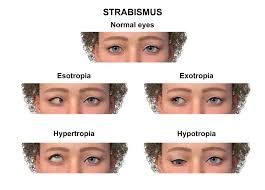
STRABISMUS

This is a disorder where by both eyes of an individual faces different positions of gaze.

This condition is also called crossed eyes,  or squint.

It is caused by injury to the eyes extraocular muscles, muscle paralysis, higher center lesions, surgery et.c.

Signs and symptoms includes visible crossed eyes, diplopia, blurry vision.

Treatment includes the use of eye patch,  eye exercises, surgery, prisms and corrective lenses.

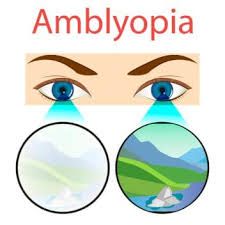
AMBLYOPIA

Amblyopia or lazy eye is a reduction in vision of one or both eyes due to poor development of vision in childhood.

In cases like this, the eye with poor vision is ignored by the brain.

Conditions that can cause amblyopia includes strabismus, refractive Errors, cataract et.c

Amblyopia is treated by each of the following techniques or a combination of all of them, use of prescription glasses, Atropization, patching, vision therapy, eye exercises et.c