Eagleview Eye Clinic

Archives January 2026

MONOFOCAL IOL

A monofocal IOL 👀 is a type of intraocular lens that focuses at one distance (near, intermediate, or far).

Key things

  • Single focus point: Usually set for distance vision (you’d use glasses for near tasks like reading).
  • Less dependence on glasses if monovision approach is used (e.g., one eye for distance, one for near).
  • Common and reliable: Predictable outcomes, often covered by insurance.

Pros

  • Sharp vision at chosen distance.
  • Lower risk of visual side effects (e.g., halos, glare) vs multifocal IOLs.

Cons

  • Glasses needed for other distances (unless monovision).
  • Less flexibility compared to multifocal/accommodating IOLs.

INTRAOCULAR LENS

An intraocular lens (IOL) 👓 is an artificial lens implanted in the eye to replace the natural lens, usually during cataract surgery or refractive lens exchange.

Types

  • Monofocal IOLs: Focus at one distance (near, intermediate, or far).
  • Multifocal IOLs: Allow focus at multiple distances (e.g., near and far).
  • Accommodating IOLs: Move with eye muscles to focus.
  • Toric IOLs: Correct astigmatism.

Benefits

  • Vision restoration: Improves clarity after cataract removal.
  • Reduced dependence on glasses: Depending on IOL type.
  • Customizable: Chosen based on lifestyle and needs.

B – SCAN

A B-scan ultrasound 👀 is a diagnostic test that uses sound waves to create images of the eye’s internal structures, especially the posterior segment.

Key uses

  • Retinal detachment: Shows if the retina is detached or torn.
  • Vitreous hemorrhage: Visualizes blood in the vitreous.
  • Tumors: Helps identify and measure eye tumors.
  • Foreign bodies: Locates objects inside the eye.
  • Trauma assessment: Evaluates damage when the eye’s hard to examine.

How it works

  1. Probe placement: Gel is applied; the probe is placed on the eyelid (closed or open).
  2. Sound waves: Echoes bounce off structures, creating images.
  3. Interpretation: Images show structures like the retina, vitreous, and orbit.

Types of scans

  • Axial scan: Shows structures along the eye’s axis.
  • Longitudinal scan: Images are taken in different meridians.

Tips

  • Painless and non-invasive.
  • Coupling gel is used for better contact.
  • Results are immediate.

MIRROR TEST

The mirror test 🪞 is a sneaky way to check if someone’s faking vision loss in one eye (malingering).

How it works

  1. Patient claims blindness in one eye.
  2. Place a mirror in front of them, angled to show their “blind” eye.
  3. Ask them to look straight ahead.
  4. Check if they react to their own reflection (e.g., blink, move, etc.).

What it shows

  • If they react to their reflection, it suggests the “blind” eye can see.
  • If they don’t react, could be malingering… or really blind 😅.

Tips

  • Casual setup: Make it seem like a normal exam step.
  • Distract them: Talk about something else while doing the test.
  • Combine with other tests for stronger evidence.

FOGGING TEST

The fogging test 👀 is a clever way to uncover malingering (faking vision loss in one eye).

How it works

  1. Patient wears trial frame with +5.00 D lens over the “good” eye (blurs vision).
  2. Read the chart with “bad” eye (you’re checking if they can see better than claimed).
  3. If they suddenly read smaller lines, they’re likely malingering (using the “bad” eye all along).

Sneaky part

  • They think the “good” eye is being tested (because it’s fogged).
  • If they see better with the “bad” eye, it proves vision is actually better than claimed.

Tips

  • Don’t tip them off → act like you’re testing the “good” eye.
  • Quick switch lenses if needed to confirm findings.
  • Combine with other tests (e.g., stereoacuity) for stronger evidence.

Example

  • “Test” right eye (fogged with +5 D). Patient reads 20/20 with left eye → suggests left eye is actually seeing fine (malingering?).

Limitations

  • Not foolproof → some patients catch on.
  • Cooperation needed → won’t work if they refuse to read.

RED GLASS TEST

The red glass test 👀 is a simple way to check for diplopia (double vision) and figure out if it’s caused by a muscle weakness (like a cranial nerve palsy).

How it works

  1. Patient wears red glass over one eye (usually right eye → red lens OD).
  2. Look at a point light source (e.g., penlight) in front.
  3. Ask: “How many lights do you see? What color(s)?”

What it shows

  • Normal: Sees one pink light (colors blend).
  • Diplopia: Sees one red + one white light.
    • Horizontal separation → lateral/medial rectus issue (CN VI or CN III).
    • Vertical/oblique separation → other muscles (e.g., superior oblique CN IV, superior/inferior rectus CN III).
  • Image location → helps localize the weak muscle (e.g., red image on right → right lateral rectus weakness).

Example

  • Patient sees red light on right + white on left → right lateral rectus palsy (CN VI).
  • Image is tilted/diagonal → likely a cyclovertical muscle issue.

Tips

  • Control fixation: Make sure they’re looking straight at the light.
  • Check gaze positions: Repeat in different directions → helps map out weakness.
  • Cover-uncover test can help confirm tropia/phoria.

Limitations

  • Subjective: Relies on patient description.
  • Doesn’t pinpoint cause → need extra tests (e.g., cover test, motility).

MALINGERER

A malingerer 😏 is someone who fakes or exaggerates symptoms (like vision problems) to avoid work, get compensation, or achieve another goal. In eye care, malingerers might claim blindness or poor vision in one eye to get glasses, avoid duties, or scam insurance.

Why it matters

  • Misdiagnosis risk: They might fool clinicians into unnecessary tests/treatments.
  • Resource drain: Wastes time/money on unneeded care.
  • Legal implications: Can lead to fraud investigations if deception is intentional.

How to spot it

  • Inconsistent test results (e.g., wildly different acuity on repeat checks).
  • Refusing simple vision checks (e.g., pinhole test).
  • Overly cooperative or hostile behavior (trying too hard to prove symptoms).
  • Secondary gain motive (e.g., avoiding work, seeking meds/compensation).

Tests for malingering

  • Fogging test: Blur vision in the “good” eye → forces use of the “bad” eye.
  • Red glass test: Assess inconsistencies in double-vision reporting.
  • Mirror test: Check if they “accidentally” react to seeing themselves.
  • Stereoacuity checks: Good stereopsis suggests better vision than claimed.

Management

  • Non-confrontational approach: Focus on function, not “you’re faking it.”
  • Behavioral observation: Look for inconsistencies over time.
  • Document carefully: Note subjective vs. objective findings.
  • Refer if needed: To a neuro-ophthalmologist or psychiatrist if underlying psych issues suspected.
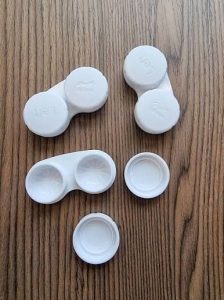
CONTACT LENS CASE

A contact lens case 👓 is a must-have for storing and caring for your lenses. It’s used to hold your lenses in solution when you’re not wearing them. Here are some things to consider:

  • Type: Look for a case that’s easy to open, clean, and dry. Some cases have separate wells for each lens, while others have a single compartment.
  • Material: Most cases are made of plastic, but some are designed to be more hygienic or have antimicrobial properties.
  • Size: Choose a case that’s compact enough to fit in your bag or purse.

Some popular features include:

  • Screw-top or snap-on lids: Easy to use and secure.
  • Labelled compartments: Helps you keep track of which lens is which.
  • Ventilation: Some cases have vents to help dry the lenses or reduce bacterial growth.
CONTACT LENS APPLICATOR

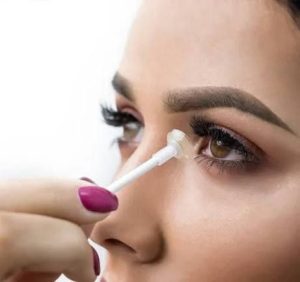
A contact lens applicator 😎 is a handy tool that helps you put in (and sometimes take out) contact lenses, especially if you’re a newbie or have dexterity issues. Types include:

  • Sucker/plucker: A small tool with a suction cup that grips the lens.
  • Finger-tip applicator: A guide that fits on your finger to help position the lens.

They’re super useful if:

  • You’re struggling to handle tiny lenses
  • You have arthritis or finger issues
  • You’re helping someone else with lenses (like kids)
RENU REWETTING DROP

Renu rewetting drops 💧 are a great option for adding extra moisture to your contact lenses throughout the day. They’re designed to:

  • Relieve dryness and discomfort
  • Refresh and rehydrate lenses
  • Compatible with all soft contact lenses

Some key benefits:

  • Long-lasting relief: Helps keep lenses comfortable for hours
  • Easy to use: Just a few drops as needed
  • Travel-friendly: Compact and convenient

You can use Renu rewetting drops with your Renu multipurpose solution. They’re a great addition to your contact lens care routine!