Eagleview Eye Clinic
GIANT PAPILLARY CONJUNCTIVITIS

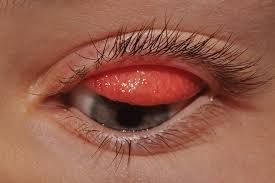
This is an inflammation of the inner lining of the upper eyelid caused by use of contact lens. The lining of the upper eye lid appears like small bubbles or stones over the surface

The condition is caused usually by trauma, and or use of soft contact lens.

Signs and symptoms includes pain, watery eyes, foreign body sensation, itching, blurry vision, et.c

Treatment involves antihistamines, steroids and lubricants.
FEMTOSECOND LASER ASSISTED CATARACT SURGERY

This is a new cataract surgery intervention that involves the use of laser beams to create micro incision on the cornea and then create a circular patch on the posterior lens capsule (a procedure called capsulectomy).

After the capsulectomy, the cataractous lens is broken down by the use of laser beams and drained out via phacoemulsification.

The procedure is done under local anesthesia and it takes about 25 to 30minutes.

RETINAL CRYOPEXY

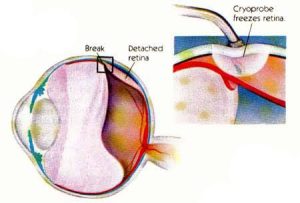
This is also called retinal cryotherapy. It is a procedure that uses freezing to seal off a retinal tear or leaking blood vessel.

This is mainly used in the treatment of retinal tear, retinal detachment and most times diabetic retinopathy.

The doctor first numbs the eye using a local anesthesia, then he places a probe that releases cold to the spot where he wants to seal off. Afterwards he releases high intensity cold to the spot for over thirty minutes.

The procedure is very safe and non invasive.

LASER PHOTOCOAGULATION

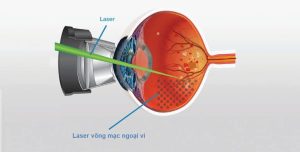
This is a Procedure that involves the use of laser beams to shrink or destroy abnormal structures in the retina..

This procedure is normally used in cases of diabetic retinopathy and other conditions that brings about neovascularization.

Although in recent times, anti VEGF drugs have been favoured in the treatment of ARMD compared to laser photocoagulation.

LASIK

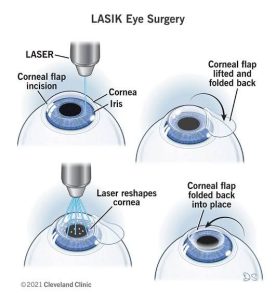
This laser procedure involves the use of femtosecond laser or microkerotome to expose the cornea stroma and then using excimer laser to reshape the Cornea stroma inorder to improve visual acuity..

LASIK is an acronym for laser assisted in situ keratomileusis. This is a surgical procedure used to correct refractive Errors like myopia, hyperopia and astigmatism.

reference; Wikipedia

ANISOCORIA

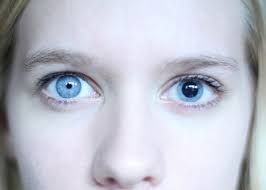
This anisocoria is defined as an inequality in size of the pupil.

Anisocoria is usually an efferent pupillary effect.

Anisocoria can be as a result of a couple of factors which includes, trauma to the head, surgery, lesion in the visual pathway,  aneurysms, et.c.

Some signs and symptoms includes, blurry vision, photophobia, diplopia eye pain et.c

Diagnosis requires physical examination, and imaging scans .

Treatment involves treating the underlying causes

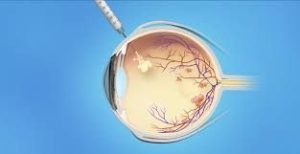
Anti – VEGF Injection

Anti – VEGF is an injection that is used to prevent or reduce the growth of abnormal blood vessels in the eye.

VEGF is vascular endothelial growth factor. This VEGF is a cytokine protein responsible for  the growth and proliferation of blood vessels. So injecting the eye with anti VEGF will  eventually reduce the proliferation of new vessels while killing off the new vessels.

This anti-VEGF is a very important technique in treating conditions like diabetic retinopathy, vascular age related macular degeneration, and other vascular eye conditions.

Some anti VEGF drugs includes pegaptanib, afligecept, ranibizumab, bevacizumab

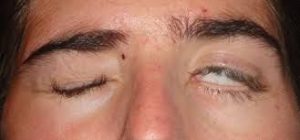
LAGOPHTHALMOS

Lagophthalmos is the inability to close either one or both eyes.

The causes of lagophthalmos includes ptosis, Bell’s palsy, graves opthalmopathy, Surgery et.c

Types of lagophthalmos includes nocturnal lagophthalmos, paralytic lagophthalmos and cicatrical lagophthalmos..

Signs and symptoms includes gritty sensation, dry eyes, Cornea ulcer, et.c.

Treatment most times involves surgical intervention especially in cases of paralytic lagophthalmos

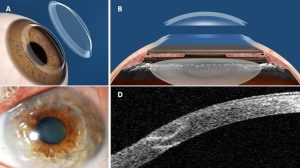
KERATOPLASTY

Keratoplasty or cornea grafting is a surgical procedure where a damaged cornea is replaced with a donated cornea tissue.

The cornea is the transparent outermost tissue of the eye over lapping the iris. Most people refer to the cornea as the black of the eye.

Conditions that can necessitate a cornea grafting include keratoconus, cornea decompensation, iridocornea endothelium syndrome, et.c

If the whole cornea is been replaced, then it is known as penetrating keratoplasty and if a part of the cornea is been replaced then it’s known as lamellar keratoplasty .

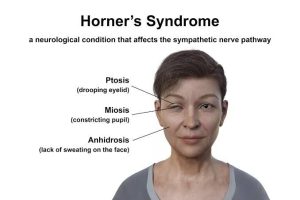
HORNER’S SYNDROME

Horner’s syndrome is a neurological disorder that occurs when the oculosympathetic nerve is damaged.

It can be caused by a tumour, stroke or damage to the middle ear..

When the sympathetic nerves that connects the brain stem to the eye is damaged a triad of ptosis ( Droopy lids), miosis (Constricted pupils) and anhidrosis ( lack of sweat) occurs.

Although this condition is similar to Bell’s palsy, it is different from Bell’s palsy.

Treatment basically involves treating the underlying cause.