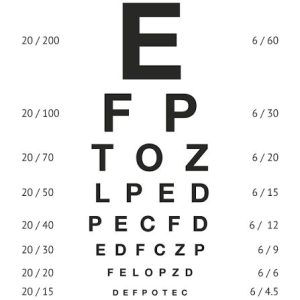
The Pelli-Robson contrast sensitivity chart is a tool used to measure an individual’s ability to detect differences in contrast, which is essential for everyday activities like reading and driving. Here’s how it works:
Key Features:
- Contrast Sensitivity Measurement: The chart consists of rows of letters with decreasing contrast, allowing practitioners to assess the patient’s ability to detect subtle differences in contrast.
- Standardized Design: The chart is designed to provide a reliable and repeatable measure of contrast sensitivity.
Clinical Applications:
- Detecting Visual Impairments: The Pelli-Robson chart can help identify visual impairments, such as cataracts, glaucoma, or age-related macular degeneration, which can affect contrast sensitivity.
- Monitoring Treatment: It can be used to monitor the effectiveness of treatments or interventions aimed at improving contrast sensitivity.
The Pelli-Robson chart is a valuable tool for eye care professionals to assess and monitor patients’ contrast sensitivity, helping to identify potential issues and develop effective treatment plans.