Squinting the eyes while under the Sun? It’s very important to protect the eye from the sun exposure, this is because the UV ray can impair the vision by causing some harmful damages to the tissues of the eyes
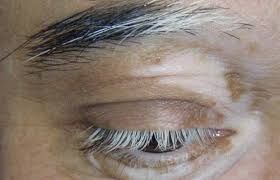
Sunlight can cause serious damages to the lens , retina and the eyelid.
Some of the harmful effects of the UV rays on the eye are :
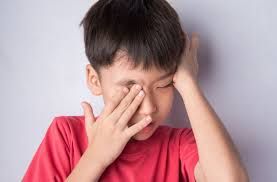
Eye strain can be referred to as eye fatigue or tiredness. This can occur as a result of using the eyes intensively. For instance, staring at the phone screen or other gadgets for hours. In addition staring at tiny objects at long distance can also results to the fatigue of the eye. It can also be as a result of refractive Errors like presbyopia and hyperopia.
Signs and symptoms of asthenopia includes burning sensation, teary eyes, pain, headache, dizziness et.c
Precautions ° Taking a break: You can relieve your eyes from the stress by taking a break.
Look away from the gadgets for few minutes or hours
Take a cool bath or wash your face with cool water to stop eye burning and to cool down the temperature
Note: if you are still experiencing discomfort in the eyes, it’s advisable to consult an optometrist or visit an eye clinic.
The eyes are one of the most sensitive and delicate parts of the human body. They require proper care and attention to maintain good vision and overall eye health. One common hazard that can affect the eyes is chemical irritants. These irritants get into they eyes and cause what we call chemical burns.
Chemical irritants can enter the eyes and cause chemical burns through the following various means:
– Using bar soap while bathing – Applying facial treatments such as face scrubs and face washes – Accidentally getting cream or lotion in the eyes.
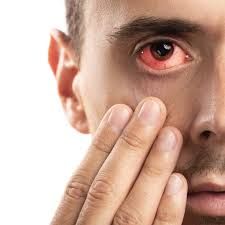
When chemical irritants enter the eyes, they can cause a range of issues which includes:
– Discomfort and pain – Irritation and itching – Dryness and redness of the eyes
Long-term Effects
If left untreated, chemical irritants can cause damage to the eye tissue, leading to impaired vision.
What to Do in Case of Chemical Irritation
If you accidentally get chemicals in your eyes, follow these steps:
– Flush your eyes with clean, lukewarm water for at least 15 minutes – If the discomfort persists after flushing, visit an eye clinic near you to consult an optometrist
Diplopia occurs when an individual sees Double image of an object.
PATHOPHYSIOLOGY: Both the left and right eye sees objects differently and send their individual signals to the brain. Processing and fusion of the two images occur in the brain.
In cases of refractive Errors, strabismus, and most times, pathologies, both eyes send images of one object with different sizes to the brain, thereby making it difficult for the brain to fuse the images.
CAUSES:
Strabismus
Phoria
Refractive Errors
Anisometropia and antimetropia
Anisekonia
Pathologies
SIGNS AND SYMPTOMS: visualizing two images of an object side by side, diagonally or vertically placed, dizziness
TREATMENT: treating the underlying cause resolves the condition.
Medical follow up are the appointment schedules given by the doctor to patients with existing conditions after their first consultation and treatment.
This is to follow up on patients and their existing eye conditions, to ascertain if the eyes are better or not, or if there is need for change in medication or not.
And most patients disregard this step and do not see the need to go back or honor their appointment with the doctor. Once they stop feeling that pain or itch, ” they are done with the doctor” even when they have not been discharged by the doctor.
Some assume that once they are already using glasses, that is the end, the issue is resolved.
Little do they know that their prescription can change and they either have to stop using the glasses or change their prescription.
Some even feel the doctor is after their money or that the doctor might prescribe more drugs for them, which they deem not necessary. After all the pain, itch or ache is gone .
And in most cases, a good number of these people return to the clinic with the same or a more serious ailment.
It is very important, also to be honest with the doctor when you go for your check ups and appointments. Dealing with eye challenges require utmost care leaving no stone unturned. Be transparent and open with the doctor when laying your complains and your pains.
Until you are cleared by the doctor, stick to that appointment and honor it. You can save yourself from unnecessary eyes issues by so doing and be rest assured that you have gotten a complete and full eyes treatment.
Hyperopia from the two words hyper and ope meaning Excess and Eye respectively is a condition whereby an individual in most cases can see objects from afar while finding it difficult to see objects at close range.
Although there are some Hyperopic cases that does not go in line with the above definition as most hyperopes still find it difficult to see distant objects.
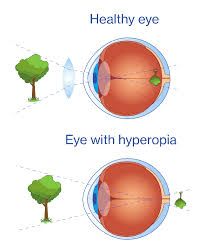
PATHOPHYSIOLOGY: normally when an individual fixates on an object, an image is formed on the retina which is then interpreted by the Brain as vision.
But Hyperopic patients usually have short eyeballs. As a result , images are formed behind the retina instead of been formed on the retina. resulting in blurry vision.
For such patients to have clear vision, they will require convex lenses to drag the image back into focus in the retina.
SIGNS AND SYMPTOMS: these includes Frontal Headache, difficulty seeing objects close to the eye, tearing, occasional photophobia, narrow AC angle
TREATMENT: Treatment options includes use of convex lenses, LASIK surgery and finally use of contact lenses.
Tag : far sight, headache, photophobia, Vision, near sight, hyperopia
For Our eyes to maintain optimum health and function effectively, they require a myriad of Nutrients and chemicals which can either be taken as supplements or from the food we consume.
While it is cool to focus on beautiful presentation and mind blowing taste when selecting food, we should not forget to take into cognizance the nutritional value of the arrays of our food choices.
Whatever food choice you make must have a very healthy combination of vitamin A, vitamin E, lutein, xeanthin, zinc et.c
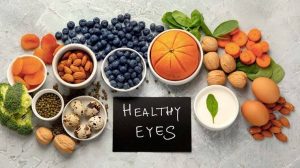
Below are some food that are necessary for optimum visual function
Fruits like carrot, berries, grapes et.c which are rich in vitamin A
Veggies
Dairies like egg yolk, milk which are rich in lutein and xeanthin