Eagleview Eye Clinic
RETINOPATHY OF PREMATURITY

This condition also known as retrolental fibroplasia or terry syndrome is the formation of abnormal blood vessels in the retina of a new born ( especially babies born before term).

Normally retinal vessels starts growing from the 4th month of pregnancy and stops at the 9th month. So when babies are born before term, the retinal develops abnormal blood vessels. Secondly the  low oxygen levels the child is exposed to also triggers the formation of abnormal blood vessels.

Causes includes, hypoxia,  premature baby, babies below 3 pounds weight are also at risk of ROP,

Treatment usually involves laser procedures

ONCHOCERCIASIS

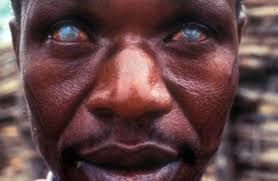
Onchocerciasis or river blindness is caused by the parasitic worm known as onchocercha vovulus.

This condition occurs when an individual is bitten by black flies hence injecting the larvae of these worms into the host.

The larvae takes about 12 – 18 months before attaining maturity stage, they then move into the skin and blood stream wrecking havoc in their wake.

This condition is transmissible, as larvae of these worms are found underneath the skin of infected people,  hence if an infected person is bitten by black fly, the fly picks up the larvae from infected persons and transmit them to non infected persons when bitten.

People who dwell in riverine areas are more prone to this condition, hence the reason it is called river blindness.

Signs and symptoms includes eye pain, cloudy cornea, itching skin, swollen skin, et.c.

Treatment involves the use of ivermectin at a  6 month interval. Although ivermectin does not kill adult filarial worms.

LASIK

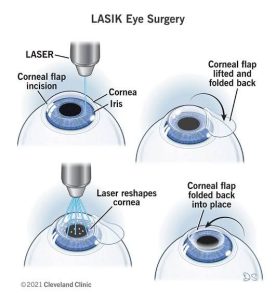
This laser procedure involves the use of femtosecond laser or microkerotome to expose the cornea stroma and then using excimer laser to reshape the Cornea stroma inorder to improve visual acuity..

LASIK is an acronym for laser assisted in situ keratomileusis. This is a surgical procedure used to correct refractive Errors like myopia, hyperopia and astigmatism.

reference; Wikipedia

ASTEROID HYALOSIS

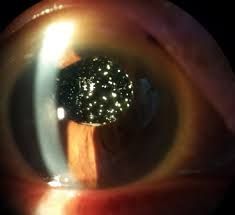
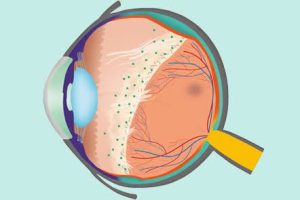
Asteroid HYALOSIS are yellowish glittering particles deposits on the vitreous body caused by age related vitreous degeneration.

This condition is usually age related and does not affect vision in any way.

Most of times, the patients does not even notice any sign or symptom but a common symptom of this condition is floaters ( moving objects in the field of view).

If the symptom becomes  discomforting, surgery is usually the way out for the patient.

OCULAR TOXOPLASMOSIS

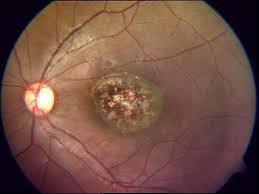
Ocular toxoplasmosis is an inflammation caused by the plasmodium toxoplasmosis gondii. This condition is also known as cat scratch disease.

Risk factors include patients with HIV/AIDS, patients that did organ transplant, patients that keep pet cats et.c.

Causes includes ingesting contaminated food, coming in contact with cat and dog faeces during gardening, ingesting contaminated food ( especially improperly cooked meat).

Signs and symptoms includes visual reduction, eye pain, swollen lymph nodes, floaters, cloudy vision.

Treatment involves the use of anti- infectives and steroids.

If this condition is not treated , it can result in irreversible Blindness.

GLAUCOMA TESTS

Glaucoma as we all know is the leading cause of irreversible Blindness world wide and the second leading cause of blindness.

Glaucoma is usually asymptomatic in it’s early stage. Hence it requires an optometric Examination to diagnose.

To say for a fact that an individual has or does not have glaucoma, the following tests will have to be conducted.

VISUAL ACUITY: Both at 6M and at 40cm. Visual acuity tells us how well the eyes can see. Usually a low visual acuity is usually a sign of glaucoma.

OPHTHALMOSCOPY: Opthalmoscopy examines the fundus i.e the back of the eye with emphasis on the optic nerve head. Usually a  high C/D ratio calls for concern.

TONOMETRY:  Tonometry Is a measure of the intraocular pressure of the eye.  A high Intraocular pressure is a risk factor for concern.

VISUAL FIELD ANALYSIS: This is an estimate of how well the individual can see side objects while looking straight ahead. A narrow visual field usually conotes glaucomatous damage

OCULAR COHERENCE TOMOGRAPHY: This is an imaging of the retinal nerve fibre layer

GONIOSCOPY: This is  measure of the anterior chamber angle. It helps gives an insight as to if the anterior chamber angle is wide or narrow. Individuals with narrow angle are at risk of having glaucoma.

PACHYMETRY; This is a measure of the central Cornea thickness. Pachymetry is important because it helps reduces the incidence of false positive and false negatives.

THE MUSCLE DESTROYER (Myasthenia gravis)

Myasthenia gravis occurs when the nerves are unable to give signals to the muscles to perform specific actions e.g standing, gripping an object, opening your mouth and eyes etc.

CAUSES: It is an autoimmune condition. That is the body’s immune system attacks the Healthy body structures or tissues mistaking it for an infectious or foreign particle

It can also be caused by an overaction or tumour of the thymus gland.


There are usually three types of Myasthenia gravis and they are 1. Autoimmune Myasthenia gravis 2. Neonatal MG 3. Congenital MG. The first one affects women of ages between 20 and 40 and men above 60yrs of age. while the last two affects babies

PATHOPHYSIOLOGY: Normally for muscular activity to occur, the nerve release a substance called acetylcholine. This acetylcholine travels and binds itself to the receptors on the muscle site and trigger a contraction of the muscle

SIGNS AND SYMPTOMS: Difficulty sitting up, difficulty opening the mouth and eyes, difficulty lifting hands, difficulty breathing

When the body’s antibodies  destroys all the acetylcholine receptors on the muscle site. The acetylcholine will not be able to bind to any receptor to trigger muscular contraction

TREATMENT : For auto immune myasthenia gravis, there is usually no cure. But it’s usually advised that the patient gets enough rest.

MG crisis is triggered when the individual is stressed, hence rest is advised so that the muscles can gain strength.

THE MUSCLE DESTROYER (Myasthenia gravis)

Myasthenia gravis occurs when the nerves are unable to give signals to the muscles to perform specific actions e.g standing, gripping an object, opening your mouth and eyes etc.

CAUSES: It is an autoimmune condition. That is the body’s immune system attacks the Healthy body structures or tissues mistaking it for an infectious or foreign particle.

It can also be caused by an overaction or tumour of the thymus gland.

There are usually three types of Myasthenia gravis and they are 1. Autoimmune Myasthenia gravis 2. Neonatal MG 3. Congenital MG. The first one affects women of ages between 20 and 40 and men above 60yrs of age. while the last two affects babies.

PATHOPHYSIOLOGY: Normally for muscular activity to occur, the nerve release a substance called acetylcholine. This acetylcholine travels and binds itself to the receptors on the muscle site and trigger a contraction of the muscle.

SIGNS AND SYMPTOMS: Difficulty sitting up, difficulty opening the mouth and eyes, difficulty lifting hands, difficulty breathing.

When the body’s antibodies  all the acetylcholine receptors on the muscle site. The acetylcholine will not be able to bind to any receptor to trigger muscular contraction.

TREATMENT : For auto immune myasthenia gravis, there is usually no cure. But it’s usually advised that the patient gets enough rests.

MG crisis is triggered when the individual is stressed, hence rest is advised so that the muscles can gain strength.

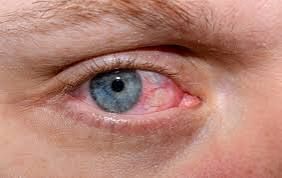
DRAGON’S SPIT: Eye infection

Infection is the presence of virus, bacteria or fungus in the body.


An eye infection is a disease that affects the eye due to virus, bacteria or a fungus.

Some common  eye infections are:
Cellulitis, conjunctivitis, keratitis, herpes, dacryocystitis et.c.


Some of these infections are highly contagious and need to be treated immediately to prevent them from spreading.

Can Eye Infections be Contracted?

Yes, eye infections can be contracted through various means, including:

– Touching your eyes with unwashed hands
– Sharing makeup or makeup brushes
– Not disinfecting contact lenses properly
– Coming into contact with someone who has an eye infection.

Signs of Eye Infection

How can you tell if you have an eye infection? Look out for these symptoms:

– Pain in the eye
– Increased sensitivity to light
– Colored discharge from the eyes
– Sore sensation on the iris

Can Eye Infections Lead to Blindness?

If left untreated, eye infections can cause permanent vision damage or even blindness. It’s essential to seek medical attention immediately if you experience any symptoms.

Precaution

– Visit an eye professional if you notice any signs of eye infection, such as itching, watery discharge, or vision changes.

Written by: Adesoji Margaret
Moisture matters: The menace of dry eye syndrome.

How could my eyes be dried when it’s not my skin?

Dry eye occurs when the eye doesn’t produce enough tears to keep the outer surface eyes moisturized.

When the eye doesn’t release much tears to retain the moisture of the eye, it causes irritation and discomforts in the eye.

Just like the skin looks whitish ,dry and cracked when it’s not moisturized, the eyes as well gets dry when it doesn’t release enough tears to wet the eye.

Causes of dry eye are , age , hormonal changes, insufficient tears, exposure to windy environment, staring at a screen for extended period.

Signs and symptoms of dry eyes are :
• dry feeling in the eye
• ⁠burning sensation
• ⁠Teary eye
• ⁠redness

You are experiencing amy of the symptoms of dry eye  listed above ? Then you need to visit an eye clinic to get proper treatment for your eyes.

Written by: Adesoji Margaret