Eagleview Eye Clinic

Tag angle closure glaucoma

a WAVE and b WAVE

A-waves and B-waves are key components of the full-field ERG, reflecting retinal function:

  • A-wave: Initial negative deflection, generated by photoreceptors (rods and cones) responding to light. Its amplitude and timing indicate photoreceptor health.
  • B-wave: Positive deflection following A-wave, produced by inner retinal cells (bipolar and Müller cells). It shows how well signals from photoreceptors are processed.

Reduced A-waves suggest photoreceptor damage (e.g., retinitis pigmentosa), while reduced B-waves point to inner retinal issues (e.g., retinal vascular diseases).
RETINAL GANGLION CELLS

Retinal ganglion cells (RGCs) are a type of neuron in the retina. Key features:

  1. Signal transmission: RGCs receive visual information from bipolar cells and transmit it to the brain via the optic nerve.
  2. Visual processing: RGCs play a crucial role in processing visual information, including:
    • Detecting light intensity and patterns
    • Processing color and contrast
    • Detecting motion and direction
  3. Types: There are several types of RGCs, each responding to different visual stimuli.

RGCs are essential for transmitting visual information from the eye to the brain, enabling us to perceive and interpret visual stimuli.

SECONDARY ANGLE CLOSURE GLAUCOMA

This is angle closure Glaucoma that’s is attributed to a known cause, e.g trauma, inflammation etc.

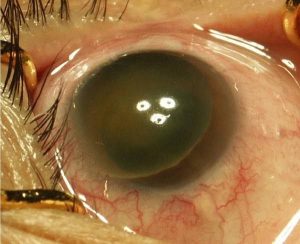
This particular condition most times comes with iris inflammation. Signs and symptoms includes pain, red eyes, fixed and dilated pupils, cornea odema ( occasionally).

Treatment includes hyperosmotics, miotics and anti Glaucoma drugs, while ensuring that the primary cause is properly treated.

Prognosis is very good, but delayed treatment can result in fatal consequences.