Eagleview Eye Clinic

Tag congenital cranial dysinnervation disorder

DUANE SYNDROME

Duane syndrome is a rare congenital eye movement disorder characterized by limited or absent eye movement, particularly in outward (abduction) or inward (adduction) directions. It can cause:

  1. Strabismus (crossed eyes): Misalignment of the eyes.
  2. Limited eye movement: Restricted movement in certain directions.
  3. Head turns: Compensatory head movements to achieve binocular vision.

There are three types of Duane syndrome, classified based on the direction of limited eye movement. Treatment may include:

  1. Glasses or prisms: To improve vision and alignment.
  2. Surgery: To improve eye alignment and movement.

If you or someone you know has Duane syndrome, consulting an optometrist or strabismus specialist can help determine the best treatment approach.
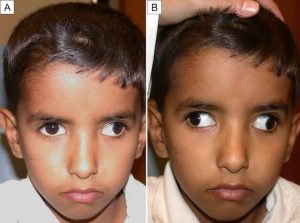
DUANE SYNDROME

Duane syndrome is a rare congenital eye movement disorder characterized by limited or absent eye movement, particularly in outward (abduction) or inward (adduction) directions. It can cause:

  1. Strabismus (crossed eyes): Misalignment of the eyes.
  2. Limited eye movement: Restricted movement in certain directions.
  3. Head turns: Compensatory head movements to achieve binocular vision.

There are three types of Duane syndrome, classified based on the direction of limited eye movement. Treatment may include:

  1. Glasses or prisms: To improve vision and alignment.
  2. Surgery: To improve eye alignment and movement.

If you or someone you know has Duane syndrome, consulting an optometrist or strabismus specialist can help determine the best treatment approach.

DUANE SYNDROME

Duane syndrome is a rare congenital eye movement disorder characterized by limited or absent eye movement, particularly in outward (abduction) or inward (adduction) directions. It can cause:

  1. Strabismus (crossed eyes): Misalignment of the eyes.
  2. Limited eye movement: Restricted movement in certain directions.
  3. Head turns: Compensatory head movements to achieve binocular vision.

There are three types of Duane syndrome, classified based on the direction of limited eye movement. Treatment may include:

  1. Glasses or prisms: To improve vision and alignment.
  2. Surgery: To improve eye alignment and movement.

If you or someone you know has Duane syndrome, consulting an optometrist or strabismus specialist can help determine the best treatment approach.

DUANE SYNDROME

Duane syndrome is a rare congenital eye movement disorder characterized by limited or absent eye movement, particularly in outward (abduction) or inward (adduction) directions. It can cause:

  1. Strabismus (crossed eyes): Misalignment of the eyes.
  2. Limited eye movement: Restricted movement in certain directions.
  3. Head turns: Compensatory head movements to achieve binocular vision.

There are three types of Duane syndrome, classified based on the direction of limited eye movement. Treatment may include:

  1. Glasses or prisms: To improve vision and alignment.
  2. Surgery: To improve eye alignment and movement.

If you or someone you know has Duane syndrome, consulting an optometrist or strabismus specialist can help determine the best treatment approach.

hotdepo slot maxwin asia200 vip388 super89 kelas777 asiaslot777 asia100 win188 zeus123 megawinslot hotdepo gitar100 pangkalantoto koko500 api naga mega888 asia300 uno4d wow33 merahtoto super33 MEGASLOT SLOT GOPAY wow33 megatoto koko500 hotdepo koko500 vip388 asia500 merahtoto vip388 vip33 koko500 super89 hotdepo koko500 kpk100 asia300 mahjong333 merahtoto hotdepo hotdepo hotdepo hotdepo hotdepo hotdepo hotdepo hotdepo hotdepo vip33 merahtoto vip388 wdbos asia100 dana100 koko500 merahtoto mahjong333 kl108 dana100 super33 asia100 koko500 vip33 merahtoto kl108 abc33 kl108 slot5000 koko500 koko11 hotdepo pg11 kl108 kl108 hotdepo koko500