Eagleview Eye Clinic

Tag eye care professionals

CORNEA DELLEN

👓 Corneal dellen (or dellen) refers to a localized thinning or depression in the peripheral cornea.

  • Causes: Often due to localized dehydration or inflammation, sometimes related to:
    • Contact lens use
    • Surgery or trauma
    • Adjacent lesions (e.g., pterygium)
  • Symptoms: May cause discomfort, irritation, or blurred vision.
  • Management: Often resolves with lubrication, discontinuing contact lens use, or treating underlying causes.
MORNING GLORY SYNDROME

👓 Morning glory syndrome is a rare congenital eye anomaly characterized by an abnormal optic disc.

  • Appearance: The optic disc looks like a morning glory flower, with a funnel-shaped excavation and radial retinal vessels.
  • Associated risks: Potential vision problems, retinal detachment, and other eye issues.
  • Causes: Congenital, possibly related to abnormal fetal development.
  • Management: Regular eye exams, monitoring for complications.
AIR PUFF TONOMETER

👓 The air puff tonometer is a non-contact device that measures intraocular pressure (IOP) by blowing a quick puff of air onto the cornea.

  • How it works: The device measures the corneal deformation caused by the air puff.
  • Advantages: No direct contact with the eye, reducing infection risk.
  • Common use: Often used for glaucoma screening and routine eye exams.
  • Considerations: Can be less accurate than contact tonometers (e.g., Goldmann).

TONOPEN TONOMETER

👓 To open a Perkins tonometer (for maintenance or calibration), you typically need to:

  1. Check the manual: Consult the manufacturer’s instructions for specific guidance.
  2. Handle with care: Tonometers are sensitive instruments.
  3. Common steps: Usually involves removing screws or a cover to access the internal mechanism.

If you’re looking to use the tonometer, ensure it’s properly calibrated and sterilized before measuring IOP.

PERKINS TONOMETER

👓 The Perkins tonometer is a handheld, portable device used to measure intraocular pressure (IOP).

  • Type: Applanation tonometer, similar to Goldmann tonometer.
  • Use: Commonly used in ophthalmology and optometry for glaucoma screening and monitoring.
  • How it works: Uses a small probe to gently touch the cornea, measuring IOP.
  • Advantages: Portable, easy to use, and provides accurate readings.

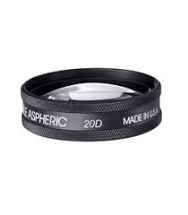
20D LENS

👓 Here’s more on a 20D lens:

  • Magnification: A +20D lens provides approximately 20x magnification.
  • Field of view: Offers a relatively wide field, useful for examining the retina.
  • Use: Commonly used in ophthalmology for:
    • Indirect ophthalmoscopy (with a slit lamp or head-mounted scope).
    • Examining the posterior segment (retina, macula, etc.).
  • Type: Typically a handheld, convex lens made of glass or acrylic.
  • Working distance: Around 5 cm (2 inches) from the patient’s eye.
BIFOCAL IOL

👓 Bifocal IOLs (Intraocular Lenses) are a type of lens implant used in cataract surgery to help restore vision at multiple distances. They’re designed to reduce dependence on glasses or contacts.

  • How they work: Bifocal IOLs have different zones for near and distance vision, allowing for clearer vision at multiple distances.
  • Types: Some common types include diffractive (e.g., Alcon ReSTOR) and refractive (e.g., AMO Array) lenses.
  • Benefits: Reduced need for glasses, improved vision at various distances.
  • Considerations: Potential for halos, glare, or decreased contrast sensitivity.

MONOFOCAL IOL

A monofocal IOL 👀 is a type of intraocular lens that focuses at one distance (near, intermediate, or far).

Key things

  • Single focus point: Usually set for distance vision (you’d use glasses for near tasks like reading).
  • Less dependence on glasses if monovision approach is used (e.g., one eye for distance, one for near).
  • Common and reliable: Predictable outcomes, often covered by insurance.

Pros

  • Sharp vision at chosen distance.
  • Lower risk of visual side effects (e.g., halos, glare) vs multifocal IOLs.

Cons

  • Glasses needed for other distances (unless monovision).
  • Less flexibility compared to multifocal/accommodating IOLs.

INTRAOCULAR LENS

An intraocular lens (IOL) 👓 is an artificial lens implanted in the eye to replace the natural lens, usually during cataract surgery or refractive lens exchange.

Types

  • Monofocal IOLs: Focus at one distance (near, intermediate, or far).
  • Multifocal IOLs: Allow focus at multiple distances (e.g., near and far).
  • Accommodating IOLs: Move with eye muscles to focus.
  • Toric IOLs: Correct astigmatism.

Benefits

  • Vision restoration: Improves clarity after cataract removal.
  • Reduced dependence on glasses: Depending on IOL type.
  • Customizable: Chosen based on lifestyle and needs.

B – SCAN

A B-scan ultrasound 👀 is a diagnostic test that uses sound waves to create images of the eye’s internal structures, especially the posterior segment.

Key uses

  • Retinal detachment: Shows if the retina is detached or torn.
  • Vitreous hemorrhage: Visualizes blood in the vitreous.
  • Tumors: Helps identify and measure eye tumors.
  • Foreign bodies: Locates objects inside the eye.
  • Trauma assessment: Evaluates damage when the eye’s hard to examine.

How it works

  1. Probe placement: Gel is applied; the probe is placed on the eyelid (closed or open).
  2. Sound waves: Echoes bounce off structures, creating images.
  3. Interpretation: Images show structures like the retina, vitreous, and orbit.

Types of scans

  • Axial scan: Shows structures along the eye’s axis.
  • Longitudinal scan: Images are taken in different meridians.

Tips

  • Painless and non-invasive.
  • Coupling gel is used for better contact.
  • Results are immediate.