Eagleview Eye Clinic

Tag eye care professionals

ULTRA THIN LENSES.

Ultra-thin lenses are designed to provide the same functionality as traditional lenses but with a significantly reduced thickness. They’re ideal for individuals with strong prescriptions who want to maintain a stylish appearance without compromising on lens thickness.

Types of Ultra-Thin Lenses:

  • High-Index Lenses: These lenses have a higher refractive index, which allows them to bend light more efficiently, resulting in a thinner design. Examples include 1.74 high-index lenses and 1.76 high-index lenses.
  • Double-Sided Aspheric Lenses: These lenses feature a unique design that reduces distortion and warping, making them thinner and more aesthetically pleasing ¹ ² ³.

Benefits of Ultra-Thin Lenses:

  • Aesthetic Appeal: Ultra-thin lenses are more cosmetically appealing, reducing the “bug-eyed” effect associated with thick lenses.
  • Lightweight: Thinner lenses are lighter, making them more comfortable to wear.
  • Reduced Distortion: Advanced designs minimize distortion and warping, ensuring a clearer field of vision ¹ ².

Recommended For:

  • Strong Prescriptions: Individuals with high myopia or astigmatism can benefit from ultra-thin lenses.
  • Fashion-Conscious Individuals: Those who want stylish glasses without compromising on lens thickness.
  • Individuals with Active Lifestyles: Ultra-thin lenses can be more comfortable and durable ² ¹.

Innovations in Ultra-Thin Lenses:

  • Metalenses: Researchers have developed ultra-thin metalenses that can convert infrared light into visible light, opening up new possibilities for applications in security, authentication, and more ⁴ ⁵.
ULTRA THIN LENSES.

Ultra-thin lenses are designed to provide the same functionality as traditional lenses but with a significantly reduced thickness. They’re ideal for individuals with strong prescriptions who want to maintain a stylish appearance without compromising on lens thickness.

Types of Ultra-Thin Lenses:

  • High-Index Lenses: These lenses have a higher refractive index, which allows them to bend light more efficiently, resulting in a thinner design. Examples include 1.74 high-index lenses and 1.76 high-index lenses.
  • Double-Sided Aspheric Lenses: These lenses feature a unique design that reduces distortion and warping, making them thinner and more aesthetically pleasing ¹ ² ³.

Benefits of Ultra-Thin Lenses:

  • Aesthetic Appeal: Ultra-thin lenses are more cosmetically appealing, reducing the “bug-eyed” effect associated with thick lenses.
  • Lightweight: Thinner lenses are lighter, making them more comfortable to wear.
  • Reduced Distortion: Advanced designs minimize distortion and warping, ensuring a clearer field of vision ¹ ².

Recommended For:

  • Strong Prescriptions: Individuals with high myopia or astigmatism can benefit from ultra-thin lenses.
  • Fashion-Conscious Individuals: Those who want stylish glasses without compromising on lens thickness.
  • Individuals with Active Lifestyles: Ultra-thin lenses can be more comfortable and durable ² ¹.

Innovations in Ultra-Thin Lenses:

  • Metalenses: Researchers have developed ultra-thin metalenses that can convert infrared light into visible light, opening up new possibilities for applications in security, authentication, and more ⁴ ⁵.
ULTRA THIN LENSES.

Ultra-thin lenses are designed to provide the same functionality as traditional lenses but with a significantly reduced thickness. They’re ideal for individuals with strong prescriptions who want to maintain a stylish appearance without compromising on lens thickness.

Types of Ultra-Thin Lenses:

  • High-Index Lenses: These lenses have a higher refractive index, which allows them to bend light more efficiently, resulting in a thinner design. Examples include 1.74 high-index lenses and 1.76 high-index lenses.
  • Double-Sided Aspheric Lenses: These lenses feature a unique design that reduces distortion and warping, making them thinner and more aesthetically pleasing ¹ ² ³.

Benefits of Ultra-Thin Lenses:

  • Aesthetic Appeal: Ultra-thin lenses are more cosmetically appealing, reducing the “bug-eyed” effect associated with thick lenses.
  • Lightweight: Thinner lenses are lighter, making them more comfortable to wear.
  • Reduced Distortion: Advanced designs minimize distortion and warping, ensuring a clearer field of vision ¹ ².

Recommended For:

  • Strong Prescriptions: Individuals with high myopia or astigmatism can benefit from ultra-thin lenses.
  • Fashion-Conscious Individuals: Those who want stylish glasses without compromising on lens thickness.
  • Individuals with Active Lifestyles: Ultra-thin lenses can be more comfortable and durable ² ¹.

Innovations in Ultra-Thin Lenses:

  • Metalenses: Researchers have developed ultra-thin metalenses that can convert infrared light into visible light, opening up new possibilities for applications in security, authentication, and more ⁴ ⁵.
ULTRA THIN LENSES.

Ultra-thin lenses are designed to provide the same functionality as traditional lenses but with a significantly reduced thickness. They’re ideal for individuals with strong prescriptions who want to maintain a stylish appearance without compromising on lens thickness.

Types of Ultra-Thin Lenses:

  • High-Index Lenses: These lenses have a higher refractive index, which allows them to bend light more efficiently, resulting in a thinner design. Examples include 1.74 high-index lenses and 1.76 high-index lenses.
  • Double-Sided Aspheric Lenses: These lenses feature a unique design that reduces distortion and warping, making them thinner and more aesthetically pleasing ¹ ² ³.

Benefits of Ultra-Thin Lenses:

  • Aesthetic Appeal: Ultra-thin lenses are more cosmetically appealing, reducing the “bug-eyed” effect associated with thick lenses.
  • Lightweight: Thinner lenses are lighter, making them more comfortable to wear.
  • Reduced Distortion: Advanced designs minimize distortion and warping, ensuring a clearer field of vision ¹ ².

Recommended For:

  • Strong Prescriptions: Individuals with high myopia or astigmatism can benefit from ultra-thin lenses.
  • Fashion-Conscious Individuals: Those who want stylish glasses without compromising on lens thickness.
  • Individuals with Active Lifestyles: Ultra-thin lenses can be more comfortable and durable ² ¹.

Innovations in Ultra-Thin Lenses:

  • Metalenses: Researchers have developed ultra-thin metalenses that can convert infrared light into visible light, opening up new possibilities for applications in security, authentication, and more ⁴ ⁵.
ULTRA THIN LENSES.

Ultra-thin lenses are designed to provide the same functionality as traditional lenses but with a significantly reduced thickness. They’re ideal for individuals with strong prescriptions who want to maintain a stylish appearance without compromising on lens thickness.

Types of Ultra-Thin Lenses:

  • High-Index Lenses: These lenses have a higher refractive index, which allows them to bend light more efficiently, resulting in a thinner design. Examples include 1.74 high-index lenses and 1.76 high-index lenses.
  • Double-Sided Aspheric Lenses: These lenses feature a unique design that reduces distortion and warping, making them thinner and more aesthetically pleasing ¹ ² ³.

Benefits of Ultra-Thin Lenses:

  • Aesthetic Appeal: Ultra-thin lenses are more cosmetically appealing, reducing the “bug-eyed” effect associated with thick lenses.
  • Lightweight: Thinner lenses are lighter, making them more comfortable to wear.
  • Reduced Distortion: Advanced designs minimize distortion and warping, ensuring a clearer field of vision ¹ ².

Recommended For:

  • Strong Prescriptions: Individuals with high myopia or astigmatism can benefit from ultra-thin lenses.
  • Fashion-Conscious Individuals: Those who want stylish glasses without compromising on lens thickness.
  • Individuals with Active Lifestyles: Ultra-thin lenses can be more comfortable and durable ² ¹.

Innovations in Ultra-Thin Lenses:

  • Metalenses: Researchers have developed ultra-thin metalenses that can convert infrared light into visible light, opening up new possibilities for applications in security, authentication, and more ⁴ ⁵.
ULTRA THIN LENSES.

Ultra-thin lenses are designed to provide the same functionality as traditional lenses but with a significantly reduced thickness. They’re ideal for individuals with strong prescriptions who want to maintain a stylish appearance without compromising on lens thickness.

Types of Ultra-Thin Lenses:

  • High-Index Lenses: These lenses have a higher refractive index, which allows them to bend light more efficiently, resulting in a thinner design. Examples include 1.74 high-index lenses and 1.76 high-index lenses.
  • Double-Sided Aspheric Lenses: These lenses feature a unique design that reduces distortion and warping, making them thinner and more aesthetically pleasing ¹ ² ³.

Benefits of Ultra-Thin Lenses:

  • Aesthetic Appeal: Ultra-thin lenses are more cosmetically appealing, reducing the “bug-eyed” effect associated with thick lenses.
  • Lightweight: Thinner lenses are lighter, making them more comfortable to wear.
  • Reduced Distortion: Advanced designs minimize distortion and warping, ensuring a clearer field of vision ¹ ².

Recommended For:

  • Strong Prescriptions: Individuals with high myopia or astigmatism can benefit from ultra-thin lenses.
  • Fashion-Conscious Individuals: Those who want stylish glasses without compromising on lens thickness.
  • Individuals with Active Lifestyles: Ultra-thin lenses can be more comfortable and durable ² ¹.

Innovations in Ultra-Thin Lenses:

  • Metalenses: Researchers have developed ultra-thin metalenses that can convert infrared light into visible light, opening up new possibilities for applications in security, authentication, and more ⁴ ⁵.
ULTRA THIN LENSES.

Ultra-thin lenses are designed to provide the same functionality as traditional lenses but with a significantly reduced thickness. They’re ideal for individuals with strong prescriptions who want to maintain a stylish appearance without compromising on lens thickness.

Types of Ultra-Thin Lenses:

  • High-Index Lenses: These lenses have a higher refractive index, which allows them to bend light more efficiently, resulting in a thinner design. Examples include 1.74 high-index lenses and 1.76 high-index lenses.
  • Double-Sided Aspheric Lenses: These lenses feature a unique design that reduces distortion and warping, making them thinner and more aesthetically pleasing ¹ ² ³.

Benefits of Ultra-Thin Lenses:

  • Aesthetic Appeal: Ultra-thin lenses are more cosmetically appealing, reducing the “bug-eyed” effect associated with thick lenses.
  • Lightweight: Thinner lenses are lighter, making them more comfortable to wear.
  • Reduced Distortion: Advanced designs minimize distortion and warping, ensuring a clearer field of vision ¹ ².

Recommended For:

  • Strong Prescriptions: Individuals with high myopia or astigmatism can benefit from ultra-thin lenses.
  • Fashion-Conscious Individuals: Those who want stylish glasses without compromising on lens thickness.
  • Individuals with Active Lifestyles: Ultra-thin lenses can be more comfortable and durable ² ¹.

Innovations in Ultra-Thin Lenses:

  • Metalenses: Researchers have developed ultra-thin metalenses that can convert infrared light into visible light, opening up new possibilities for applications in security, authentication, and more ⁴ ⁵.
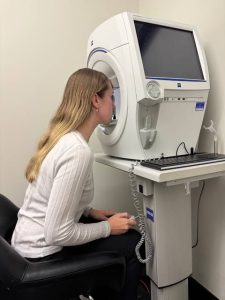
VISUAL FIELD ANALYSER

A Visual Field Analyzer is a medical device used to assess the sensitivity and coverage of a patient’s visual field. It maps out the field of vision, detecting any defects or abnormalities, particularly in peripheral vision.

Key Features:

  • Visual Field Testing: Measures the sensitivity of the retina in different locations.
  • Diagnostic Capabilities: Detects conditions like glaucoma, age-related macular degeneration, and other neurological disorders.
  • Variety of Tests: Offers different testing strategies, such as threshold and screening tests.

Types of Visual Field Analyzers:

  • Humphrey Field Analyzer 3 (HFA 3): Considered the gold standard, featuring Guided Progression Analysis and SITA Faster testing.
  • ObjectiveFIELD Analyzer: Uses multifocal pupillographic objective perimetry (mfPOP) for completely objective visual field assessment.
  • PalmScan VF2000: A wearable, portable analyzer with gaze tracking and customizable reports.
  • Easyfield VR: Utilizes virtual reality technology for visual field screenings and threshold exams.
  • Kowa AP-7000: Offers advanced diagnostic capabilities and high accuracy ¹ ² ³ ⁴.

Benefits:

  • Early Detection: Identifies visual field defects and conditions at an early stage.
  • Accurate Results: Provides reliable and reproducible results.
  • Patient Comfort: Some devices offer features like automated verbal instructions and gaze tracking for improved patient experience.

When selecting a Visual Field Analyzer, consider factors such as ⁵:

  • Measurement Accuracy: Look for devices with high accuracy and reliability.
  • Testing Strategies: Choose a device that offers a range of testing options.
  • Patient Comfort: Consider devices with features that improve patient experience.
  • Data Management: Ensure the device allows for easy data storage and analysis.
VISUAL FIELD ANALYSER

A Visual Field Analyzer is a medical device used to assess the sensitivity and coverage of a patient’s visual field. It maps out the field of vision, detecting any defects or abnormalities, particularly in peripheral vision.

Key Features:

  • Visual Field Testing: Measures the sensitivity of the retina in different locations.
  • Diagnostic Capabilities: Detects conditions like glaucoma, age-related macular degeneration, and other neurological disorders.
  • Variety of Tests: Offers different testing strategies, such as threshold and screening tests.

Types of Visual Field Analyzers:

  • Humphrey Field Analyzer 3 (HFA 3): Considered the gold standard, featuring Guided Progression Analysis and SITA Faster testing.
  • ObjectiveFIELD Analyzer: Uses multifocal pupillographic objective perimetry (mfPOP) for completely objective visual field assessment.
  • PalmScan VF2000: A wearable, portable analyzer with gaze tracking and customizable reports.
  • Easyfield VR: Utilizes virtual reality technology for visual field screenings and threshold exams.
  • Kowa AP-7000: Offers advanced diagnostic capabilities and high accuracy ¹ ² ³ ⁴.

Benefits:

  • Early Detection: Identifies visual field defects and conditions at an early stage.
  • Accurate Results: Provides reliable and reproducible results.
  • Patient Comfort: Some devices offer features like automated verbal instructions and gaze tracking for improved patient experience.

When selecting a Visual Field Analyzer, consider factors such as ⁵:

  • Measurement Accuracy: Look for devices with high accuracy and reliability.
  • Testing Strategies: Choose a device that offers a range of testing options.
  • Patient Comfort: Consider devices with features that improve patient experience.
  • Data Management: Ensure the device allows for easy data storage and analysis.
VISUAL FIELD ANALYSER

A Visual Field Analyzer is a medical device used to assess the sensitivity and coverage of a patient’s visual field. It maps out the field of vision, detecting any defects or abnormalities, particularly in peripheral vision.

Key Features:

  • Visual Field Testing: Measures the sensitivity of the retina in different locations.
  • Diagnostic Capabilities: Detects conditions like glaucoma, age-related macular degeneration, and other neurological disorders.
  • Variety of Tests: Offers different testing strategies, such as threshold and screening tests.

Types of Visual Field Analyzers:

  • Humphrey Field Analyzer 3 (HFA 3): Considered the gold standard, featuring Guided Progression Analysis and SITA Faster testing.
  • ObjectiveFIELD Analyzer: Uses multifocal pupillographic objective perimetry (mfPOP) for completely objective visual field assessment.
  • PalmScan VF2000: A wearable, portable analyzer with gaze tracking and customizable reports.
  • Easyfield VR: Utilizes virtual reality technology for visual field screenings and threshold exams.
  • Kowa AP-7000: Offers advanced diagnostic capabilities and high accuracy ¹ ² ³ ⁴.

Benefits:

  • Early Detection: Identifies visual field defects and conditions at an early stage.
  • Accurate Results: Provides reliable and reproducible results.
  • Patient Comfort: Some devices offer features like automated verbal instructions and gaze tracking for improved patient experience.

When selecting a Visual Field Analyzer, consider factors such as ⁵:

  • Measurement Accuracy: Look for devices with high accuracy and reliability.
  • Testing Strategies: Choose a device that offers a range of testing options.
  • Patient Comfort: Consider devices with features that improve patient experience.
  • Data Management: Ensure the device allows for easy data storage and analysis.