Eagleview Eye Clinic

Tag Eye clinic

IRIS

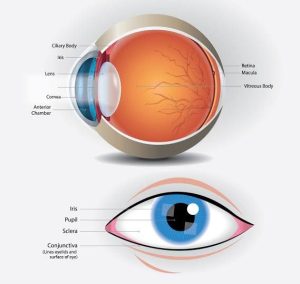
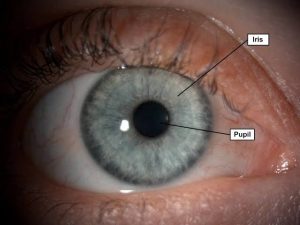
The iris is the colored, circular structure in the eye, surrounding the pupil. It’s a complex and highly specialized tissue that plays a crucial role in regulating light entry and supporting overall eye health.

Key characteristics:

  1. Color: The iris gets its color from melanin pigments, resulting in a wide range of colors and shades.
  2. Structure: The iris consists of two main layers:
    • Stroma (front layer): Contains collagen fibers, blood vessels, and melanocytes.
    • Epithelium (back layer): Contains pigment cells and muscles that control pupil size.
  3. Muscles: The iris contains two types of muscles:
    • Sphincter pupillae: Constricts the pupil in bright light or during near vision.
    • Dilator pupillae: Dilates the pupil in low light or during emotional arousal.
  4. Function: The iris:
    • Regulates light entry into the eye by adjusting pupil size.
    • Helps maintain optimal vision and protects the retina from excessive light exposure.
  5. Uniqueness: Each individual’s iris has unique patterns, colors, and textures, making it useful for identification purposes.

Importance: The iris plays a vital role in controlling light exposure to the retina, supporting optimal vision, and contributing to overall eye health.
PUPIL

The pupil is the circular opening in the center of the iris, the colored part of the eye. It plays a crucial role in regulating the amount of light that enters the eye.

Key characteristics:

  1. Location: The pupil is located in the center of the iris.
  2. Function: The pupil:
    • Regulates light entry into the eye
    • Adjusts size to control light intensity
    • Helps maintain optimal vision
  3. Size adjustment: The pupil:
    • Constricts (gets smaller) in response to:
      • Bright light
      • Near vision
      • Certain medications
    • Dilates (gets larger) in response to:
      • Low light
      • Emotional arousal
      • Certain medications or substances
  4. Control: The pupil’s size is controlled by the autonomic nervous system, specifically the:
    • Parasympathetic nervous system (constriction)
    • Sympathetic nervous system (dilation)

Importance: The pupil’s ability to regulate light entry is essential for maintaining optimal vision, protecting the retina, and responding to changes in lighting conditions.

CONJUNCTIVA

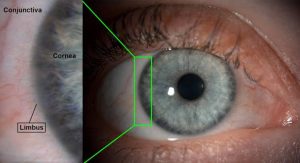
The conjunctiva is a thin, transparent, mucous membrane that covers the anterior (front) part of the eye and the inside of the eyelids. It plays a crucial role in maintaining eye health and function.

Key characteristics:

  1. Location: The conjunctiva covers:
    • The sclera (white part of the eye)
    • The inside of the upper and lower eyelids (palpebral conjunctiva)
    • The fornices (areas where the eyelids meet the eye)
  2. Function: The conjunctiva:
    • Produces mucus to lubricate the eye and facilitate smooth movement
    • Helps protect the eye from infection and foreign particles
    • Aids in maintaining the health of the cornea
  3. Structure: The conjunctiva consists of:
    • Epithelial cells
    • Substantia propria (a layer of connective tissue)
  4. Importance: The conjunctiva is essential for:
    • Maintaining eye comfort and moisture
    • Preventing infection and inflammation
    • Supporting the overall health of the eye

Common conditions: Conjunctivitis (pink eye), allergies, and dry eye syndrome can affect the conjunctiva, causing symptoms such as redness, itching, discharge, and discomfort.

CORNEA

The cornea is the transparent, avascular (without blood vessels), dome-shaped surface at the front of the eye. It plays a crucial role in refracting (bending) light and protecting the eye.

Key characteristics:

  1. Transparency: The cornea is clear and transparent, allowing light to pass through.
  2. Structure: It consists of five layers:
    • Epithelium (outermost layer)
    • Bowman’s layer
    • Stroma (thickest layer)
    • Descemet’s membrane
    • Endothelium (innermost layer)
  3. Function: The cornea:
    • Refracts light, accounting for most of the eye’s focusing power
    • Protects the eye from external damage
    • Maintains the shape of the eye
  4. Sensitivity: The cornea is highly sensitive to touch, temperature, and chemicals.
  5. Nourishment: The cornea receives nutrients and oxygen from tears and the aqueous humor.

Importance: The cornea is essential for clear vision, and any damage, disease, or irregularity can significantly impact visual acuity.

SCLERA

The sclera, also known as the white of the eye, is the opaque, fibrous, and protective outer layer of the eyeball. It provides structure, protection, and shape to the eye.

Key characteristics:

  1. Composition: The sclera is made of dense, collagenous connective tissue.
  2. Location: It covers the posterior five-sixths of the eyeball, with the cornea covering the anterior one-sixth.
  3. Function: The sclera:
    • Provides protection to the intraocular contents
    • Maintains the shape of the eyeball
    • Serves as an attachment site for the extraocular muscles that control eye movement
  4. Appearance: The sclera is typically white or off-white in color, but it can appear differently in certain conditions.

Importance: The sclera plays a vital role in maintaining the integrity and function of the eye, and its health is essential for preserving vision.

BLEB

A bleb is a blister-like structure that forms on the surface of the eye, typically as a result of a surgical procedure, such as trabeculectomy. In the context of glaucoma surgery, a bleb is a fluid-filled reservoir that forms under the conjunctiva, allowing excess fluid to drain from the eye and reducing intraocular pressure.

Characteristics of a bleb:

  • Fluid-filled
  • Located under the conjunctiva
  • Can be diffuse or localized
  • May be elevated or flat

The presence and characteristics of a bleb can indicate the success of the surgery and the effectiveness of IOP reduction.

TRABECULECTOMY

Trabeculectomy is a surgical procedure used to treat glaucoma by creating a new drainage pathway for fluid to leave the eye, reducing intraocular pressure (IOP). The goal is to:

  • Lower IOP to prevent further damage to the optic nerve
  • Preserve vision
  • Slow disease progression

During the procedure:

  • A small section of tissue is removed from the eye
  • A new drainage channel is created
  • A bleb (fluid reservoir) forms under the conjunctiva

Trabeculectomy is often considered for patients with:

  • Advanced glaucoma
  • Uncontrolled IOP despite medication or laser treatment

Post-operative care includes:

  • Monitoring for complications (e.g., infection, scarring)
  • Managing IOP and inflammation
  • Follow-up appointments for recovery assessment.

NEUROPARALYTIC KERATITIS

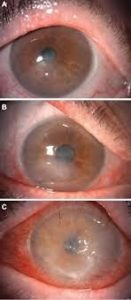
Neuroparalytic keratitis is a condition where the cornea becomes inflamed or damaged due to nerve dysfunction or paralysis, often resulting from:

  • Facial nerve palsy (e.g., Bell’s palsy)
  • Trigeminal nerve damage
  • Trauma
  • Stroke
  • Neurological disorders (e.g., multiple sclerosis)

This condition can lead to:

  • Decreased corneal sensation
  • Reduced blinking
  • Exposure keratopathy
  • Increased risk of corneal ulcers

Symptoms may include:

  • Eye pain
  • Redness
  • Blurred vision
  • Dryness

Treatment aims to:

  • Protect the cornea
  • Promote healing
  • Manage symptoms

Options may include:

  • Lubricating eye drops
  • Protective eyewear
  • Tarsorrhaphy (surgical eyelid closure)
  • Other supportive measures.
ORBITAL TUMOUR REMOVAL

Orbital tumor removal is a surgical procedure to remove abnormal growths or tumors within the orbit (the bony cavity surrounding the eye). The goal is to:

  • Eliminate the tumor
  • Preserve vision and eye function
  • Improve appearance
  • Relieve symptoms (e.g., pain, double vision)

Types of orbital tumors:

  • Benign (non-cancerous): e.g., hemangiomas, neurofibromas
  • Malignant (cancerous): e.g., lymphoma, rhabdomyosarcoma

Surgical approaches:

  • Anterior orbitotomy: For tumors located in the front part of the orbit.
  • Lateral orbitotomy: For tumors located on the side of the orbit.
  • Cranio-orbital approach: For tumors extending into the cranial cavity.

Techniques:

  • Open surgery: Traditional approach with incisions.
  • Endoscopic surgery: Minimally invasive approach using small incisions and a camera.

Post-operative care:

  • Monitoring for complications (e.g., bleeding, infection)
  • Managing pain and swelling
  • Follow-up appointments for recovery assessment

The specific approach and technique depend on the tumor’s location, size, and type, as well as the patient’s overall health.

LEVATOR RESECTION

Levator resection is a surgical technique used to correct ptosis (drooping eyelid) by strengthening the levator palpebrae superioris muscle, which is responsible for eyelid elevation. Here’s a more detailed overview:

Indications:

  • Congenital or acquired ptosis
  • Mild to moderate ptosis
  • Good levator function

Procedure:

  1. The surgeon makes an incision in the eyelid crease.
  2. The levator muscle and tendon are identified and resected (a portion is removed).
  3. The resected muscle is then reattached to the eyelid, effectively shortening it and improving eyelid elevation.

Goals:

  • Improve eyelid position and symmetry
  • Enhance visual field
  • Restore normal appearance

Types:

  • Müllerectomy: A variation involving resection of Müller’s muscle, which also contributes to eyelid elevation.

Post-operative care:

  • Eye drops and ointments may be prescribed to aid healing and reduce inflammation.
  • Patients are usually advised to avoid heavy lifting, bending, or strenuous activities.

Potential risks and complications:

  • Undercorrection or overcorrection
  • Bleeding or hematoma
  • Infection
  • Lagophthalmos (incomplete eyelid closure)

Levator resection is a common and effective procedure for correcting ptosis, but the outcome depends on individual factors, such as the severity of ptosis and the surgeon’s expertise.