Irritant conjunctivitis is an inflammation of the conjunctiva (the thin membrane covering the white part of the eye and inside of the eyelids) caused by:
Exposure to irritants like chemicals, smoke, or dust
Allergens or foreign substances
Symptoms
Redness: Pink or red eyes
Itching or burning: Discomfort in the eyes
Discharge: Watery or sticky discharge
Sensitivity to light: Photophobia
Treatment
Avoid irritants: Remove or minimize exposure
Flush eyes: With water or saline solution
Artificial tears: To lubricate and soothe
Cool compresses: To reduce discomfort
If symptoms persist or worsen, consult an eye care professional for proper diagnosis and treatment.
Lifestyle practices are daily life actions that we engage in daily.
Some lifestyle practices are good and are beneficial to the eyes and the reverse of these good practices poses serious threat to the eyes.
The following are some lifestyle practices and how they affect the eyes:
1. WEARING PROTECTIVE GOGGLES WHILE AT WORK: If you work in a production factory or a chemical laboratory/factory, wearing protective goggles will help protect your eyes from workspace accidents like flying objects getting into the eyes, chemicals and fumes entering the eyes and causing issues for your eyes.
If you are an outdoor worker, that spends Time outside under the sun, a pair of photo AR will go a long way in preventing issues like cataract, pterygium and Age related macular degeneration
If you spend time working on your computer, getting a pair of bluecut glasses will go a long way in protecting your eyes from blue light from your devices.
2. EXERCISING: By Exercising regularly, your body will be able to fight against diseases like diabetes, hypertension and obesity.
Once you are able to fight against these conditions your chances of coming down diseases like diabetic retinopathy and hypertensive retinopathy.
These conditions have been known to cause blindness.
3. SMOKING: smoking regularly can actually put you at a risk of cataracts and macula degeneration. Instead of smoking yourself to blindness and then start looking for help all around, why don’t you just avoid smoking altogether? Think about it.
4. SELF – MEDICATION: By using medications (eyedrops and tablets) without doctor’s recommendation, you will actually be putting your eyes and life at risk. The damages self – medication can cause are enormous and most times irreversible.
5. NOT CHECKING YOUR EYES REGULARLY: Not checking your eyes regularly or avoiding visiting the hospital altogether when you are have eye issues is a lifestyle practice that have caused so many their eyes eventually.
By not checking your eyes regularly, you tend to Miss certain conditions that could have been treated in their early stage until it’s impossible to treat.
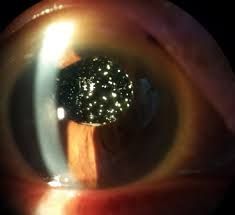
Asteroid HYALOSIS are yellowish glittering particles deposits on the vitreous body caused by age related vitreous degeneration.
This condition is usually age related and does not affect vision in any way.
Most of times, the patients does not even notice any sign or symptom but a common symptom of this condition is floaters ( moving objects in the field of view).
If the symptom becomes discomforting, surgery is usually the way out for the patient.
Optic neuritis is an inflammation of the optic nerves. The optic nerves are connections between the eye and the brain responsible for transmission of visual impulses between the two organs
This condition is caused by autoimmune ailments like multiple sclerosis, myasthenia gravis and viral infections like shingles , chicken pox et.c
This condition is sight threatening, especially if not treated early.
Signs and symptoms includes pain on eye movement, reduced vision, defective colour vision, eye pain.
Treatment involves treating underlying conditions, and the use of corticosteroids.
Myasthenia gravis occurs when the nerves are unable to give signals to the muscles to perform specific actions e.g standing, gripping an object, opening your mouth and eyes etc.
CAUSES: It is an autoimmune condition. That is the body’s immune system attacks the Healthy body structures or tissues mistaking it for an infectious or foreign particle
It can also be caused by an overaction or tumour of the thymus gland.
There are usually three types of Myasthenia gravis and they are 1. Autoimmune Myasthenia gravis 2. Neonatal MG 3. Congenital MG. The first one affects women of ages between 20 and 40 and men above 60yrs of age. while the last two affects babies
PATHOPHYSIOLOGY: Normally for muscular activity to occur, the nerve release a substance called acetylcholine. This acetylcholine travels and binds itself to the receptors on the muscle site and trigger a contraction of the muscle
SIGNS AND SYMPTOMS: Difficulty sitting up, difficulty opening the mouth and eyes, difficulty lifting hands, difficulty breathing
When the body’s antibodies destroys all the acetylcholine receptors on the muscle site. The acetylcholine will not be able to bind to any receptor to trigger muscular contraction
TREATMENT : For auto immune myasthenia gravis, there is usually no cure. But it’s usually advised that the patient gets enough rest.
MG crisis is triggered when the individual is stressed, hence rest is advised so that the muscles can gain strength.