Eagleview Eye Clinic

Tag eye diseases

ULTRA THIN LENSES.

Ultra-thin lenses are designed to provide the same functionality as traditional lenses but with a significantly reduced thickness. They’re ideal for individuals with strong prescriptions who want to maintain a stylish appearance without compromising on lens thickness.

Types of Ultra-Thin Lenses:

  • High-Index Lenses: These lenses have a higher refractive index, which allows them to bend light more efficiently, resulting in a thinner design. Examples include 1.74 high-index lenses and 1.76 high-index lenses.
  • Double-Sided Aspheric Lenses: These lenses feature a unique design that reduces distortion and warping, making them thinner and more aesthetically pleasing ¹ ² ³.

Benefits of Ultra-Thin Lenses:

  • Aesthetic Appeal: Ultra-thin lenses are more cosmetically appealing, reducing the “bug-eyed” effect associated with thick lenses.
  • Lightweight: Thinner lenses are lighter, making them more comfortable to wear.
  • Reduced Distortion: Advanced designs minimize distortion and warping, ensuring a clearer field of vision ¹ ².

Recommended For:

  • Strong Prescriptions: Individuals with high myopia or astigmatism can benefit from ultra-thin lenses.
  • Fashion-Conscious Individuals: Those who want stylish glasses without compromising on lens thickness.
  • Individuals with Active Lifestyles: Ultra-thin lenses can be more comfortable and durable ² ¹.

Innovations in Ultra-Thin Lenses:

  • Metalenses: Researchers have developed ultra-thin metalenses that can convert infrared light into visible light, opening up new possibilities for applications in security, authentication, and more ⁴ ⁵.
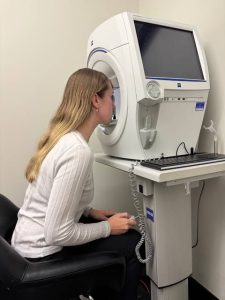
VISUAL FIELD ANALYSER

A Visual Field Analyzer is a medical device used to assess the sensitivity and coverage of a patient’s visual field. It maps out the field of vision, detecting any defects or abnormalities, particularly in peripheral vision.

Key Features:

  • Visual Field Testing: Measures the sensitivity of the retina in different locations.
  • Diagnostic Capabilities: Detects conditions like glaucoma, age-related macular degeneration, and other neurological disorders.
  • Variety of Tests: Offers different testing strategies, such as threshold and screening tests.

Types of Visual Field Analyzers:

  • Humphrey Field Analyzer 3 (HFA 3): Considered the gold standard, featuring Guided Progression Analysis and SITA Faster testing.
  • ObjectiveFIELD Analyzer: Uses multifocal pupillographic objective perimetry (mfPOP) for completely objective visual field assessment.
  • PalmScan VF2000: A wearable, portable analyzer with gaze tracking and customizable reports.
  • Easyfield VR: Utilizes virtual reality technology for visual field screenings and threshold exams.
  • Kowa AP-7000: Offers advanced diagnostic capabilities and high accuracy ¹ ² ³ ⁴.

Benefits:

  • Early Detection: Identifies visual field defects and conditions at an early stage.
  • Accurate Results: Provides reliable and reproducible results.
  • Patient Comfort: Some devices offer features like automated verbal instructions and gaze tracking for improved patient experience.

When selecting a Visual Field Analyzer, consider factors such as ⁵:

  • Measurement Accuracy: Look for devices with high accuracy and reliability.
  • Testing Strategies: Choose a device that offers a range of testing options.
  • Patient Comfort: Consider devices with features that improve patient experience.
  • Data Management: Ensure the device allows for easy data storage and analysis.
VISUAL FIELD ANALYSER

A Visual Field Analyzer is a medical device used to assess the sensitivity and coverage of a patient’s visual field. It maps out the field of vision, detecting any defects or abnormalities, particularly in peripheral vision.

Key Features:

  • Visual Field Testing: Measures the sensitivity of the retina in different locations.
  • Diagnostic Capabilities: Detects conditions like glaucoma, age-related macular degeneration, and other neurological disorders.
  • Variety of Tests: Offers different testing strategies, such as threshold and screening tests.

Types of Visual Field Analyzers:

  • Humphrey Field Analyzer 3 (HFA 3): Considered the gold standard, featuring Guided Progression Analysis and SITA Faster testing.
  • ObjectiveFIELD Analyzer: Uses multifocal pupillographic objective perimetry (mfPOP) for completely objective visual field assessment.
  • PalmScan VF2000: A wearable, portable analyzer with gaze tracking and customizable reports.
  • Easyfield VR: Utilizes virtual reality technology for visual field screenings and threshold exams.
  • Kowa AP-7000: Offers advanced diagnostic capabilities and high accuracy ¹ ² ³ ⁴.

Benefits:

  • Early Detection: Identifies visual field defects and conditions at an early stage.
  • Accurate Results: Provides reliable and reproducible results.
  • Patient Comfort: Some devices offer features like automated verbal instructions and gaze tracking for improved patient experience.

When selecting a Visual Field Analyzer, consider factors such as ⁵:

  • Measurement Accuracy: Look for devices with high accuracy and reliability.
  • Testing Strategies: Choose a device that offers a range of testing options.
  • Patient Comfort: Consider devices with features that improve patient experience.
  • Data Management: Ensure the device allows for easy data storage and analysis.
VISUAL FIELD ANALYSER

A Visual Field Analyzer is a medical device used to assess the sensitivity and coverage of a patient’s visual field. It maps out the field of vision, detecting any defects or abnormalities, particularly in peripheral vision.

Key Features:

  • Visual Field Testing: Measures the sensitivity of the retina in different locations.
  • Diagnostic Capabilities: Detects conditions like glaucoma, age-related macular degeneration, and other neurological disorders.
  • Variety of Tests: Offers different testing strategies, such as threshold and screening tests.

Types of Visual Field Analyzers:

  • Humphrey Field Analyzer 3 (HFA 3): Considered the gold standard, featuring Guided Progression Analysis and SITA Faster testing.
  • ObjectiveFIELD Analyzer: Uses multifocal pupillographic objective perimetry (mfPOP) for completely objective visual field assessment.
  • PalmScan VF2000: A wearable, portable analyzer with gaze tracking and customizable reports.
  • Easyfield VR: Utilizes virtual reality technology for visual field screenings and threshold exams.
  • Kowa AP-7000: Offers advanced diagnostic capabilities and high accuracy ¹ ² ³ ⁴.

Benefits:

  • Early Detection: Identifies visual field defects and conditions at an early stage.
  • Accurate Results: Provides reliable and reproducible results.
  • Patient Comfort: Some devices offer features like automated verbal instructions and gaze tracking for improved patient experience.

When selecting a Visual Field Analyzer, consider factors such as ⁵:

  • Measurement Accuracy: Look for devices with high accuracy and reliability.
  • Testing Strategies: Choose a device that offers a range of testing options.
  • Patient Comfort: Consider devices with features that improve patient experience.
  • Data Management: Ensure the device allows for easy data storage and analysis.
VISUAL FIELD ANALYSER

A Visual Field Analyzer is a medical device used to assess the sensitivity and coverage of a patient’s visual field. It maps out the field of vision, detecting any defects or abnormalities, particularly in peripheral vision.

Key Features:

  • Visual Field Testing: Measures the sensitivity of the retina in different locations.
  • Diagnostic Capabilities: Detects conditions like glaucoma, age-related macular degeneration, and other neurological disorders.
  • Variety of Tests: Offers different testing strategies, such as threshold and screening tests.

Types of Visual Field Analyzers:

  • Humphrey Field Analyzer 3 (HFA 3): Considered the gold standard, featuring Guided Progression Analysis and SITA Faster testing.
  • ObjectiveFIELD Analyzer: Uses multifocal pupillographic objective perimetry (mfPOP) for completely objective visual field assessment.
  • PalmScan VF2000: A wearable, portable analyzer with gaze tracking and customizable reports.
  • Easyfield VR: Utilizes virtual reality technology for visual field screenings and threshold exams.
  • Kowa AP-7000: Offers advanced diagnostic capabilities and high accuracy ¹ ² ³ ⁴.

Benefits:

  • Early Detection: Identifies visual field defects and conditions at an early stage.
  • Accurate Results: Provides reliable and reproducible results.
  • Patient Comfort: Some devices offer features like automated verbal instructions and gaze tracking for improved patient experience.

When selecting a Visual Field Analyzer, consider factors such as ⁵:

  • Measurement Accuracy: Look for devices with high accuracy and reliability.
  • Testing Strategies: Choose a device that offers a range of testing options.
  • Patient Comfort: Consider devices with features that improve patient experience.
  • Data Management: Ensure the device allows for easy data storage and analysis.
VISUAL FIELD ANALYSER

A Visual Field Analyzer is a medical device used to assess the sensitivity and coverage of a patient’s visual field. It maps out the field of vision, detecting any defects or abnormalities, particularly in peripheral vision.

Key Features:

  • Visual Field Testing: Measures the sensitivity of the retina in different locations.
  • Diagnostic Capabilities: Detects conditions like glaucoma, age-related macular degeneration, and other neurological disorders.
  • Variety of Tests: Offers different testing strategies, such as threshold and screening tests.

Types of Visual Field Analyzers:

  • Humphrey Field Analyzer 3 (HFA 3): Considered the gold standard, featuring Guided Progression Analysis and SITA Faster testing.
  • ObjectiveFIELD Analyzer: Uses multifocal pupillographic objective perimetry (mfPOP) for completely objective visual field assessment.
  • PalmScan VF2000: A wearable, portable analyzer with gaze tracking and customizable reports.
  • Easyfield VR: Utilizes virtual reality technology for visual field screenings and threshold exams.
  • Kowa AP-7000: Offers advanced diagnostic capabilities and high accuracy ¹ ² ³ ⁴.

Benefits:

  • Early Detection: Identifies visual field defects and conditions at an early stage.
  • Accurate Results: Provides reliable and reproducible results.
  • Patient Comfort: Some devices offer features like automated verbal instructions and gaze tracking for improved patient experience.

When selecting a Visual Field Analyzer, consider factors such as ⁵:

  • Measurement Accuracy: Look for devices with high accuracy and reliability.
  • Testing Strategies: Choose a device that offers a range of testing options.
  • Patient Comfort: Consider devices with features that improve patient experience.
  • Data Management: Ensure the device allows for easy data storage and analysis.
SWINGING FLASH LIGHT TEST

The swinging flashlight test is a simple, bedside test used to assess the relative afferent pupillary defect (RAPD) in the visual pathway. It’s a valuable tool for detecting unilateral or asymmetric optic nerve dysfunction or severe retinal disease.

How to Perform the Test

  1. Positioning: The patient sits in a comfortable position, and the examiner stands in front of them.
  2. Lighting: A bright flashlight is shone into one eye, then the other, in a swinging motion.
  3. Observation: The examiner observes the pupils’ reactions to the light stimulus.

What to Look For

  • Normal response: Both pupils constrict equally when the light is shone into one eye and then the other.
  • Relative afferent pupillary defect (RAPD): When the light is shone into the affected eye, the pupils may dilate or constrict less compared to when the light is shone into the healthy eye.

Clinical Significance

  • Optic nerve damage: RAPD can indicate optic nerve damage or disease, such as optic neuritis or optic neuropathy.
  • Retinal disease: Severe retinal disease can also cause RAPD.
  • Neurological conditions: Certain neurological conditions, like stroke or multiple sclerosis, can affect the visual pathway and result in RAPD.

The swinging flashlight test is a useful screening tool for detecting visual pathway abnormalities and can guide further diagnostic testing and management.

SWINGING FLASH LIGHT TEST

The swinging flashlight test is a simple, bedside test used to assess the relative afferent pupillary defect (RAPD) in the visual pathway. It’s a valuable tool for detecting unilateral or asymmetric optic nerve dysfunction or severe retinal disease.

How to Perform the Test

  1. Positioning: The patient sits in a comfortable position, and the examiner stands in front of them.
  2. Lighting: A bright flashlight is shone into one eye, then the other, in a swinging motion.
  3. Observation: The examiner observes the pupils’ reactions to the light stimulus.

What to Look For

  • Normal response: Both pupils constrict equally when the light is shone into one eye and then the other.
  • Relative afferent pupillary defect (RAPD): When the light is shone into the affected eye, the pupils may dilate or constrict less compared to when the light is shone into the healthy eye.

Clinical Significance

  • Optic nerve damage: RAPD can indicate optic nerve damage or disease, such as optic neuritis or optic neuropathy.
  • Retinal disease: Severe retinal disease can also cause RAPD.
  • Neurological conditions: Certain neurological conditions, like stroke or multiple sclerosis, can affect the visual pathway and result in RAPD.

The swinging flashlight test is a useful screening tool for detecting visual pathway abnormalities and can guide further diagnostic testing and management.

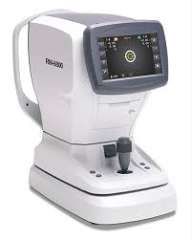
AUTO REFRACTOMETER

An autorefractor or auto refractometer is an ophthalmic device used to measure the refractive error of a patient’s eyes. It provides an objective measurement of the eye’s focusing power, helping eye care professionals to determine the correct prescription for glasses or contact lenses.

Key Features

  • Automated measurement: Quick and accurate measurements with minimal patient input.
  • Refractive error assessment: Measures sphere, cylinder, and axis values for astigmatism.
  • Pupil size measurement: Some autorefractors can measure pupil size.

Uses

  • Eye exams: Routine eye exams to determine refractive error and prescribe corrective lenses.
  • Screening: Vision screenings in schools, clinics, or community settings.
  • Pre-operative assessment: Measuring refractive error before eye surgery.

Benefits

  • Accurate measurements: Provides reliable and consistent results.
  • Efficient workflow: Streamlines the eye exam process.
  • Easy to use: User-friendly interface for both patients and eye care professionals.
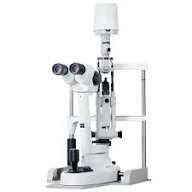
SLIT LAMP BIOMICROSCOPE

A slit lamp biomicroscope is an ophthalmic instrument used to examine the anterior segment of the eye, including the cornea, iris, lens, and anterior chamber. It provides a detailed, magnified view of these structures, allowing eye care professionals to diagnose and manage various eye conditions, such as cataracts, glaucoma, and corneal diseases. The slit lamp’s bright light source and adjustable slit allow for precise control over illumination, enabling detailed examination of the eye’s structures.