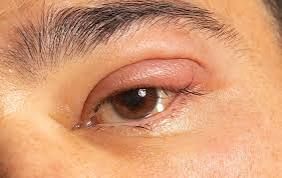
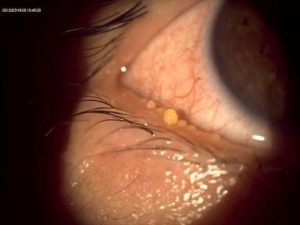
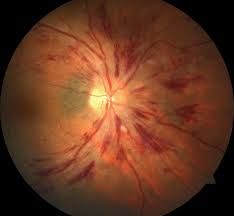
Dacryoadenitis is inflammation of the lacrimal gland, which can be:
Acute or chronic
Caused by infection, autoimmune disorders, or blockage
Symptoms
Swelling: Upper eyelid swelling, often on the outer side
Pain: Tenderness or pain in the area of the lacrimal gland
Redness: Inflammation of the eyelid
Excessive tearing: Or decreased tearing in chronic cases
Causes
Infections: Bacterial or viral
Autoimmune disorders: Such as sarcoidosis or Sjögren’s syndrome
Blockage: Of the lacrimal gland ducts
Treatment
Warm compresses: To relieve symptoms
Antibiotics: If bacterial infection is present
Anti-inflammatory medications: To reduce swelling and pain
Further testing: May be needed to determine underlying cause
If you have dacryoadenitis, consult an eye care professional for proper diagnosis and treatment to alleviate symptoms and address the underlying cause.
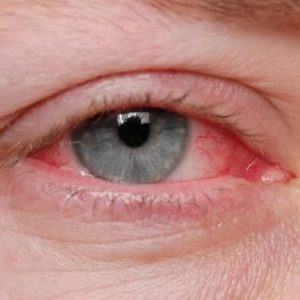
Irritant conjunctivitis is an inflammation of the conjunctiva (the thin membrane covering the white part of the eye and inside of the eyelids) caused by:
Exposure to irritants like chemicals, smoke, or dust
Allergens or foreign substances
Symptoms
Redness: Pink or red eyes
Itching or burning: Discomfort in the eyes
Discharge: Watery or sticky discharge
Sensitivity to light: Photophobia
Treatment
Avoid irritants: Remove or minimize exposure
Flush eyes: With water or saline solution
Artificial tears: To lubricate and soothe
Cool compresses: To reduce discomfort
If symptoms persist or worsen, consult an eye care professional for proper diagnosis and treatment.
Irritant conjunctivitis is an inflammation of the conjunctiva (the thin membrane covering the white part of the eye and inside of the eyelids) caused by:
Exposure to irritants like chemicals, smoke, or dust
Allergens or foreign substances
Symptoms
Redness: Pink or red eyes
Itching or burning: Discomfort in the eyes
Discharge: Watery or sticky discharge
Sensitivity to light: Photophobia
Treatment
Avoid irritants: Remove or minimize exposure
Flush eyes: With water or saline solution
Artificial tears: To lubricate and soothe
Cool compresses: To reduce discomfort
If symptoms persist or worsen, consult an eye care professional for proper diagnosis and treatment.
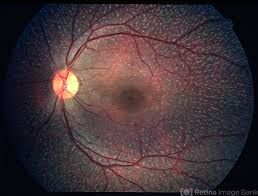
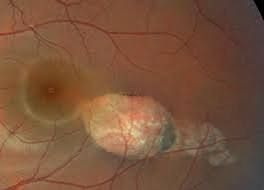
Hypertensive choroidopathy refers to damage to the choroid layer of the eye due to high blood pressure. This can cause:
Vision problems
Retinal damage
Choroidal ischemia (lack of blood flow)
Symptoms
Vision loss: Blurred or distorted vision
Blind spots: Areas of decreased vision
Flashes: Flashes of light
Complications
Retinal detachment: Separation of the retina from underlying tissue
Choroidal neovascularization: Growth of new, fragile blood vessels
Management
Blood pressure control: Managing hypertension through lifestyle changes and medication
Regular eye exams: Monitoring eye health
Treatment of complications: Such as anti-VEGF injections for CNV
If you have hypertension, regular eye exams can help detect and manage hypertensive choroidopathy. Consult with an eye care professional for personalized advice and treatment.
Charles Bonnet Syndrome (CBS) is a condition where people with significant vision loss experience vivid visual hallucinations. These hallucinations can range from simple patterns to complex images, such as people, animals, or objects.
Characteristics
Visual hallucinations: CBS hallucinations are typically visual and can be very vivid.
Vision loss: CBS typically occurs in people with significant vision loss, often due to age-related macular degeneration, cataracts, or other eye conditions.
Insight: People with CBS often have insight into the fact that their hallucinations are not real.
Symptoms
Hallucinations: Can be simple (e.g., patterns, shapes) or complex (e.g., people, animals).
Variable frequency: Hallucinations can occur frequently or infrequently.
Variable duration: Hallucinations can last from seconds to hours.
Management
Reassurance: Educating patients that CBS is a recognized condition can be helpful.
Coping strategies: Techniques like closing eyes or looking away can help manage hallucinations.
Addressing underlying conditions: Managing underlying eye conditions can help alleviate symptoms.
If you’re experiencing symptoms or concerns, consult an eye doctor or a healthcare professional for proper diagnosis and guidance.