Eagleview Eye Clinic

Tag eye doctor

a WAVE and b WAVE

A-waves and B-waves are key components of the full-field ERG, reflecting retinal function:

  • A-wave: Initial negative deflection, generated by photoreceptors (rods and cones) responding to light. Its amplitude and timing indicate photoreceptor health.
  • B-wave: Positive deflection following A-wave, produced by inner retinal cells (bipolar and Müller cells). It shows how well signals from photoreceptors are processed.

Reduced A-waves suggest photoreceptor damage (e.g., retinitis pigmentosa), while reduced B-waves point to inner retinal issues (e.g., retinal vascular diseases).
P50 and N95

P50 and N95 are key waves in pattern ERG (PERG), reflecting retinal ganglion cell (RGC) function:

  • P50: Early positive wave, mainly from RGCs and inner retinal layers. Reduced amplitude or delayed timing suggests ganglion cell dysfunction, common in early glaucoma or optic neuropathies.
  • N95: Later negative wave, more specific to optic nerve health. A drop in N95 amplitude often signals optic nerve damage or axonal loss.

Both waves together help gauge severity and progression of optic nerve diseases. For example, in glaucoma, P50 might reduce first, then N95 drops as damage worsens.

FULL ERG

Full-field ERG tests the entire retina’s electrical response to light. You get electrodes on the cornea or skin, dark-adapt for ~20 mins, then flashes of light stimulate rods and cones. It records a-waves (photoreceptor activity) and b-waves (inner retinal response). Used to diagnose widespread retinal diseases like retinitis pigmentosa or Leber congenital amaurosis. Results show overall retinal function, not localized areas.

ELECTRORETINOGRAPHY

Electroretinography (ERG) is a test that measures the electrical response of the retina’s light-sensitive cells (rods and cones) to light stimuli. It helps diagnose retinal diseases like retinitis pigmentosa, macular degeneration, and Leber congenital amaurosis.

  • How it works: Electrodes placed on the cornea or skin around the eye record electrical activity while the eye is exposed to flashes of light.
  • What it shows: Waves (a-waves, b-waves) reflecting function of photoreceptors and inner retinal layers.
  • Types: Full-field ERG (tests whole retina), multifocal ERG (tests small areas), and pattern ERG (tests ganglion cells).
  • Use: Detects retinal dysfunction even before vision loss is noticeable.

LEBER CONGENITAL AMAUROSIS

Leber congenital amaurosis (LCA) is a rare, inherited retinal disorder present at birth or early infancy, causing severe vision loss.

  • Genetics: Autosomal recessive, with mutations in genes like RPE65, CEP290, GUCY2D.
  • Symptoms: Profound visual impairment, nystagmus (involuntary eye movement), sluggish or absent pupillary response, and often “ Franceschetti’s oculodigital sign” (eye poking).
  • Pathology: Disrupts photoreceptor function in the retina, stopping light from being processed into vision.
  • Diagnosis: Clinical exam, electroretinography (ERG shows little/no response), and genetic testing.
  • Treatment: No cure yet, but gene therapy (e.g., Luxturna for RPE65 mutations) has shown promise. Low-vision aids, mobility training, and early intervention help quality of life.

CORNEA DECOMPENSATION

👁️ Corneal decompensation happens when the endothelium (the inner layer of the cornea) fails to pump out fluid, causing corneal swelling (edema), cloudiness, and blurry vision.

  • Causes:
    • Fuchs’ endothelial dystrophy (most common)
    • Trauma (surgical or accidental)
    • Long-term contact lens wear
    • Glaucoma or high eye pressure
    • Inflammation or infection
  • Symptoms:
    • Hazy or blurry vision (often worse in the morning)
    • Glare and light sensitivity
    • Eye discomfort or pain in advanced cases
    • Halos around lights
  • Stages:
    • Early: Mild swelling, subtle visual changes
    • Moderate: Noticeable edema, thickened cornea
    • Advanced: Bullae formation (epithelial blisters), pain, and risk of infection
  • Treatment:
    • Mild: Hypertonic saline drops/ointment to draw out fluid
    • Moderate: Reducing contributing factors (e.g., pressure control in glaucoma)
    • Severe: Endothelial keratoplasty (DSEK, DSAEK, or DMEK) — partial corneal transplant replacing only the damaged endothelial layer

ORCAM

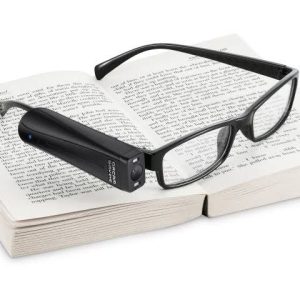
👓 OrCam MyEye is a small, AI-powered device that clips onto glasses and helps people with visual impairments by “reading” text and identifying objects, faces, and products aloud.

  • Key features:
    • Text reading: Reads printed and digital text from books, screens, signs, and labels.
    • Facial recognition: Learns and announces names of people.
    • Object and product identification: Recognizes everyday items and barcodes.
    • Color and money detection: Helps identify colors and currency notes.
    • Voice commands: Hands-free control for easy operation.
  • How it works: The device uses a smart camera and AI algorithms to interpret visual information and deliver it as audio through a tiny speaker.
  • Benefits:
    • Promotes independence for visually impaired users.
    • Portable and discreet.
    • Supports multiple languages.
CORNEA NEOVASCULARIZATION

👓 Corneal neovascularization is the growth of new blood vessels into the cornea, typically as a response to injury, infection, or hypoxia.

  • Causes: Contact lens wear, infections (e.g., herpes simplex keratitis), trauma, or inflammation.
  • Effects: Can lead to vision impairment, scarring, or lipid deposition.
  • Symptoms: May cause redness, discomfort, or vision changes.
  • Management: Treats underlying cause, steroids, or anti-VEGF therapy in some cases.

CONDITIONS THAT CAN OCCUR FROM CONTACT LENS USE

😊 Contact lens misuse can lead to various eye issues, including:

  • Infections: Bacterial (e.g., bacterial keratitis), fungal, or viral (e.g., adenovirus).
  • Irritation and allergies: Giant papillary conjunctivitis (GPC), allergic reactions to lens solutions.
  • Corneal issues: Abrasions, ulcers, neovascularization, or dellen.
  • Hypoxia-related problems: Corneal edema, neovascularization.
  • Other: Dry eye, discomfort, or lens-related complications.

CORNEA DELLEN

👓 Corneal dellen (or dellen) refers to a localized thinning or depression in the peripheral cornea.

  • Causes: Often due to localized dehydration or inflammation, sometimes related to:
    • Contact lens use
    • Surgery or trauma
    • Adjacent lesions (e.g., pterygium)
  • Symptoms: May cause discomfort, irritation, or blurred vision.
  • Management: Often resolves with lubrication, discontinuing contact lens use, or treating underlying causes.