Eagleview Eye Clinic

Tag eye Examination

PTOSIS REPAIR SURGERY

Ptosis repair is a surgical procedure to correct droopy eyelids (ptosis), which can affect one or both eyes. The goal is to:

  1. Improve eyelid position: Lift the eyelid to a more normal position.
  2. Enhance vision: Reduce obstruction of the visual field.
  3. Improve appearance: Restore a more youthful and alert appearance.

The procedure can be performed on children or adults, depending on the cause and severity of the ptosis.

Some common techniques include:

  1. Levator resection: Tightening the levator muscle.
  2. Müllerectomy: Removing a portion of the Müller muscle.
  3. Frontalis sling: Using a sling to suspend the eyelid.

If you’re considering ptosis repair, consult with an oculoplastic surgeon or ophthalmologist to determine the best approach for your specific case.

PTOSIS REPAIR SURGERY

Ptosis repair is a surgical procedure to correct droopy eyelids (ptosis), which can affect one or both eyes. The goal is to:

  1. Improve eyelid position: Lift the eyelid to a more normal position.
  2. Enhance vision: Reduce obstruction of the visual field.
  3. Improve appearance: Restore a more youthful and alert appearance.

The procedure can be performed on children or adults, depending on the cause and severity of the ptosis.

Some common techniques include:

  1. Levator resection: Tightening the levator muscle.
  2. Müllerectomy: Removing a portion of the Müller muscle.
  3. Frontalis sling: Using a sling to suspend the eyelid.

If you’re considering ptosis repair, consult with an oculoplastic surgeon or ophthalmologist to determine the best approach for your specific case.

PTOSIS REPAIR SURGERY

Ptosis repair is a surgical procedure to correct droopy eyelids (ptosis), which can affect one or both eyes. The goal is to:

  1. Improve eyelid position: Lift the eyelid to a more normal position.
  2. Enhance vision: Reduce obstruction of the visual field.
  3. Improve appearance: Restore a more youthful and alert appearance.

The procedure can be performed on children or adults, depending on the cause and severity of the ptosis.

Some common techniques include:

  1. Levator resection: Tightening the levator muscle.
  2. Müllerectomy: Removing a portion of the Müller muscle.
  3. Frontalis sling: Using a sling to suspend the eyelid.

If you’re considering ptosis repair, consult with an oculoplastic surgeon or ophthalmologist to determine the best approach for your specific case.

PTOSIS REPAIR SURGERY

Ptosis repair is a surgical procedure to correct droopy eyelids (ptosis), which can affect one or both eyes. The goal is to:

  1. Improve eyelid position: Lift the eyelid to a more normal position.
  2. Enhance vision: Reduce obstruction of the visual field.
  3. Improve appearance: Restore a more youthful and alert appearance.

The procedure can be performed on children or adults, depending on the cause and severity of the ptosis.

Some common techniques include:

  1. Levator resection: Tightening the levator muscle.
  2. Müllerectomy: Removing a portion of the Müller muscle.
  3. Frontalis sling: Using a sling to suspend the eyelid.

If you’re considering ptosis repair, consult with an oculoplastic surgeon or ophthalmologist to determine the best approach for your specific case.

PTOSIS REPAIR SURGERY

Ptosis repair is a surgical procedure to correct droopy eyelids (ptosis), which can affect one or both eyes. The goal is to:

  1. Improve eyelid position: Lift the eyelid to a more normal position.
  2. Enhance vision: Reduce obstruction of the visual field.
  3. Improve appearance: Restore a more youthful and alert appearance.

The procedure can be performed on children or adults, depending on the cause and severity of the ptosis.

Some common techniques include:

  1. Levator resection: Tightening the levator muscle.
  2. Müllerectomy: Removing a portion of the Müller muscle.
  3. Frontalis sling: Using a sling to suspend the eyelid.

If you’re considering ptosis repair, consult with an oculoplastic surgeon or ophthalmologist to determine the best approach for your specific case.

PTOSIS REPAIR SURGERY

Ptosis repair is a surgical procedure to correct droopy eyelids (ptosis), which can affect one or both eyes. The goal is to:

  1. Improve eyelid position: Lift the eyelid to a more normal position.
  2. Enhance vision: Reduce obstruction of the visual field.
  3. Improve appearance: Restore a more youthful and alert appearance.

The procedure can be performed on children or adults, depending on the cause and severity of the ptosis.

Some common techniques include:

  1. Levator resection: Tightening the levator muscle.
  2. Müllerectomy: Removing a portion of the Müller muscle.
  3. Frontalis sling: Using a sling to suspend the eyelid.

If you’re considering ptosis repair, consult with an oculoplastic surgeon or ophthalmologist to determine the best approach for your specific case.

CONE – ROD DYSTROPHY

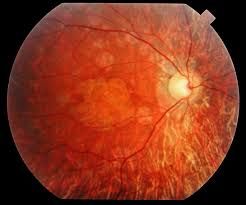
Cone-rod dystrophy is a group of inherited eye disorders that affect the retina, leading to progressive vision loss. It typically starts with:

  1. Loss of cone cell function: Affecting color vision, visual acuity, and central vision.
  2. Later involvement of rod cells: Impacting night vision and peripheral vision.

Symptoms may include:

  • Difficulty with color vision
  • Decreased visual acuity
  • Sensitivity to light
  • Night blindness (in later stages)

If you or someone you know is experiencing symptoms, consulting an optometrist or retinal specialist can provide a proper diagnosis and guidance on managing the condition.

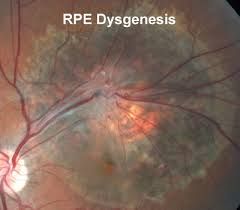
RPE DYSGENESIS

RPE dysgenesis refers to abnormalities in the development of the Retinal Pigment Epithelium (RPE), a layer of cells crucial for photoreceptor health and vision.

RPE dysgenesis can lead to various eye conditions, including:

  1. Retinal dystrophies: Inherited disorders affecting the retina.
  2. Vision impairment: Potential loss of vision due to RPE dysfunction.

If you or someone you know is affected, consulting an eye care professional or a genetic specialist can provide personalized guidance and treatment options.

OCULAR MYOSITIS

Ocular myositis is a rare inflammatory condition that affects the extraocular muscles, which control eye movement. Symptoms may include:

  1. Eye pain: Pain or discomfort in or around the eye.
  2. Diplopia (double vision): Difficulty moving eyes in sync.
  3. Limited eye movement: Restricted or abnormal eye movements.
  4. Swelling: Inflammation or swelling of the affected muscles.

Treatment typically involves:

  1. Corticosteroids: To reduce inflammation.
  2. Immunosuppressive medications: In some cases.

If you’re experiencing symptoms, consult an optometrist or neurologist for proper evaluation and treatment.

WHAT TO EXPECT IN A ROUTINE EYE EXAMINATION

Not knowing what to expect in routine eye Examination is quite normal. But it is not supposed to be.

It is very important for individuals who are visiting the eye clinic for the first time to know routine eye tests that should be carried out on them, as this will help them know if they are receiving proper Eyecare services or not.

There are six basic routine tests you should expect to receive on your first visit to the eye clinic and they are:

1.Visual acuity: This is a measure of how well, you can see things both at far añd near distance. This test is carried out both at 6metres and at 40cm.

2. External Examination: This is done to access the health of the external structures of your eyes like the cornea, sclera, lids, lashes, pupil, et.c. This is either done with the slit lamp biomicroscope or penlight.

3. Internal Examination: This is also known as funduscopy or ophthalmoscopy. Here the integrity of the internal structures of the eyes  are examined. This can be done with the opthalmoscope ( direct and indirect), fundus camera.

4. Tonometry: This is a measure of the intraocular pressure of the eye. This procedure is Carried out with the tonometer. Normal pressure ranges between 10mmhg and 21mmhg.

5. Visual field Examination: This is an Examination that gives an insight on the scope of the visual field. It can either be done manually ( confrontational and bjerrum screen) or automated ( Humphrey visual field analyser).

6. Refraction: This procedure accesses the refractive state of the eye. It is this procedure that determine, wether or not you will need a pair of glasses.