Eagleview Eye Clinic

Tag eye exercises

ULTRA THIN LENSES.

Ultra-thin lenses are designed to provide the same functionality as traditional lenses but with a significantly reduced thickness. They’re ideal for individuals with strong prescriptions who want to maintain a stylish appearance without compromising on lens thickness.

Types of Ultra-Thin Lenses:

  • High-Index Lenses: These lenses have a higher refractive index, which allows them to bend light more efficiently, resulting in a thinner design. Examples include 1.74 high-index lenses and 1.76 high-index lenses.
  • Double-Sided Aspheric Lenses: These lenses feature a unique design that reduces distortion and warping, making them thinner and more aesthetically pleasing ¹ ² ³.

Benefits of Ultra-Thin Lenses:

  • Aesthetic Appeal: Ultra-thin lenses are more cosmetically appealing, reducing the “bug-eyed” effect associated with thick lenses.
  • Lightweight: Thinner lenses are lighter, making them more comfortable to wear.
  • Reduced Distortion: Advanced designs minimize distortion and warping, ensuring a clearer field of vision ¹ ².

Recommended For:

  • Strong Prescriptions: Individuals with high myopia or astigmatism can benefit from ultra-thin lenses.
  • Fashion-Conscious Individuals: Those who want stylish glasses without compromising on lens thickness.
  • Individuals with Active Lifestyles: Ultra-thin lenses can be more comfortable and durable ² ¹.

Innovations in Ultra-Thin Lenses:

  • Metalenses: Researchers have developed ultra-thin metalenses that can convert infrared light into visible light, opening up new possibilities for applications in security, authentication, and more ⁴ ⁵.
ULTRA THIN LENSES.

Ultra-thin lenses are designed to provide the same functionality as traditional lenses but with a significantly reduced thickness. They’re ideal for individuals with strong prescriptions who want to maintain a stylish appearance without compromising on lens thickness.

Types of Ultra-Thin Lenses:

  • High-Index Lenses: These lenses have a higher refractive index, which allows them to bend light more efficiently, resulting in a thinner design. Examples include 1.74 high-index lenses and 1.76 high-index lenses.
  • Double-Sided Aspheric Lenses: These lenses feature a unique design that reduces distortion and warping, making them thinner and more aesthetically pleasing ¹ ² ³.

Benefits of Ultra-Thin Lenses:

  • Aesthetic Appeal: Ultra-thin lenses are more cosmetically appealing, reducing the “bug-eyed” effect associated with thick lenses.
  • Lightweight: Thinner lenses are lighter, making them more comfortable to wear.
  • Reduced Distortion: Advanced designs minimize distortion and warping, ensuring a clearer field of vision ¹ ².

Recommended For:

  • Strong Prescriptions: Individuals with high myopia or astigmatism can benefit from ultra-thin lenses.
  • Fashion-Conscious Individuals: Those who want stylish glasses without compromising on lens thickness.
  • Individuals with Active Lifestyles: Ultra-thin lenses can be more comfortable and durable ² ¹.

Innovations in Ultra-Thin Lenses:

  • Metalenses: Researchers have developed ultra-thin metalenses that can convert infrared light into visible light, opening up new possibilities for applications in security, authentication, and more ⁴ ⁵.
ULTRA THIN LENSES.

Ultra-thin lenses are designed to provide the same functionality as traditional lenses but with a significantly reduced thickness. They’re ideal for individuals with strong prescriptions who want to maintain a stylish appearance without compromising on lens thickness.

Types of Ultra-Thin Lenses:

  • High-Index Lenses: These lenses have a higher refractive index, which allows them to bend light more efficiently, resulting in a thinner design. Examples include 1.74 high-index lenses and 1.76 high-index lenses.
  • Double-Sided Aspheric Lenses: These lenses feature a unique design that reduces distortion and warping, making them thinner and more aesthetically pleasing ¹ ² ³.

Benefits of Ultra-Thin Lenses:

  • Aesthetic Appeal: Ultra-thin lenses are more cosmetically appealing, reducing the “bug-eyed” effect associated with thick lenses.
  • Lightweight: Thinner lenses are lighter, making them more comfortable to wear.
  • Reduced Distortion: Advanced designs minimize distortion and warping, ensuring a clearer field of vision ¹ ².

Recommended For:

  • Strong Prescriptions: Individuals with high myopia or astigmatism can benefit from ultra-thin lenses.
  • Fashion-Conscious Individuals: Those who want stylish glasses without compromising on lens thickness.
  • Individuals with Active Lifestyles: Ultra-thin lenses can be more comfortable and durable ² ¹.

Innovations in Ultra-Thin Lenses:

  • Metalenses: Researchers have developed ultra-thin metalenses that can convert infrared light into visible light, opening up new possibilities for applications in security, authentication, and more ⁴ ⁵.
ULTRA THIN LENSES.

Ultra-thin lenses are designed to provide the same functionality as traditional lenses but with a significantly reduced thickness. They’re ideal for individuals with strong prescriptions who want to maintain a stylish appearance without compromising on lens thickness.

Types of Ultra-Thin Lenses:

  • High-Index Lenses: These lenses have a higher refractive index, which allows them to bend light more efficiently, resulting in a thinner design. Examples include 1.74 high-index lenses and 1.76 high-index lenses.
  • Double-Sided Aspheric Lenses: These lenses feature a unique design that reduces distortion and warping, making them thinner and more aesthetically pleasing ¹ ² ³.

Benefits of Ultra-Thin Lenses:

  • Aesthetic Appeal: Ultra-thin lenses are more cosmetically appealing, reducing the “bug-eyed” effect associated with thick lenses.
  • Lightweight: Thinner lenses are lighter, making them more comfortable to wear.
  • Reduced Distortion: Advanced designs minimize distortion and warping, ensuring a clearer field of vision ¹ ².

Recommended For:

  • Strong Prescriptions: Individuals with high myopia or astigmatism can benefit from ultra-thin lenses.
  • Fashion-Conscious Individuals: Those who want stylish glasses without compromising on lens thickness.
  • Individuals with Active Lifestyles: Ultra-thin lenses can be more comfortable and durable ² ¹.

Innovations in Ultra-Thin Lenses:

  • Metalenses: Researchers have developed ultra-thin metalenses that can convert infrared light into visible light, opening up new possibilities for applications in security, authentication, and more ⁴ ⁵.
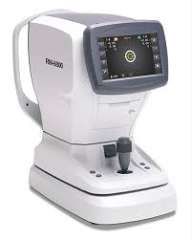
AUTO REFRACTOMETER

An autorefractor or auto refractometer is an ophthalmic device used to measure the refractive error of a patient’s eyes. It provides an objective measurement of the eye’s focusing power, helping eye care professionals to determine the correct prescription for glasses or contact lenses.

Key Features

  • Automated measurement: Quick and accurate measurements with minimal patient input.
  • Refractive error assessment: Measures sphere, cylinder, and axis values for astigmatism.
  • Pupil size measurement: Some autorefractors can measure pupil size.

Uses

  • Eye exams: Routine eye exams to determine refractive error and prescribe corrective lenses.
  • Screening: Vision screenings in schools, clinics, or community settings.
  • Pre-operative assessment: Measuring refractive error before eye surgery.

Benefits

  • Accurate measurements: Provides reliable and consistent results.
  • Efficient workflow: Streamlines the eye exam process.
  • Easy to use: User-friendly interface for both patients and eye care professionals.
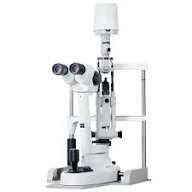
SLIT LAMP BIOMICROSCOPE

A slit lamp biomicroscope is an ophthalmic instrument used to examine the anterior segment of the eye, including the cornea, iris, lens, and anterior chamber. It provides a detailed, magnified view of these structures, allowing eye care professionals to diagnose and manage various eye conditions, such as cataracts, glaucoma, and corneal diseases. The slit lamp’s bright light source and adjustable slit allow for precise control over illumination, enabling detailed examination of the eye’s structures.

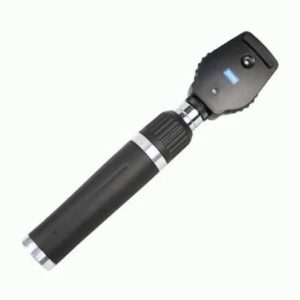
OPHTHALMOSCOPE

An ophthalmoscope is a medical device used to examine the interior of the eye, particularly the retina, optic nerve, and macula. It allows healthcare professionals to visualize the internal structures of the eye and diagnose various eye conditions.

Key Features of an Ophthalmoscope

  • Magnification: Ophthalmoscopes provide magnified views of the eye’s internal structures.
  • Illumination: They use a light source to illuminate the eye, allowing for clear visualization.
  • Adjustable settings: Many ophthalmoscopes have adjustable settings for different pupil sizes, refractive errors, and examination techniques.

Uses of an Ophthalmoscope

  • Eye exams: Ophthalmoscopes are essential tools for comprehensive eye exams.
  • Diabetic retinopathy screening: They help detect and monitor diabetic retinopathy.
  • Retinal disease diagnosis: Ophthalmoscopes aid in diagnosing and monitoring various retinal diseases, such as age-related macular degeneration.
  • Optic nerve evaluation: They allow for examination of the optic nerve head and detection of conditions like glaucoma.

Types of Ophthalmoscopes

  • Direct ophthalmoscope: A handheld device that provides a direct view of the retina.
  • Indirect ophthalmoscope: Uses a condensing lens to provide a wider view of the retina.
  • Fundus camera: A specialized camera that captures images of the retina and other internal eye structures.

Ophthalmoscopes are crucial tools for eye care professionals, enabling them to diagnose and manage various eye conditions.

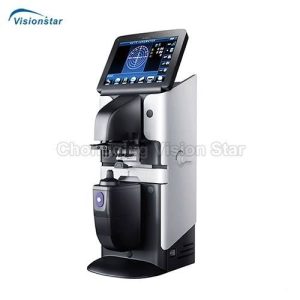
LENS METER

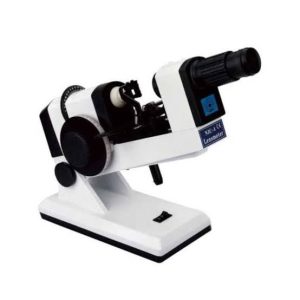
A lens meter, also known as a lensometer or focimeter, is an optical instrument used to measure the power and prescription of eyeglass lenses. It helps determine the correct lens power, axis, and other parameters for accurate vision correction.

Key Features of a Lens Meter

  • Lens Power Measurement: Measures the spherical, cylindrical, and axis powers of a lens.
  • Prescription Verification: Verifies the accuracy of a lens prescription.
  • Lens Identification: Identifies the type of lens, including single vision, bifocal, or progressive.
  • Quality Control: Checks for lens defects, such as scratches or distortions.

Types of Lens Meters

  • Manual Lens Meters: Require manual adjustment and reading of measurements.
  • Automatic Lens Meters: Use computerized technology for faster and more accurate measurements.
  • Digital Lens Meters: Display measurements digitally, often with additional features like data storage and analysis.

Applications of Lens Meters

  • Optometry and Ophthalmology: Used by eye care professionals to measure and verify lens prescriptions.
  • Optical Laboratories: Used to quality control and verify lenses before shipping to customers.
  • Research and Development: Used to test and develop new lens materials and designs.

Benefits of Lens Meters

  • Accurate Measurements: Ensures accurate lens prescriptions and minimizes errors.
  • Efficient Workflow: Streamlines the lens measurement process, saving time and increasing productivity.
  • Improved Patient Care: Enhances patient care by providing accurate and reliable lens prescriptions.
LOW VISION DEVICES

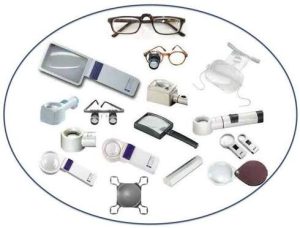
👓 Low vision devices are tools designed to help individuals with low vision maximize their remaining vision and improve daily functioning. These devices can be optical, electronic, or non-optical.

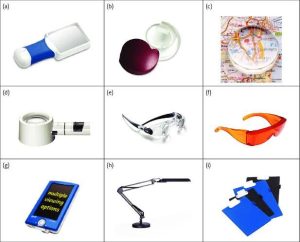
Types of Low Vision Devices

  • Magnifiers: Handheld or stand magnifiers that enlarge text or objects.
  • Telescopes: Devices for distance vision, useful for activities like watching TV or seeing board work in a classroom.
  • Electronic devices: Smartphones, tablets, or computers with accessibility features like text-to-speech, zoom, or high-contrast modes.
  • Large print materials: Books, labels, or other materials with larger font sizes.
  • Specialized lighting: Bright or task-specific lighting to improve visibility.

Assistive Technologies

  • Screen readers: Software that reads aloud text on screens.
  • Magnification apps: Apps that enlarge text or objects on smartphones or tablets.
  • Smart glasses: Wearable devices with magnification or object recognition capabilities.
CARUNCLE

The caruncle is a small anatomical feature of the eye. Key features:

  1. Location: Located at the medial (inner) corner of the eye, in the medial canthus.
  2. Description: A small, fleshy prominence containing sebaceous and sweat glands.
  3. Function:
    • May contribute to tear film stability or eye lubrication.
    • Can be a site for potential pathology like inflammation or lesions.

The caruncle is a minor but notable part of the eye’s anatomy.