Eagleview Eye Clinic

Tag eye test

ICG ANGIOGRAPHY

ICG angiography = Indocyanine Green Angiography. It’s an imaging test that maps blood flow in the choroid, the blood-vessel layer under your retina.

What it is

  • Dye test: A green dye called indocyanine green is injected into your arm vein
  • Infrared camera: Special camera uses near-infrared light at 790-805 nm to see the dye through the retinal pigment
  • Shows choroid: Unlike fluorescein angiography which shows retinal vessels, ICG goes deeper and highlights choroidal circulation

Why doctors order it

  • See through blood/pigment: ICG light penetrates melanin, fluid, and thin blood. Useful when fluorescein images are blocked
  • Diagnose specific conditions:
    • Choroidal neovascularization (CNV): Especially “occult” CNV hidden under the retina in AMD
    • Polypoidal choroidal vasculopathy (PCV): Branching vessels with polyp-like aneurysms, common in African/Asian patients
    • Central serous chorioretinopathy (CSCR): Shows choroidal hyperpermeability areas
    • Lacquer cracks: Checks if CNV is growing through the cracks
    • Inflammatory diseases: Vogt-Koyanagi-Harada, choroiditis, to see active lesions
    • Tumors: Choroidal melanoma vs nevus

How the test works

  • Prep: Pupils dilated. You’ll sign consent and get an IV line
  • Injection: 25 mg ICG dye injected into arm. It binds to plasma proteins and stays inside blood vessels
  • Imaging phases:
    • Early 0-1 min: Choroidal arteries and choriocapillaris fill
    • Mid 5-15 min: Venous phase and leakage patterns show
    • Late 20-30 min: Staining or “washout” patterns. Polyps stay bright late
  • Time: Takes 20-30 minutes total

ICG vs Fluorescein angiography
Feature ICG Fluorescein
Light used Near-infrared 790-805 nm Blue light 490 nm
What it shows Choroidal vessels Retinal vessels
Dye leakage Minimal. Stays in vessels Leaks easily from damaged vessels
See through blood Yes No
Best for PCV, CSCR, occult CNV, choroidal tumors Diabetic retinopathy, vein occlusion, macular edema
Safety & side effects

  • Very safe: Severe reaction rate is about 0.05%, much lower than fluorescein
  • Common effects: Temporary green discoloration of skin, green urine for 1 day
  • Mild reactions: Nausea in 1-2%, sneezing, itching
  • Contraindications: Iodine allergy because ICG contains iodine. Also avoid in liver disease and pregnancy unless essential
  • No kidney issues: Unlike CT contrast, ICG isn’t nephrotoxic

What to expect after

  • Vision: Not blurred by the dye itself, but dilation makes you light sensitive for 4-6 hours
  • Drive: Bring someone. You can’t drive until dilation wears off
  • Results: Retina specialist reads images same day and decides on treatment like anti-VEGF or photodynamic therapy

Bottom line: If fluorescein angiography shows the retinal circulation, ICG shows the “basement” blood supply under it. It’s the go-to test when doctors suspect PCV, CSCR, or hidden CNV, especially in highly pigmented eyes.
ICG ANGIOGRAPHY

ICG angiography = Indocyanine Green Angiography. It’s an imaging test that maps blood flow in the choroid, the blood-vessel layer under your retina.

What it is

  • Dye test: A green dye called indocyanine green is injected into your arm vein
  • Infrared camera: Special camera uses near-infrared light at 790-805 nm to see the dye through the retinal pigment
  • Shows choroid: Unlike fluorescein angiography which shows retinal vessels, ICG goes deeper and highlights choroidal circulation

Why doctors order it

  • See through blood/pigment: ICG light penetrates melanin, fluid, and thin blood. Useful when fluorescein images are blocked
  • Diagnose specific conditions:
    • Choroidal neovascularization (CNV): Especially “occult” CNV hidden under the retina in AMD
    • Polypoidal choroidal vasculopathy (PCV): Branching vessels with polyp-like aneurysms, common in African/Asian patients
    • Central serous chorioretinopathy (CSCR): Shows choroidal hyperpermeability areas
    • Lacquer cracks: Checks if CNV is growing through the cracks
    • Inflammatory diseases: Vogt-Koyanagi-Harada, choroiditis, to see active lesions
    • Tumors: Choroidal melanoma vs nevus

How the test works

  • Prep: Pupils dilated. You’ll sign consent and get an IV line
  • Injection: 25 mg ICG dye injected into arm. It binds to plasma proteins and stays inside blood vessels
  • Imaging phases:
    • Early 0-1 min: Choroidal arteries and choriocapillaris fill
    • Mid 5-15 min: Venous phase and leakage patterns show
    • Late 20-30 min: Staining or “washout” patterns. Polyps stay bright late
  • Time: Takes 20-30 minutes total

ICG vs Fluorescein angiography
Feature ICG Fluorescein
Light used Near-infrared 790-805 nm Blue light 490 nm
What it shows Choroidal vessels Retinal vessels
Dye leakage Minimal. Stays in vessels Leaks easily from damaged vessels
See through blood Yes No
Best for PCV, CSCR, occult CNV, choroidal tumors Diabetic retinopathy, vein occlusion, macular edema
Safety & side effects

  • Very safe: Severe reaction rate is about 0.05%, much lower than fluorescein
  • Common effects: Temporary green discoloration of skin, green urine for 1 day
  • Mild reactions: Nausea in 1-2%, sneezing, itching
  • Contraindications: Iodine allergy because ICG contains iodine. Also avoid in liver disease and pregnancy unless essential
  • No kidney issues: Unlike CT contrast, ICG isn’t nephrotoxic

What to expect after

  • Vision: Not blurred by the dye itself, but dilation makes you light sensitive for 4-6 hours
  • Drive: Bring someone. You can’t drive until dilation wears off
  • Results: Retina specialist reads images same day and decides on treatment like anti-VEGF or photodynamic therapy

Bottom line: If fluorescein angiography shows the retinal circulation, ICG shows the “basement” blood supply under it. It’s the go-to test when doctors suspect PCV, CSCR, or hidden CNV, especially in highly pigmented eyes.

a WAVE and b WAVE

A-waves and B-waves are key components of the full-field ERG, reflecting retinal function:

  • A-wave: Initial negative deflection, generated by photoreceptors (rods and cones) responding to light. Its amplitude and timing indicate photoreceptor health.
  • B-wave: Positive deflection following A-wave, produced by inner retinal cells (bipolar and Müller cells). It shows how well signals from photoreceptors are processed.

Reduced A-waves suggest photoreceptor damage (e.g., retinitis pigmentosa), while reduced B-waves point to inner retinal issues (e.g., retinal vascular diseases).

P50 and N95

P50 and N95 are key waves in pattern ERG (PERG), reflecting retinal ganglion cell (RGC) function:

  • P50: Early positive wave, mainly from RGCs and inner retinal layers. Reduced amplitude or delayed timing suggests ganglion cell dysfunction, common in early glaucoma or optic neuropathies.
  • N95: Later negative wave, more specific to optic nerve health. A drop in N95 amplitude often signals optic nerve damage or axonal loss.

Both waves together help gauge severity and progression of optic nerve diseases. For example, in glaucoma, P50 might reduce first, then N95 drops as damage worsens.

ELECTRORETINOGRAPHY

Electroretinography (ERG) is a test that measures the electrical response of the retina’s light-sensitive cells (rods and cones) to light stimuli. It helps diagnose retinal diseases like retinitis pigmentosa, macular degeneration, and Leber congenital amaurosis.

  • How it works: Electrodes placed on the cornea or skin around the eye record electrical activity while the eye is exposed to flashes of light.
  • What it shows: Waves (a-waves, b-waves) reflecting function of photoreceptors and inner retinal layers.
  • Types: Full-field ERG (tests whole retina), multifocal ERG (tests small areas), and pattern ERG (tests ganglion cells).
  • Use: Detects retinal dysfunction even before vision loss is noticeable.

CONDITIONS THAT CAN OCCUR FROM CONTACT LENS USE

😊 Contact lens misuse can lead to various eye issues, including:

  • Infections: Bacterial (e.g., bacterial keratitis), fungal, or viral (e.g., adenovirus).
  • Irritation and allergies: Giant papillary conjunctivitis (GPC), allergic reactions to lens solutions.
  • Corneal issues: Abrasions, ulcers, neovascularization, or dellen.
  • Hypoxia-related problems: Corneal edema, neovascularization.
  • Other: Dry eye, discomfort, or lens-related complications.

AIR PUFF TONOMETER

👓 The air puff tonometer is a non-contact device that measures intraocular pressure (IOP) by blowing a quick puff of air onto the cornea.

  • How it works: The device measures the corneal deformation caused by the air puff.
  • Advantages: No direct contact with the eye, reducing infection risk.
  • Common use: Often used for glaucoma screening and routine eye exams.
  • Considerations: Can be less accurate than contact tonometers (e.g., Goldmann).

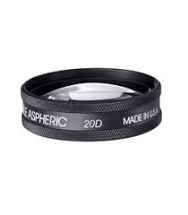
20D LENS

👓 Here’s more on a 20D lens:

  • Magnification: A +20D lens provides approximately 20x magnification.
  • Field of view: Offers a relatively wide field, useful for examining the retina.
  • Use: Commonly used in ophthalmology for:
    • Indirect ophthalmoscopy (with a slit lamp or head-mounted scope).
    • Examining the posterior segment (retina, macula, etc.).
  • Type: Typically a handheld, convex lens made of glass or acrylic.
  • Working distance: Around 5 cm (2 inches) from the patient’s eye.
MONOFOCAL IOL

A monofocal IOL 👀 is a type of intraocular lens that focuses at one distance (near, intermediate, or far).

Key things

  • Single focus point: Usually set for distance vision (you’d use glasses for near tasks like reading).
  • Less dependence on glasses if monovision approach is used (e.g., one eye for distance, one for near).
  • Common and reliable: Predictable outcomes, often covered by insurance.

Pros

  • Sharp vision at chosen distance.
  • Lower risk of visual side effects (e.g., halos, glare) vs multifocal IOLs.

Cons

  • Glasses needed for other distances (unless monovision).
  • Less flexibility compared to multifocal/accommodating IOLs.

MIRROR TEST

The mirror test 🪞 is a sneaky way to check if someone’s faking vision loss in one eye (malingering).

How it works

  1. Patient claims blindness in one eye.
  2. Place a mirror in front of them, angled to show their “blind” eye.
  3. Ask them to look straight ahead.
  4. Check if they react to their own reflection (e.g., blink, move, etc.).

What it shows

  • If they react to their reflection, it suggests the “blind” eye can see.
  • If they don’t react, could be malingering… or really blind 😅.

Tips

  • Casual setup: Make it seem like a normal exam step.
  • Distract them: Talk about something else while doing the test.
  • Combine with other tests for stronger evidence.