Eagleview Eye Clinic

Tag inflammation

TRACHOMA

Trachoma

Trachoma is a:

  • Bacterial infection (Chlamydia trachomatis) affecting the eyes
  • Leading cause of preventable blindness worldwide

Symptoms

  1. Eye irritation: Redness, itching, discharge
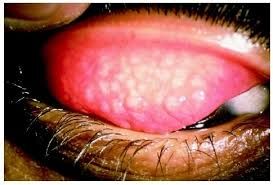
  2. Follicles: On the underside of the upper eyelid
  3. Scarring: Can lead to vision loss and blindness

Transmission

  1. Direct contact: With infected eye discharge
  2. Indirect contact: Through contaminated objects or flies

Prevention

  1. Hygiene: Proper handwashing and face washing
  2. Sanitation: Improved access to clean water and sanitation
  3. Antibiotics: Mass treatment in endemic areas

Treatment

  1. Antibiotics: Azithromycin or tetracycline
  2. Surgery: To correct eyelid deformities or trichiasis (eyelashes rubbing against the cornea)

If you suspect trachoma, consult an eye care professional for proper diagnosis and treatment. Early intervention can prevent long-term vision damage.

IRRITANT CONJUNCTIVITIS

Irritant Conjunctivitis

Irritant conjunctivitis is an inflammation of the conjunctiva (the thin membrane covering the white part of the eye and inside of the eyelids) caused by:

  • Exposure to irritants like chemicals, smoke, or dust
  • Allergens or foreign substances

Symptoms

  1. Redness: Pink or red eyes
  2. Itching or burning: Discomfort in the eyes
  3. Discharge: Watery or sticky discharge
  4. Sensitivity to light: Photophobia

Treatment

  1. Avoid irritants: Remove or minimize exposure
  2. Flush eyes: With water or saline solution
  3. Artificial tears: To lubricate and soothe
  4. Cool compresses: To reduce discomfort

If symptoms persist or worsen, consult an eye care professional for proper diagnosis and treatment.

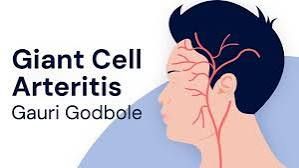
GIANT CELL ARTERITIS

Giant cell arteritis is an inflammation of blood vessels, typically affecting the head, especially the temples. Symptoms include:
– Headaches
– Scalp tenderness
– Jaw pain
– Vision problems
– Fatigue

If left untreated, it can lead to serious complications like vision loss. Treatment usually involves corticosteroids. Consult a healthcare professional for proper diagnosis and care.

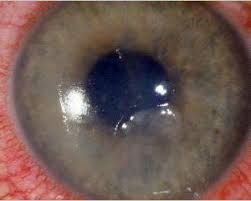
CORNEA EROSION

Corneal erosion is a condition where the outer layer of the cornea (epithelium) loosens or falls off, often causing pain, blurred vision, and sensitivity to light.

It can be caused by trauma, dry eye, or certain corneal conditions.

Treatment typically involves lubricating eye drops and, in some cases, bandage contact lenses or surgery.

ENDOPTHAMITIS

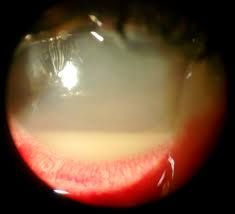
Endophthalmitis is a severe inflammation of the interior of the eye, usually caused by infection.

It can occur after eye surgery, eye trauma, or from an infection elsewhere in the body that spreads to the eye.

Symptoms may include:

– Severe eye pain
– Redness and swelling
– Vision loss
– Discharge or pus
– Sensitivity to light

If left untreated, endophthalmitis can lead to permanent vision loss or even loss of the eye. Prompt medical attention is essential if symptoms occur.

It can be treated by

– 1. travitreal antibiotics: Injecting antibiotics directly into the eye to target the infection

-2. Systemic antibiotics: Administering antibiotics orally or intravenously to support treatment

– 3. Vitrectomy:  Surgical removal of infected vitreous gel to reduce inflammation and prevent further damage


–  4. Steroids: May be used to reduce inflammation, but with caution and under close monitoring

Early diagnosis and aggressive treatment are crucial to preserving vision and preventing complications.

CHORIORETINITIS SCLOPETARIA

One of the eye problems that can occur as a result of trauma from high velocity objects is chorioretinitis sclopetaria.

Chorioretinitis sclopetaria is a condition whereby the choroid ( third layer of the uvea, which supplies blood and nutrient to retina and other area) and the retina (the vision house of the eye) gets ruptured due to trauma from high velocity objects.

This damage is as a result of transmitted sound waves from impact without the object penetrating the eyes.

Signs and symptoms includes visual reduction, pain, et.c

Treatment may require surgical intervention.

IRIDOCYCLITIS

Iridocyclitis is an inflammation of the iris and ciliary body.

Causes are usually idiopathic in nature. But most times  it could be as a result of autoimmune conditions, infection or even trauma.

Signs and symptoms includes pains, red eyes, blurry vision, light sensitivity etc..

Delay in treatment can result in angle closure glaucoma, irregular pupil and vision loss.

Treatment is usually a combination of anticholinergic drugs and steroids.

SYNECHIA

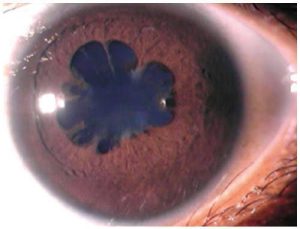
Synechia is a condition whereby the iris adheres to either the cornea ( anterior synechia) or the lens ( posterior synechia)..

This synechia is capable of causing glaucoma. Hence the need to treat as soon as possible.

Synechia is caused by both anterior and posterior uveitis, iridocyclitis, iritis or even trauma.

Prognosis is good if treated as soon as possible.

Synechia is treated with a combination of mydriatics, steroids and prostaglandin analogues.

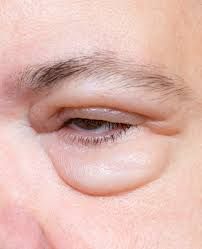
SWOLLEN EYE

Swollen eyes is one of the common  sign of several eye conditions and they include:

Infections.

Inflammation.

Allergies.

Fluid retention

Autoimmune conditions

Trauma to the face.

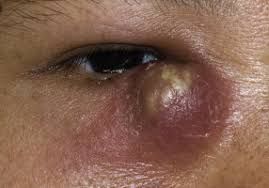
DACRYOCYSTITIS

This is an infection of the lacrimal sac, secondary to blockage of the nasolacrimal duct.

Tear drainage system helps to drain tears out of the eyes, but when it gets blocked, there is stagnancy of the tears in the lacrimal sac.

Over time this tear pool becomes infected and in turn causes infection of the lacrimal sac.

Signs and symptoms includes pain, fever, swollen eyes, discharge, et.c

Treating this condition requires an expert combination of steroids and antibiotics medication. Once the infection and pains have subsided, puncta piercing is required to ensure that there’s no blockage in the drainage system.