Eagleview Eye Clinic
LAYERS OF THE IRIS

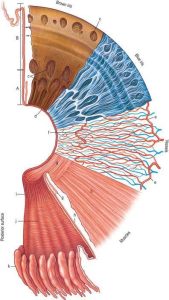
The iris consists of several layers:

  1. Anterior border layer: The front layer of the iris, consisting of fibroblasts and melanocytes.
  2. Stroma: The middle layer, composed of connective tissue, blood vessels, and melanocytes that give the iris its color.
  3. Anterior epithelium (Anterior pigmented epithelium): A layer of pigmented cells.
  4. Posterior epithelium (Posterior pigmented epithelium): A layer of densely pigmented cells that block light from entering the eye except through the pupil.

These layers work together to control the amount of light entering the eye by adjusting the size of the pupil and give the iris its color and structure.

IRIS

The iris is the colored, circular structure in the eye, surrounding the pupil. It’s a complex and highly specialized tissue that plays a crucial role in regulating light entry and supporting overall eye health.

Key characteristics:

  1. Color: The iris gets its color from melanin pigments, resulting in a wide range of colors and shades.
  2. Structure: The iris consists of two main layers:
    • Stroma (front layer): Contains collagen fibers, blood vessels, and melanocytes.
    • Epithelium (back layer): Contains pigment cells and muscles that control pupil size.
  3. Muscles: The iris contains two types of muscles:
    • Sphincter pupillae: Constricts the pupil in bright light or during near vision.
    • Dilator pupillae: Dilates the pupil in low light or during emotional arousal.
  4. Function: The iris:
    • Regulates light entry into the eye by adjusting pupil size.
    • Helps maintain optimal vision and protects the retina from excessive light exposure.
  5. Uniqueness: Each individual’s iris has unique patterns, colors, and textures, making it useful for identification purposes.

Importance: The iris plays a vital role in controlling light exposure to the retina, supporting optimal vision, and contributing to overall eye health.

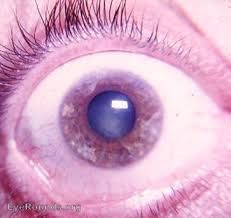
HETEROCHROMIA IRIDIUM

This is a term used to describe a difference in colour of the iris, it could be sectorial, or different colors in both eyes altogether.

The cause is mainly attributed to genetics. Though an inflammation in the iris can cause heterochromia iridium.

PIGMENT DISPERSION SYNDROME

This is a condition whereby the pigments from the iris sloughs off and blocks the trabecular meshworks leading a buildup of aqueous humor and consequently increased IOP and a particular type of glaucoma known as pigmentary Glaucoma.

The cause of this condition is unknown…

This condition most of the time is usually asymptomatic until a large proportion of the optic Nerve have been damaged during to Glaucoma. Another sign of the pigment dispersion syndrome is the krekunberg spindle which is a vertical pigmentation on the endothelium of the cornea caused by iris fragments.

Treatment usually involves managing the glaucoma that results from this condition.