Eagleview Eye Clinic

Tag miosis

MIOTIC DRUGS

👨‍⚕️ Miotic drugs constrict the pupil (miosis) and reduce intraocular pressure (IOP). Used for glaucoma, post-surgery, or counteracting mydriasis.

Common examples:

  1. Pilocarpine (cholinergic)
    • Effect: 1–2 hours, lasts 4–8h.
    • Use: Open-angle glaucoma, miosis.
    • Side effects: Headache, dim vision, brow ache.
  2. Carbachol (cholinergic)
    • Effect: Strong, longer-lasting.
    • Use: Glaucoma, post-op care.
    • Risk: Retinal detachment risk.
  3. Acetylcholine (direct-acting)
    • Use: Intraocular surgery (short-acting).
  4. Echothiophate (anticholinesterase)
    • Use: Chronic glaucoma.
    • Risk: Cysts, systemic toxicity.

Precautions:

  • Night vision issues: Avoid driving in low light.
  • Retinal risk: Check for detachment symptoms.
  • Asthma/COPD: Caution (bronchospasm).
  • Tapering: Avoid sudden stop.

MIOSIS

Miosis is the constriction of the pupil. It’s the opposite of mydriasis 😊.

Common causes:

  1. Bright light
  2. Medications: Opioids (e.g., morphine), eye drops (e.g., pilocarpine)
  3. Conditions: Horner’s syndrome, iritis, or neurological disorders
  4. Aging
  5. Substance use: Certain drugs (e.g., heroin)

Effects:

  1. Reduced light entry → dim vision in low light
  2. Increased depth of field (improved near vision)
  3. Headache or eye strain
HORNER’S SYNDROME

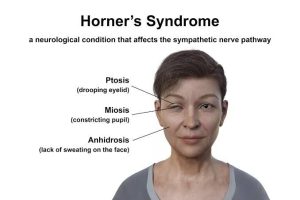
Horner’s syndrome is a neurological disorder that occurs when the oculosympathetic nerve is damaged.

It can be caused by a tumour, stroke or damage to the middle ear..

When the sympathetic nerves that connects the brain stem to the eye is damaged a triad of ptosis ( Droopy lids), miosis (Constricted pupils) and anhidrosis ( lack of sweat) occurs.

Although this condition is similar to Bell’s palsy, it is different from Bell’s palsy.

Treatment basically involves treating the underlying cause.