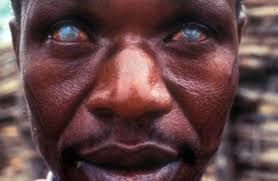
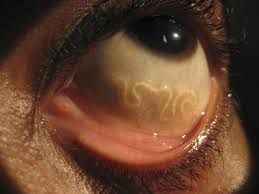
Onchocerciasis or river blindness is caused by the parasitic worm known as onchocercha vovulus.
This condition occurs when an individual is bitten by black flies hence injecting the larvae of these worms into the host.
The larvae takes about 12 – 18 months before attaining maturity stage, they then move into the skin and blood stream wrecking havoc in their wake.
This condition is transmissible, as larvae of these worms are found underneath the skin of infected people, hence if an infected person is bitten by black fly, the fly picks up the larvae from infected persons and transmit them to non infected persons when bitten.
People who dwell in riverine areas are more prone to this condition, hence the reason it is called river blindness.
Signs and symptoms includes eye pain, cloudy cornea, itching skin, swollen skin, et.c.
Treatment involves the use of ivermectin at a 6 month interval. Although ivermectin does not kill adult filarial worms.