Eagleview Eye Clinic

Tag visual Field analyser

THE BJERRUM TANGENT SCREEN

The Bjerrum tangent screen is a device used in ophthalmology to assess the visual field, particularly the central and paracentral areas. It’s a flat surface with a tangent curve marked on it, used to map out the field of vision.

How it’s used:

  1. Patient fixation: The patient fixates on a central point.
  2. Stimulus presentation: A stimulus (e.g., a small object or light) is moved along the tangent screen.
  3. Visual field mapping: The patient indicates when they see the stimulus, allowing the examiner to map out the visual field.

Purpose:

The Bjerrum tangent screen is used to:

  1. Detect visual field defects: Identify defects in the central and paracentral visual field.
  2. Monitor glaucoma: Track changes in the visual field associated with glaucoma.
  3. Assess optic nerve function: Evaluate the function of the optic nerve.

The Bjerrum tangent screen is a useful tool for assessing and monitoring visual field defects, particularly in glaucoma patients.

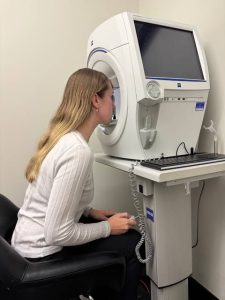
VISUAL FIELD ANALYSER

A Visual Field Analyzer is a medical device used to assess the sensitivity and coverage of a patient’s visual field. It maps out the field of vision, detecting any defects or abnormalities, particularly in peripheral vision.

Key Features:

  • Visual Field Testing: Measures the sensitivity of the retina in different locations.
  • Diagnostic Capabilities: Detects conditions like glaucoma, age-related macular degeneration, and other neurological disorders.
  • Variety of Tests: Offers different testing strategies, such as threshold and screening tests.

Types of Visual Field Analyzers:

  • Humphrey Field Analyzer 3 (HFA 3): Considered the gold standard, featuring Guided Progression Analysis and SITA Faster testing.
  • ObjectiveFIELD Analyzer: Uses multifocal pupillographic objective perimetry (mfPOP) for completely objective visual field assessment.
  • PalmScan VF2000: A wearable, portable analyzer with gaze tracking and customizable reports.
  • Easyfield VR: Utilizes virtual reality technology for visual field screenings and threshold exams.
  • Kowa AP-7000: Offers advanced diagnostic capabilities and high accuracy ¹ ² ³ ⁴.

Benefits:

  • Early Detection: Identifies visual field defects and conditions at an early stage.
  • Accurate Results: Provides reliable and reproducible results.
  • Patient Comfort: Some devices offer features like automated verbal instructions and gaze tracking for improved patient experience.

When selecting a Visual Field Analyzer, consider factors such as ⁵:

  • Measurement Accuracy: Look for devices with high accuracy and reliability.
  • Testing Strategies: Choose a device that offers a range of testing options.
  • Patient Comfort: Consider devices with features that improve patient experience.
  • Data Management: Ensure the device allows for easy data storage and analysis.
VISUAL FIELD ANALYSER

A Visual Field Analyzer is a medical device used to assess the sensitivity and coverage of a patient’s visual field. It maps out the field of vision, detecting any defects or abnormalities, particularly in peripheral vision.

Key Features:

  • Visual Field Testing: Measures the sensitivity of the retina in different locations.
  • Diagnostic Capabilities: Detects conditions like glaucoma, age-related macular degeneration, and other neurological disorders.
  • Variety of Tests: Offers different testing strategies, such as threshold and screening tests.

Types of Visual Field Analyzers:

  • Humphrey Field Analyzer 3 (HFA 3): Considered the gold standard, featuring Guided Progression Analysis and SITA Faster testing.
  • ObjectiveFIELD Analyzer: Uses multifocal pupillographic objective perimetry (mfPOP) for completely objective visual field assessment.
  • PalmScan VF2000: A wearable, portable analyzer with gaze tracking and customizable reports.
  • Easyfield VR: Utilizes virtual reality technology for visual field screenings and threshold exams.
  • Kowa AP-7000: Offers advanced diagnostic capabilities and high accuracy ¹ ² ³ ⁴.

Benefits:

  • Early Detection: Identifies visual field defects and conditions at an early stage.
  • Accurate Results: Provides reliable and reproducible results.
  • Patient Comfort: Some devices offer features like automated verbal instructions and gaze tracking for improved patient experience.

When selecting a Visual Field Analyzer, consider factors such as ⁵:

  • Measurement Accuracy: Look for devices with high accuracy and reliability.
  • Testing Strategies: Choose a device that offers a range of testing options.
  • Patient Comfort: Consider devices with features that improve patient experience.
  • Data Management: Ensure the device allows for easy data storage and analysis.
VISUAL FIELD ANALYSER

A Visual Field Analyzer is a medical device used to assess the sensitivity and coverage of a patient’s visual field. It maps out the field of vision, detecting any defects or abnormalities, particularly in peripheral vision.

Key Features:

  • Visual Field Testing: Measures the sensitivity of the retina in different locations.
  • Diagnostic Capabilities: Detects conditions like glaucoma, age-related macular degeneration, and other neurological disorders.
  • Variety of Tests: Offers different testing strategies, such as threshold and screening tests.

Types of Visual Field Analyzers:

  • Humphrey Field Analyzer 3 (HFA 3): Considered the gold standard, featuring Guided Progression Analysis and SITA Faster testing.
  • ObjectiveFIELD Analyzer: Uses multifocal pupillographic objective perimetry (mfPOP) for completely objective visual field assessment.
  • PalmScan VF2000: A wearable, portable analyzer with gaze tracking and customizable reports.
  • Easyfield VR: Utilizes virtual reality technology for visual field screenings and threshold exams.
  • Kowa AP-7000: Offers advanced diagnostic capabilities and high accuracy ¹ ² ³ ⁴.

Benefits:

  • Early Detection: Identifies visual field defects and conditions at an early stage.
  • Accurate Results: Provides reliable and reproducible results.
  • Patient Comfort: Some devices offer features like automated verbal instructions and gaze tracking for improved patient experience.

When selecting a Visual Field Analyzer, consider factors such as ⁵:

  • Measurement Accuracy: Look for devices with high accuracy and reliability.
  • Testing Strategies: Choose a device that offers a range of testing options.
  • Patient Comfort: Consider devices with features that improve patient experience.
  • Data Management: Ensure the device allows for easy data storage and analysis.
VISUAL FIELD ANALYSER

A Visual Field Analyzer is a medical device used to assess the sensitivity and coverage of a patient’s visual field. It maps out the field of vision, detecting any defects or abnormalities, particularly in peripheral vision.

Key Features:

  • Visual Field Testing: Measures the sensitivity of the retina in different locations.
  • Diagnostic Capabilities: Detects conditions like glaucoma, age-related macular degeneration, and other neurological disorders.
  • Variety of Tests: Offers different testing strategies, such as threshold and screening tests.

Types of Visual Field Analyzers:

  • Humphrey Field Analyzer 3 (HFA 3): Considered the gold standard, featuring Guided Progression Analysis and SITA Faster testing.
  • ObjectiveFIELD Analyzer: Uses multifocal pupillographic objective perimetry (mfPOP) for completely objective visual field assessment.
  • PalmScan VF2000: A wearable, portable analyzer with gaze tracking and customizable reports.
  • Easyfield VR: Utilizes virtual reality technology for visual field screenings and threshold exams.
  • Kowa AP-7000: Offers advanced diagnostic capabilities and high accuracy ¹ ² ³ ⁴.

Benefits:

  • Early Detection: Identifies visual field defects and conditions at an early stage.
  • Accurate Results: Provides reliable and reproducible results.
  • Patient Comfort: Some devices offer features like automated verbal instructions and gaze tracking for improved patient experience.

When selecting a Visual Field Analyzer, consider factors such as ⁵:

  • Measurement Accuracy: Look for devices with high accuracy and reliability.
  • Testing Strategies: Choose a device that offers a range of testing options.
  • Patient Comfort: Consider devices with features that improve patient experience.
  • Data Management: Ensure the device allows for easy data storage and analysis.
VISUAL FIELD ANALYSER

A Visual Field Analyzer is a medical device used to assess the sensitivity and coverage of a patient’s visual field. It maps out the field of vision, detecting any defects or abnormalities, particularly in peripheral vision.

Key Features:

  • Visual Field Testing: Measures the sensitivity of the retina in different locations.
  • Diagnostic Capabilities: Detects conditions like glaucoma, age-related macular degeneration, and other neurological disorders.
  • Variety of Tests: Offers different testing strategies, such as threshold and screening tests.

Types of Visual Field Analyzers:

  • Humphrey Field Analyzer 3 (HFA 3): Considered the gold standard, featuring Guided Progression Analysis and SITA Faster testing.
  • ObjectiveFIELD Analyzer: Uses multifocal pupillographic objective perimetry (mfPOP) for completely objective visual field assessment.
  • PalmScan VF2000: A wearable, portable analyzer with gaze tracking and customizable reports.
  • Easyfield VR: Utilizes virtual reality technology for visual field screenings and threshold exams.
  • Kowa AP-7000: Offers advanced diagnostic capabilities and high accuracy ¹ ² ³ ⁴.

Benefits:

  • Early Detection: Identifies visual field defects and conditions at an early stage.
  • Accurate Results: Provides reliable and reproducible results.
  • Patient Comfort: Some devices offer features like automated verbal instructions and gaze tracking for improved patient experience.

When selecting a Visual Field Analyzer, consider factors such as ⁵:

  • Measurement Accuracy: Look for devices with high accuracy and reliability.
  • Testing Strategies: Choose a device that offers a range of testing options.
  • Patient Comfort: Consider devices with features that improve patient experience.
  • Data Management: Ensure the device allows for easy data storage and analysis.
hotdepo slot maxwin asia200 vip388 super89 kelas777 asiaslot777 asia100 win188 zeus123 megawinslot hotdepo gitar100 pangkalantoto koko500 api naga mega888 asia300 uno4d wow33 merahtoto super33 MEGASLOT SLOT GOPAY wow33 megatoto koko500 hotdepo koko500 vip388 asia500 merahtoto vip388 vip33 koko500 super89 hotdepo koko500 kpk100 asia300 mahjong333 merahtoto hotdepo hotdepo hotdepo hotdepo hotdepo hotdepo hotdepo hotdepo hotdepo vip33 merahtoto vip388 wdbos asia100 dana100 koko500 merahtoto mahjong333 kl108 dana100 super33 asia100 koko500 vip33 merahtoto kl108 abc33 kl108 slot5000 koko500 koko11 hotdepo pg11 kl108 kl108 hotdepo koko500