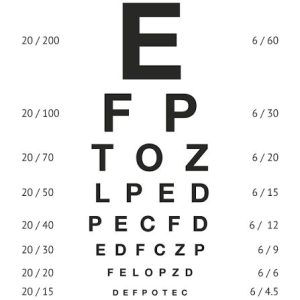
Visual acuity refers to the sharpness and clarity of vision, measured by the ability to identify objects or patterns at a standard distance. It’s a crucial aspect of eye health and can be affected by various factors, including refractive errors, eye diseases, and age-related conditions.
Measurement of Visual Acuity
Visual acuity is typically measured using:
- Snellen Chart: A standardized chart with letters or symbols of varying sizes, used to assess distance vision.
- LogMAR Chart: A chart that measures visual acuity based on the logarithm of the minimum angle of resolution.
Factors Affecting Visual Acuity
- Refractive Errors: Myopia (nearsightedness), hyperopia (farsightedness), and astigmatism can all impact visual acuity.
- Eye Diseases: Conditions like cataracts, glaucoma, and age-related macular degeneration can affect visual acuity.
- Age: Visual acuity can decline with age due to natural aging processes or age-related eye diseases.
- Injuries or Trauma: Eye injuries or trauma can impact visual acuity.
Importance of Visual Acuity
- Daily Activities: Visual acuity is essential for tasks like reading, driving, and recognizing faces.
- Quality of Life: Good visual acuity can significantly impact overall quality of life and independence.
- Early Detection: Regular eye exams can help detect visual acuity problems and underlying eye conditions, allowing for timely treatment and management.