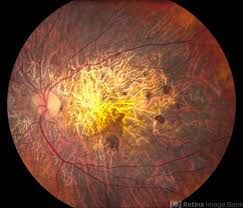
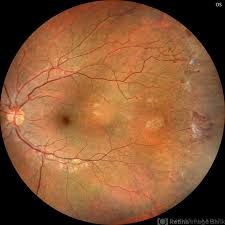
Eagleview Eye Clinic

Archives June 2025

CHOROIDAL HEMANGIOMA

Choroidal Hemangioma

Choroidal hemangioma is a benign vascular tumor of the choroid layer of the eye. It can cause:

  • Vision problems
  • Fluid accumulation
  • Retinal detachment

Types

  1. Circumscribed choroidal hemangioma: Well-defined, localized tumor
  2. Diffuse choroidal hemangioma: Widespread tumor growth, often associated with Sturge-Weber syndrome

Symptoms

  1. Vision loss: Blurred or distorted vision
  2. Blind spots: Areas of decreased vision
  3. Metamorphopsia: Distorted vision

Treatment

  1. Observation: Monitoring tumor growth
  2. Laser photocoagulation: To reduce fluid accumulation
  3. Photodynamic therapy: To treat tumor and reduce fluid
  4. Radiation therapy: In some cases

If you suspect a choroidal hemangioma, consult an eye care professional for proper diagnosis and treatment to preserve vision.
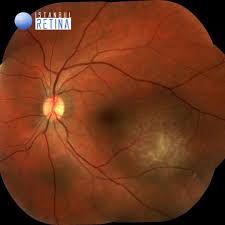
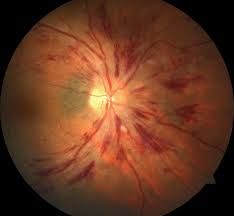
HYPERTENSIVE CHOROIDOPATHY

Hypertensive Choroidopathy

Hypertensive choroidopathy refers to damage to the choroid layer of the eye due to high blood pressure. This can cause:

  • Vision problems
  • Retinal damage
  • Choroidal ischemia (lack of blood flow)

Symptoms

  1. Vision loss: Blurred or distorted vision
  2. Blind spots: Areas of decreased vision
  3. Flashes: Flashes of light

Complications

  1. Retinal detachment: Separation of the retina from underlying tissue
  2. Choroidal neovascularization: Growth of new, fragile blood vessels

Management

  1. Blood pressure control: Managing hypertension through lifestyle changes and medication
  2. Regular eye exams: Monitoring eye health
  3. Treatment of complications: Such as anti-VEGF injections for CNV

If you have hypertension, regular eye exams can help detect and manage hypertensive choroidopathy. Consult with an eye care professional for personalized advice and treatment.

POLYPOIDAL CHOROIDAL VASCULOPATHY

Polypoidal Choroidal Vasculopathy (PCV)

Polypoidal choroidal vasculopathy is a subtype of age-related macular degeneration (AMD) characterized by:

  • Abnormal blood vessel growth
  • Polyp-like structures in the choroid
  • Fluid leakage and hemorrhage

Symptoms

  1. Vision loss: Sudden or gradual loss of central vision
  2. Distortion: Straight lines appear wavy
  3. Blind spots: Areas of decreased vision

Diagnosis

  1. Imaging tests: Indocyanine green angiography (ICG), OCT

Treatment

  1. Anti-vascular endothelial growth factor (anti-VEGF) injections: To reduce fluid leakage and vessel growth
  2. Photodynamic therapy: To close abnormal vessels
  3. Combination therapy: Anti-VEGF injections with photodynamic therapy

If you suspect PCV, consult an eye care professional for proper diagnosis and treatment to preserve vision.
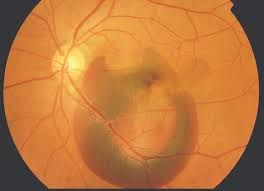
CHOROIDAL TUMOUR

Choroidal Tumor

A choroidal tumor is a growth in the choroid layer of the eye. Types include:

  • Melanoma (most common primary malignant tumor)
  • Hemangioma (benign vascular tumor)
  • Metastatic tumors (from other cancers)

Symptoms

  1. Vision loss: Blurred or distorted vision
  2. Flashes: Flashes of light
  3. Floaters: Spots or floaters in vision
  4. Blind spots: Areas of decreased vision

Diagnosis

  1. Fundus examination: Detailed eye exam
  2. Imaging tests: Ultrasound, OCT, or MRI

Treatment

  1. Observation: Monitoring tumor growth
  2. Radiation therapy: To treat malignant tumors
  3. Surgery: To remove tumors
  4. Laser therapy: To treat certain tumors

If you suspect a choroidal tumor, consult an eye care professional or oncologist for proper diagnosis and treatment. Early detection is crucial for preserving vision and overall health.

CHOROIDAL DYSTROPHY

Choroidal Dystrophy

Choroidal dystrophy refers to a group of inherited eye disorders characterized by progressive degeneration of the choroid, retina, and retinal pigment epithelium. This can lead to:

  • Vision loss
  • Night blindness
  • Blind spots

Types

  1. Choroideremia: A rare, X-linked disorder
  2. Gyrate atrophy: A rare, autosomal recessive disorder
  3. Central areolar choroidal dystrophy: A condition affecting the central retina

Symptoms

  1. Night blindness: Difficulty seeing in low light
  2. Vision loss: Central or peripheral vision loss
  3. Blind spots: Areas of decreased vision

Management

  1. Genetic counseling: Understanding inheritance patterns
  2. Low vision rehabilitation: Adapting to vision loss
  3. Regular eye exams: Monitoring disease progression
  4. Research and clinical trials: Exploring potential treatments

If you have choroidal dystrophy, consult with an eye care professional or genetic counselor for personalized guidance and support.

ANGIOID STREAKS

Angioid Streaks

Angioid streaks are irregular breaks in Bruch’s membrane, a layer of tissue in the retina. This condition can cause:

  • Vision loss
  • Distortion
  • Blind spots

Associated Conditions

  1. Pseudoxanthoma elasticum (PXE): A genetic disorder affecting elastic tissue
  2. Ehlers-Danlos syndrome: A genetic disorder affecting connective tissue
  3. Paget’s disease: A bone disorder

Symptoms

  1. Vision loss: Central or peripheral vision loss
  2. Distortion: Straight lines appear wavy
  3. Blind spots: Areas of decreased vision

Complications

  1. Choroidal neovascularization: Growth of new, fragile blood vessels
  2. Hemorrhages: Bleeding in the retina

Management

  1. Regular eye exams: To monitor disease progression
  2. Treatment of complications: Such as anti-VEGF injections for CNV

If you have angioid streaks, work closely with an eye care professional to manage the condition and preserve vision.

CHOROIDAL NEOVASCULARIZATION

Choroidal Neovascularization (CNV)

Choroidal neovascularization is a condition where new, fragile blood vessels grow from the choroid layer of the eye into the retina. This can cause:

  • Vision loss
  • Distortion
  • Blind spots

Causes

  1. Age-related macular degeneration (AMD): Most common cause
  2. Myopia: Nearsightedness
  3. Trauma: Eye injury
  4. Inflammatory disorders: Certain conditions like uveitis

Symptoms

  1. Distorted vision: Straight lines appear wavy
  2. Blind spots: Areas of decreased vision
  3. Vision loss: Central vision loss

Treatment

  1. Anti-vascular endothelial growth factor (anti-VEGF) injections: To reduce vessel growth
  2. Photodynamic therapy: To close new vessels
  3. Laser photocoagulation: To destroy new vessels

If you suspect CNV, consult an eye care professional for proper diagnosis and treatment to preserve vision.
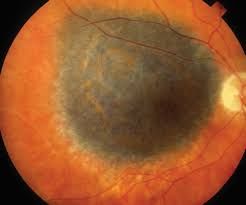
SICKLE CELL RETINOPATHY

Sickle Cell Retinopathy

Sickle cell retinopathy is a complication of sickle cell disease that affects the eyes. It occurs when sickled red blood cells damage the blood vessels in the retina, leading to:

  • Retinal ischemia (lack of blood flow)
  • Neovascularization (growth of new, fragile blood vessels)
  • Hemorrhages
  • Retinal detachment

Symptoms

  1. Vision loss: Sudden or gradual loss of vision
  2. Floaters: Spots or floaters in vision
  3. Flashes: Flashes of light
  4. Blurred vision: Decreased visual acuity

Treatment

  1. Laser photocoagulation: To treat neovascularization
  2. Intravitreal injections: To reduce inflammation and edema
  3. Vitrectomy: Surgery to remove blood or repair retinal detachment
  4. Regular eye exams: To monitor disease progression

Prevention

  1. Regular eye exams: To detect retinopathy early
  2. Managing sickle cell disease: Controlling the underlying condition

If you have sickle cell disease, it’s essential to have regular eye exams to detect and manage retinopathy. Consult with an eye care professional for personalized advice and treatment.

BIRDSHOT CHRORETINOPATHY

Birdshot Chorioretinopathy

Birdshot chorioretinopathy is a rare, chronic inflammatory eye condition characterized by:

  • Inflammation of the choroid and retina
  • Multiple, small, orange-yellow lesions in the retina
  • Potential for vision loss

Symptoms

  1. Floaters: Spots or floaters in vision
  2. Blurred vision: Decreased visual acuity
  3. Night blindness: Difficulty seeing in low light
  4. Color vision defects: Difficulty distinguishing colors

Treatment

  1. Immunosuppressive therapy: Medications to reduce inflammation
  2. Corticosteroids: To control inflammation
  3. Biologics: Targeted therapies to reduce inflammation
  4. Monitoring: Regular eye exams to track disease progression

Complications

  1. Vision loss: Potential for permanent vision loss
  2. Cataracts: Increased risk of cataract development
  3. Glaucoma: Increased risk of glaucoma

If you have birdshot chorioretinopathy, work closely with an eye care professional to manage the condition and preserve vision.

CHORIODEREMA

Choroideremia

Choroideremia is a rare, inherited eye disorder characterized by:

  • Progressive loss of the choroid, retina, and retinal pigment epithelium
  • Night blindness
  • Loss of peripheral vision
  • Potential for central vision loss

Causes

  1. Genetic mutation: Mutations in the CHM gene
  2. X-linked inheritance: Primarily affects males

Symptoms

  1. Night blindness: Difficulty seeing in low light
  2. Peripheral vision loss: Loss of side vision
  3. Visual field defects: Blind spots or areas of decreased vision

Management

  1. Genetic counseling: Understanding inheritance patterns
  2. Low vision rehabilitation: Adapting to vision loss
  3. Research and clinical trials: Exploring potential treatments
  4. Regular eye exams: Monitoring disease progression

If you or a family member has choroideremia, consult with an eye care professional or genetic counselor for personalized guidance and support.