Eagleview Eye Clinic

All posts by Admin

HYPEROPIA


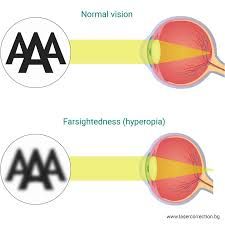
Hyperopia, also known as farsightedness, is a common vision condition where distant objects are seen clearly, but nearby objects appear blurry. This occurs when the eyeball is too short or the cornea is too flat, causing light to focus behind the retina instead of directly on it.

Symptoms


1. _Blurry near vision_: Difficulty seeing objects up close.


2. _Eye strain_: Discomfort or fatigue after reading or other near-work activities.


3. _Headaches_: Frequent headaches due to prolonged eye strain.

Correction


1. _Glasses_: Convex lenses to converge light rays.


2. _Contact lenses_: Convex lenses to correct vision.


3. _Refractive surgery_: Procedures like LASIK to reshape the cornea.

If you’re experiencing symptoms, consult an eye care professional for a comprehensive eye exam and personalized guidance.
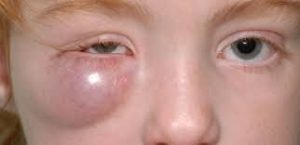
ORBITAL CELLULITIS

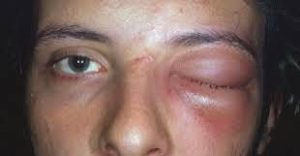
Orbital cellulitis is a serious infection of the tissues surrounding the eye, posterior to the orbital septum. It’s often caused by bacterial infections, typically Staphylococcus aureus or Streptococcus pneumoniae.

Symptoms

  1. Severe swelling: Redness, swelling, and warmth around the eye.
  2. Pain: Significant pain, especially with eye movement.
  3. Vision problems: Blurred vision, double vision, or loss of vision.
  4. Fever: High fever, often accompanied by chills.
  5. Proptosis: Bulging of the eye.

Causes

  1. Sinusitis: Spread of infection from sinuses.
  2. Trauma: Direct inoculation of bacteria through a wound.
  3. Hematogenous spread: Infection spread through the bloodstream.

Complications

  1. Vision loss: Permanent vision loss if left untreated.
  2. Intracranial complications: Infection can spread to the brain, leading to meningitis or abscesses.
  3. Cavernous sinus thrombosis: Blood clot in the cavernous sinus.

Treatment

  1. Antibiotics: Intravenous antibiotics to treat the bacterial infection.
  2. Hospitalization: Often requires hospitalization for close monitoring.
  3. Surgery: May be necessary to drain abscesses or relieve pressure.

If you suspect orbital cellulitis, seek immediate medical attention from a healthcare professional or an optometrist. Prompt treatment is crucial to prevent serious complications.

PRESEPTAL CELLULITIS


Preseptal cellulitis is an infection of the eyelid and surrounding skin, anterior to the orbital septum. It’s often caused by bacterial infections, typically Staphylococcus aureus or Streptococcus pneumoniae.

Symptoms


1. _Swelling_: Redness and swelling of the eyelid.


2. _Pain_: Tenderness to the touch.


3. _Warmth_: Affected area may feel warm.


4. _Fever_: May be present in some cases.


Causes


1. _Insect bites_: Bug bites can introduce bacteria.


2. _Skin trauma_: Cuts, scratches, or other injuries.


3. _Sinusitis_: Spread of infection from sinuses.

Treatment


1. _Antibiotics_: Oral or intravenous antibiotics to treat the bacterial infection.


2. _Warm compresses_: May help reduce swelling.

Complications


1. _Orbital cellulitis_: Infection can spread posteriorly, leading to more severe orbital cellulitis.


2. _Vision problems_: Untreated preseptal cellulitis can potentially lead to complications affecting vision.

If you’re experiencing symptoms or concerns, consult a healthcare professional for proper evaluation and treatment.

MICROCORNEA


Microcornea is a rare congenital condition where the cornea is abnormally small, typically less than 10 mm in diameter. This can occur in one or both eyes.

Characteristics


1. _Small corneal diameter_: The cornea is smaller than usual.


2. _Associated conditions_: Microcornea can be associated with other ocular or systemic abnormalities.

Potential Complications


1. _Hyperopia_: Microcornea can lead to farsightedness due to the shorter axial length.


2. _Glaucoma_: Increased risk of developing glaucoma.


3. _Other eye abnormalities_: Microcornea may be associated with other ocular malformations.

Diagnosis


1. _Ophthalmological examination_: Measurement of corneal diameter.


2. _Imaging tests_: Ultrasound or other imaging modalities to assess the eye.

Management


1. _Corrective lenses_: Glasses or contact lenses to correct refractive errors.


2. _Monitoring_: Regular eye exams to monitor for potential complications.


3. _Surgical interventions_: In some cases, surgery may be necessary to address associated conditions.

If you’re concerned about microcornea or have questions, consult an eye care professional for personalized guidance.

PTOSIS

Ptosis

Ptosis is a medical condition characterized by drooping or falling of the upper eyelid. This can affect one or both eyes and may be present at birth (congenital) or develop later in life (acquired).

Types

  1. Congenital ptosis: Present at birth, often due to underdevelopment of the levator muscle.
  2. Acquired ptosis: Develops later in life, potentially caused by:
    1. Aging
    2. Injury or trauma
    3. Neurological conditions (e.g., myasthenia gravis, stroke)
    4. Muscle diseases

Symptoms

  1. Drooping eyelid: Visible sagging of the upper eyelid.
  2. Vision obstruction: In severe cases, the drooping lid may obstruct vision.
  3. Compensatory mechanisms: Individuals might tilt their head back or raise their eyebrows to see.

Treatment

  1. Surgery: Often recommended to repair or strengthen the levator muscle.
  2. Non-surgical options: In some cases, ptosis crutches or Botox injections might be used.

If you’re experiencing symptoms or concerns, consult an eye care professional or a healthcare provider for proper evaluation and guidance.

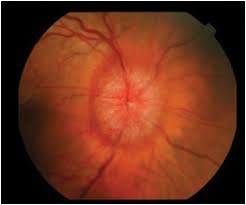
PAPILLOEDEMA


Papilloedema is a medical condition characterized by swelling of the optic disc, which is the point on the retina where the optic nerve fibers exit the eye. This swelling is usually caused by increased intracranial pressure (ICP).

Causes


1. _Increased intracranial pressure_: Conditions like brain tumors, meningitis, or idiopathic intracranial hypertension can cause papilloedema.


2. _Head trauma_: Severe head injuries can lead to increased ICP and papilloedema.

Symptoms


1. _Visual disturbances_: Transient vision loss, double vision, or blind spots.


2. _Headaches_: Often worse in the morning.


3. _Nausea and vomiting_: May occur due to increased ICP.

Complications


1. _Vision loss_: Untreated papilloedema can lead to permanent vision loss.


2. _Optic nerve damage_: Prolonged swelling can damage the optic nerve.

Diagnosis


1. _Ophthalmoscopy_: Examination of the optic disc to detect swelling.


2. _Imaging tests_: MRI or CT scans to identify underlying causes.

Treatment


1. _Addressing underlying cause_: Treating the underlying condition causing increased ICP.


2. _Monitoring_: Regular eye exams to track optic disc swelling and vision.

If you’re experiencing symptoms or concerns, consult an eye care professional or a healthcare provider for proper evaluation and guidance.

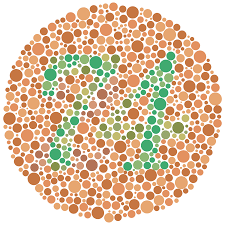
COLOUR VISION DEFICIENCY


Color vision deficiency, also known as color blindness, is a condition where a person has difficulty perceiving certain colors. This is usually due to a genetic mutation affecting the light-sensitive cells (photoreceptors) in the retina.

Types


1. _Red-green color blindness_: Most common type, where individuals struggle to distinguish between red and green colors.


2. _Monochromacy_: Rare condition where a person sees the world in shades of gray only.


3. _Tritanopia_: Difficulty perceiving blue colors.

Causes


1. _Genetics_: Inherited trait, more common in males.


2. _Age-related_: Can occur due to aging.


3. _Eye diseases_: Certain conditions like cataracts or age-related macular degeneration.

Effects


1. _Difficulty with color distinction_: Challenges in everyday tasks, like selecting ripe fruit or understanding color-coded information.


2. _Adaptation_: Many people develop coping strategies.

Diagnosis


1. _Ishihara test_: A common test using dot patterns to identify color vision deficiency.


2. _Other tests_: Like the Hardy-Rand-Rittler test or the City University Color Vision Test.

If you’re concerned about color vision deficiency, consult an eye care professional for proper evaluation and guidance.

CHARLES BONNET SYNDROME

Charles Bonnet Syndrome

Charles Bonnet Syndrome (CBS) is a condition where people with significant vision loss experience vivid visual hallucinations. These hallucinations can range from simple patterns to complex images, such as people, animals, or objects.

Characteristics

  1. Visual hallucinations: CBS hallucinations are typically visual and can be very vivid.
  2. Vision loss: CBS typically occurs in people with significant vision loss, often due to age-related macular degeneration, cataracts, or other eye conditions.
  3. Insight: People with CBS often have insight into the fact that their hallucinations are not real.

Symptoms

  1. Hallucinations: Can be simple (e.g., patterns, shapes) or complex (e.g., people, animals).
  2. Variable frequency: Hallucinations can occur frequently or infrequently.
  3. Variable duration: Hallucinations can last from seconds to hours.

Management

  1. Reassurance: Educating patients that CBS is a recognized condition can be helpful.
  2. Coping strategies: Techniques like closing eyes or looking away can help manage hallucinations.
  3. Addressing underlying conditions: Managing underlying eye conditions can help alleviate symptoms.

If you’re experiencing symptoms or concerns, consult an eye doctor or a healthcare professional for proper diagnosis and guidance.

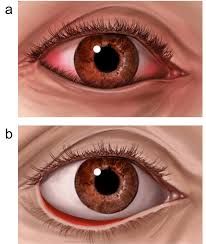
ECTROPION


Ectropion is a condition where the eyelid turns outward, often causing the eyelid to sag away from the eye. This can lead to:

1. _Eye dryness_: Exposure of the eye surface.


2. _Irritation_: Redness, tearing, and discomfort.


3. _Increased risk of infection_: Exposure to the environment.

Causes include:

1. _Aging_: Weakening of eyelid muscles.


2. _Facial paralysis_: Conditions like Bell’s palsy.


3. _Scarring_: From injury or surgery.

Treatment may involve surgery to tighten or reposition the eyelid.

If you’re experiencing symptoms, consult an eye doctor for proper diagnosis and treatment.

ENTROPION

Entropion

Entropion is a condition where the eyelid rolls inward, causing the eyelashes to rub against the cornea. This can lead to:

  1. Eye irritation: Discomfort, redness, and tearing.
  2. Corneal damage: Potential scarring or ulcers.

Causes include:

  1. Aging: Weakening of eyelid muscles.
  2. Scarring: From injury or infection.
  3. Muscle weakness: Certain neurological conditions.

Treatment often involves surgery to tighten or reposition the eyelid. If you’re experiencing symptoms, consult an eye doctor for proper diagnosis and treatment.