Eagleview Eye Clinic

Category Eye Health Education

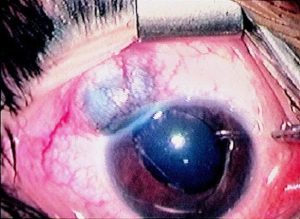
SCLERAL ETASIA

Scleral ectasia is a condition where the sclera (the white part of the eye) becomes thin and bulges outward. This can be associated with various conditions, such as:

  1. Keratoconus: A progressive eye disease that causes the cornea to thin and bulge.
  2. Scleral thinning: Due to injury, surgery, or certain diseases.

Symptoms may include:

  1. Vision problems
  2. Eye pain or discomfort
  3. Sensitivity to light

If you’re experiencing any issues, consult an eye care professional for proper evaluation and treatment.
SENILE SCLERAL PLAQUES

Senile Scleral Plaque

Senile scleral plaque is a:

  • Benign, age-related condition
  • Characterized by:
    1. Calcified deposits: Yellowish or white patches on the sclera
    2. Typically asymptomatic: May not affect vision

Causes

  1. Aging: Most common in older adults
  2. Calcification: Deposition of calcium salts

Treatment

  1. No treatment necessary: Often monitored for changes
  2. Regular eye exams: To track progression and rule out other conditions

If you have senile scleral plaques, consult an eye care professional for evaluation and reassurance.

SCLERAL THINNING

Scleral Thinning

Scleral thinning is a condition where the sclera (white part of the eye) becomes:

  • Thin and weakened
  • Prone to perforation or rupture

Causes

  1. Inflammatory conditions: Scleritis, rheumatoid arthritis
  2. Infections: Bacterial or fungal
  3. Trauma: Eye injury
  4. Surgical complications: Post-operative thinning

Symptoms

  1. Eye pain: Discomfort or tenderness
  2. Redness: Inflammation
  3. Vision problems: Blurred vision

Treatment

  1. Monitoring: Regular eye exams
  2. Medical treatment: Addressing underlying conditions
  3. Surgical repair: In severe cases or to prevent perforation

If you have scleral thinning, consult an eye care professional for personalized advice and treatment to prevent complications.

NECROTIZING SCLERITIS

Necrotizing Scleritis

Necrotizing scleritis is a:

  • Severe inflammatory eye condition
  • Characterized by:
    1. Scleral inflammation: Inflammation of the white part of the eye
    2. Tissue necrosis: Death of scleral tissue
    3. Vision-threatening: Can lead to vision loss if untreated

Symptoms

  1. Severe eye pain: Often described as deep, boring pain
  2. Redness: Inflammation of the sclera
  3. Vision loss: Blurred vision or decreased vision

Treatment

  1. Immunosuppressive medications: To control inflammation
  2. Corticosteroids: May be used to reduce inflammation
  3. Surgical intervention: In some cases

If you suspect necrotizing scleritis, consult an eye care professional or rheumatologist for prompt diagnosis and treatment to prevent vision loss.

PROLIFERATIVE VITREORETINOPATHY

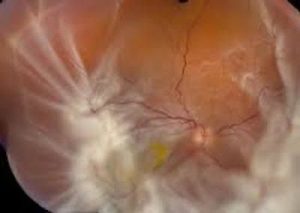
Proliferative Vitreoretinopathy (PVR)

Proliferative vitreoretinopathy (PVR) is a:

  • Complication of retinal detachment or eye injury
  • Characterized by:
    1. Scarring: Formation of fibrotic membranes in the vitreous and retina
    2. Retinal traction: Contraction of scar tissue, leading to retinal detachment or vision loss

Causes

  1. Retinal detachment: Previous detachment or surgery
  2. Eye injury: Trauma or inflammation

Treatment

  1. Surgery: Vitrectomy and membrane peeling to remove scar tissue
  2. Complex retinal surgery: May require multiple procedures

If you have PVR, consult a retina specialist for personalized advice and treatment to manage the condition and preserve vision.

FUNDUS ALBIPUNCTATUS

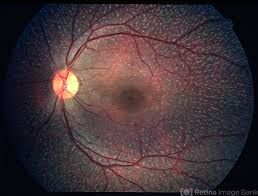
Fundus Albipunctatus

Fundus albipunctatus is a:

  • Rare, inherited condition affecting the retina
  • Characterized by:
    1. White or yellowish dots: In the retina
    2. Night blindness: Difficulty seeing in low light
    3. Variable visual impairment: May experience reduced vision

Causes

  1. Genetic mutation: Affecting the RDH5 gene

Treatment

  1. No cure: Currently, no cure available
  2. Supportive care: Regular eye exams, low vision aids

If you have fundus albipunctatus, consult an eye care professional or retina specialist for personalized advice and support to manage vision loss.

TORPEDO MACULOPATHY

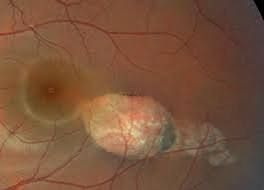
Torpedo Maculopathy

Torpedo maculopathy is a:

  • Rare, congenital condition affecting the macula
  • Characterized by a distinctive “torpedo-shaped” lesion

Symptoms

  1. Vision loss: Variable, often mild to moderate
  2. Visual field defects: Blind spots or distorted vision

Characteristics

  1. Lesion shape: Torpedo-shaped or oval-shaped lesion in the macula
  2. Retinal pigment epithelium (RPE) changes: Abnormalities in the RPE layer

Treatment

  1. Monitoring: Regular eye exams to track progression
  2. No treatment: Often not necessary, but low vision aids may be helpful

If you have torpedo maculopathy, consult an eye care professional or retina specialist for personalized advice and monitoring to preserve vision.

STAGARDT DISEASE

Stargardt Disease

Stargardt disease is a:

  • Genetic eye disorder affecting the macula
  • Leading cause of inherited juvenile macular degeneration

Symptoms

  1. Vision loss: Central vision loss, blurred vision
  2. Color vision: Difficulty distinguishing colors
  3. Night vision: Impaired adaptation to darkness

Characteristics

  1. Macular degeneration: Damage to the macula, causing vision loss
  2. Lipofuscin accumulation: Abnormal buildup of lipofuscin in the retina

Treatment

  1. No cure: Currently, no cure available
  2. Supportive care: Regular eye exams, low vision aids
  3. Research: Ongoing studies on potential treatments, such as gene therapy

If you have Stargardt disease, consult an eye care professional or retina specialist for personalized advice and support to manage vision loss.

INFECTIOUS RETINITIS

Infectious Retinitis

Infectious retinitis is inflammation of the retina caused by:

  • Viral, bacterial, fungal, or parasitic infections

Types

  1. Cytomegalovirus (CMV) retinitis: Common in immunocompromised individuals
  2. Toxoplasmosis retinochoroiditis: Caused by Toxoplasma gondii parasite
  3. Herpes simplex or varicella-zoster virus retinitis: Viral infections

Symptoms

  1. Vision loss: Blurred vision, blind spots
  2. Floaters: Dark spots or floaters in vision
  3. Eye pain: Redness, discomfort

Treatment

  1. Antiviral medications: For viral infections
  2. Antiparasitic medications: For toxoplasmosis
  3. Antibiotics: For bacterial infections
  4. Intravitreal injections: Direct medication delivery into the eye

If you suspect infectious retinitis, consult an eye care professional or retina specialist for proper diagnosis and treatment to preserve vision.

TRACHOMA

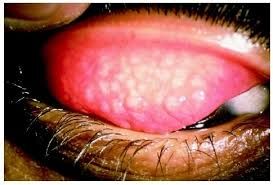
Trachoma

Trachoma is a:

  • Bacterial infection (Chlamydia trachomatis) affecting the eyes
  • Leading cause of preventable blindness worldwide

Symptoms

  1. Eye irritation: Redness, itching, discharge
  2. Follicles: On the underside of the upper eyelid
  3. Scarring: Can lead to vision loss and blindness

Transmission

  1. Direct contact: With infected eye discharge
  2. Indirect contact: Through contaminated objects or flies

Prevention

  1. Hygiene: Proper handwashing and face washing
  2. Sanitation: Improved access to clean water and sanitation
  3. Antibiotics: Mass treatment in endemic areas

Treatment

  1. Antibiotics: Azithromycin or tetracycline
  2. Surgery: To correct eyelid deformities or trichiasis (eyelashes rubbing against the cornea)

If you suspect trachoma, consult an eye care professional for proper diagnosis and treatment. Early intervention can prevent long-term vision damage.