Eagleview Eye Clinic

Category Eye Health Education

SYNCHISIS SCINTILLANS

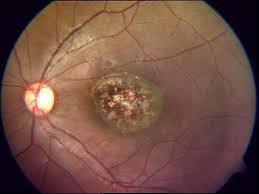
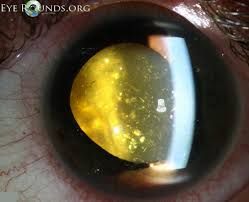
SYNCHISIS scintillans, also known as cholesterol bulbi are yellowish deposits of fine cholesterol crystals in the vitreous body of the eye.

Usually SYNCHISIS scintillans is usually asymptomatic and is seen by accident.

It is most times usually as a result of degenerative changes of the vitreous due to age.

Treatment is usually by surgical procedure.

Difference between SYNCHISIS scintillans and asteroid hyalosis, is that while SYNCHISIS scintillans floats within the vitreous, asteroid hyalosis is fixed.

ANIRIDIA

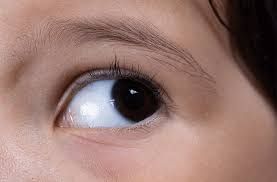
ANIRIDIA is simply the absence of a muscular structure called the Iris.

The iris forms the pupil which controls how light enters the eyes. The iris is also responsible for eye color. So incases of Aniridia, the eyes just appear black.

This condition can be congenital, affecting both eyes or traumatic due to a penetrating injury.

For some people Aniridia can result in a significant loss of vision, while for  others visual reduction mild.

Use of contact lenses can help control light and improve vision. Use of photochromic glasses or sunshades can also help to significantly improve vision.

HERPES ZOSTER OPHTHALMICUS

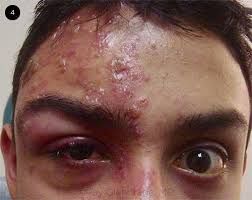
This condition is simply shingles that involves the eyes and surrounding areas.

This condition is caused by reactivation of the varicella zoster virus in the trigeminal ganglion supplying the ophthalmic division of the trigeminal nerve.

Signs and symptoms includes characteristic rash on one side of the face, pain, itching, blurring vision and on rare cases keratitis.

Immunocompromised patients, patients who have had chicken pox in the past are at risk of contracting herpes zoster OPHTHALMICUS.

Treatment includes the use of antiviral tablets, and antiviral ointment, and anti- inflammatory drugs.

OPTIC NEURITIS

Optic neuritis is an inflammation of the optic nerves. The optic nerves are connections between the eye and the brain responsible for transmission of visual impulses between the two organs

This condition is caused by autoimmune ailments like multiple sclerosis, myasthenia gravis and viral infections like shingles , chicken pox et.c

This condition is sight threatening, especially if not treated early.

Signs and symptoms includes pain on eye movement, reduced vision, defective colour vision, eye pain.

Treatment involves treating underlying conditions, and the use of corticosteroids.

BLOW OUT FRACTURE

Blow out fracture occurs when one or more of the seven bones surrounding the eye ( eye socket) breaks.

This usually occur when there a blunt trauma like  punch, baseball smack to the face/the eyes.

This condition can also occur during a road traffic accident.

Signs and symptoms includes eye pain, double vision, reduced vision, pain on eye movement, et.c.

Treatment involves the use of systemic anti-inflammatory medications and in situations where you have a break in the orbital floor, surgery may be required.

OCULAR TOXOPLASMOSIS

Ocular toxoplasmosis is an inflammation caused by the plasmodium toxoplasmosis gondii. This condition is also known as cat scratch disease.

Risk factors include patients with HIV/AIDS, patients that did organ transplant, patients that keep pet cats et.c.

Causes includes ingesting contaminated food, coming in contact with cat and dog faeces during gardening, ingesting contaminated food ( especially improperly cooked meat).

Signs and symptoms includes visual reduction, eye pain, swollen lymph nodes, floaters, cloudy vision.

Treatment involves the use of anti- infectives and steroids.

If this condition is not treated , it can result in irreversible Blindness.

THE MUSCLE DESTROYER (Myasthenia gravis)

Myasthenia gravis occurs when the nerves are unable to give signals to the muscles to perform specific actions e.g standing, gripping an object, opening your mouth and eyes etc.

CAUSES: It is an autoimmune condition. That is the body’s immune system attacks the Healthy body structures or tissues mistaking it for an infectious or foreign particle

It can also be caused by an overaction or tumour of the thymus gland.


There are usually three types of Myasthenia gravis and they are 1. Autoimmune Myasthenia gravis 2. Neonatal MG 3. Congenital MG. The first one affects women of ages between 20 and 40 and men above 60yrs of age. while the last two affects babies

PATHOPHYSIOLOGY: Normally for muscular activity to occur, the nerve release a substance called acetylcholine. This acetylcholine travels and binds itself to the receptors on the muscle site and trigger a contraction of the muscle

SIGNS AND SYMPTOMS: Difficulty sitting up, difficulty opening the mouth and eyes, difficulty lifting hands, difficulty breathing

When the body’s antibodies  destroys all the acetylcholine receptors on the muscle site. The acetylcholine will not be able to bind to any receptor to trigger muscular contraction

TREATMENT : For auto immune myasthenia gravis, there is usually no cure. But it’s usually advised that the patient gets enough rest.

MG crisis is triggered when the individual is stressed, hence rest is advised so that the muscles can gain strength.

THE MUSCLE DESTROYER (Myasthenia gravis)

Myasthenia gravis occurs when the nerves are unable to give signals to the muscles to perform specific actions e.g standing, gripping an object, opening your mouth and eyes etc.

CAUSES: It is an autoimmune condition. That is the body’s immune system attacks the Healthy body structures or tissues mistaking it for an infectious or foreign particle.

It can also be caused by an overaction or tumour of the thymus gland.

There are usually three types of Myasthenia gravis and they are 1. Autoimmune Myasthenia gravis 2. Neonatal MG 3. Congenital MG. The first one affects women of ages between 20 and 40 and men above 60yrs of age. while the last two affects babies.

PATHOPHYSIOLOGY: Normally for muscular activity to occur, the nerve release a substance called acetylcholine. This acetylcholine travels and binds itself to the receptors on the muscle site and trigger a contraction of the muscle.

SIGNS AND SYMPTOMS: Difficulty sitting up, difficulty opening the mouth and eyes, difficulty lifting hands, difficulty breathing.

When the body’s antibodies  all the acetylcholine receptors on the muscle site. The acetylcholine will not be able to bind to any receptor to trigger muscular contraction.

TREATMENT : For auto immune myasthenia gravis, there is usually no cure. But it’s usually advised that the patient gets enough rests.

MG crisis is triggered when the individual is stressed, hence rest is advised so that the muscles can gain strength.

DRAGON’S SPIT: Eye infection

Infection is the presence of virus, bacteria or fungus in the body.


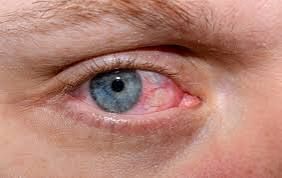
An eye infection is a disease that affects the eye due to virus, bacteria or a fungus.

Some common  eye infections are:
Cellulitis, conjunctivitis, keratitis, herpes, dacryocystitis et.c.


Some of these infections are highly contagious and need to be treated immediately to prevent them from spreading.

Can Eye Infections be Contracted?

Yes, eye infections can be contracted through various means, including:

– Touching your eyes with unwashed hands
– Sharing makeup or makeup brushes
– Not disinfecting contact lenses properly
– Coming into contact with someone who has an eye infection.

Signs of Eye Infection

How can you tell if you have an eye infection? Look out for these symptoms:

– Pain in the eye
– Increased sensitivity to light
– Colored discharge from the eyes
– Sore sensation on the iris

Can Eye Infections Lead to Blindness?

If left untreated, eye infections can cause permanent vision damage or even blindness. It’s essential to seek medical attention immediately if you experience any symptoms.

Precaution

– Visit an eye professional if you notice any signs of eye infection, such as itching, watery discharge, or vision changes.

Written by: Adesoji Margaret
Moisture matters: The menace of dry eye syndrome.

How could my eyes be dried when it’s not my skin?

Dry eye occurs when the eye doesn’t produce enough tears to keep the outer surface eyes moisturized.

When the eye doesn’t release much tears to retain the moisture of the eye, it causes irritation and discomforts in the eye.

Just like the skin looks whitish ,dry and cracked when it’s not moisturized, the eyes as well gets dry when it doesn’t release enough tears to wet the eye.

Causes of dry eye are , age , hormonal changes, insufficient tears, exposure to windy environment, staring at a screen for extended period.

Signs and symptoms of dry eyes are :
• dry feeling in the eye
• ⁠burning sensation
• ⁠Teary eye
• ⁠redness

You are experiencing amy of the symptoms of dry eye  listed above ? Then you need to visit an eye clinic to get proper treatment for your eyes.

Written by: Adesoji Margaret