Eagleview Eye Clinic

Tag Eye clinic

MALINGERER

A malingerer 😏 is someone who fakes or exaggerates symptoms (like vision problems) to avoid work, get compensation, or achieve another goal. In eye care, malingerers might claim blindness or poor vision in one eye to get glasses, avoid duties, or scam insurance.

Why it matters

  • Misdiagnosis risk: They might fool clinicians into unnecessary tests/treatments.
  • Resource drain: Wastes time/money on unneeded care.
  • Legal implications: Can lead to fraud investigations if deception is intentional.

How to spot it

  • Inconsistent test results (e.g., wildly different acuity on repeat checks).
  • Refusing simple vision checks (e.g., pinhole test).
  • Overly cooperative or hostile behavior (trying too hard to prove symptoms).
  • Secondary gain motive (e.g., avoiding work, seeking meds/compensation).

Tests for malingering

  • Fogging test: Blur vision in the “good” eye → forces use of the “bad” eye.
  • Red glass test: Assess inconsistencies in double-vision reporting.
  • Mirror test: Check if they “accidentally” react to seeing themselves.
  • Stereoacuity checks: Good stereopsis suggests better vision than claimed.

Management

  • Non-confrontational approach: Focus on function, not “you’re faking it.”
  • Behavioral observation: Look for inconsistencies over time.
  • Document carefully: Note subjective vs. objective findings.
  • Refer if needed: To a neuro-ophthalmologist or psychiatrist if underlying psych issues suspected.
CONTACT LENS CASE

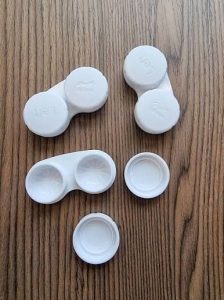
A contact lens case 👓 is a must-have for storing and caring for your lenses. It’s used to hold your lenses in solution when you’re not wearing them. Here are some things to consider:

  • Type: Look for a case that’s easy to open, clean, and dry. Some cases have separate wells for each lens, while others have a single compartment.
  • Material: Most cases are made of plastic, but some are designed to be more hygienic or have antimicrobial properties.
  • Size: Choose a case that’s compact enough to fit in your bag or purse.

Some popular features include:

  • Screw-top or snap-on lids: Easy to use and secure.
  • Labelled compartments: Helps you keep track of which lens is which.
  • Ventilation: Some cases have vents to help dry the lenses or reduce bacterial growth.
CONTACT LENS APPLICATOR

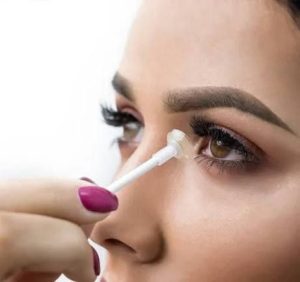
A contact lens applicator 😎 is a handy tool that helps you put in (and sometimes take out) contact lenses, especially if you’re a newbie or have dexterity issues. Types include:

  • Sucker/plucker: A small tool with a suction cup that grips the lens.
  • Finger-tip applicator: A guide that fits on your finger to help position the lens.

They’re super useful if:

  • You’re struggling to handle tiny lenses
  • You have arthritis or finger issues
  • You’re helping someone else with lenses (like kids)
CONTACT LENS SOLUTION

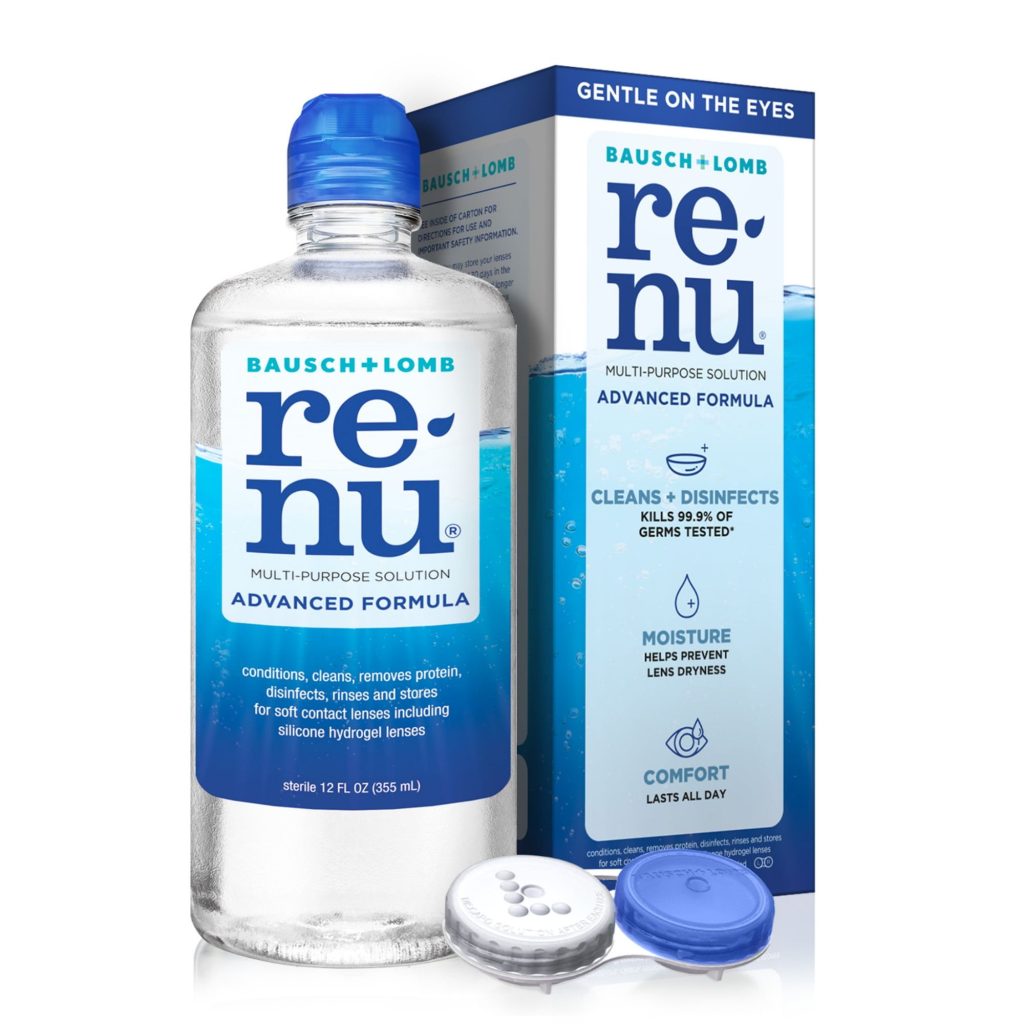
Contact lens solution is a must-have for anyone wearing reusable lenses! It’s used to clean, disinfect, and store your lenses, ensuring they stay safe and comfortable to wear. There are mainly two types: Multipurpose Solution and Hydrogen Peroxide Solution.

  • Multipurpose Solution: An all-in-one solution that cleans, rinses, disinfects, and stores your lenses. It’s super convenient and easy to use. Brands like Renu, Biotrue, and Opti-Free are popular options.
  • Hydrogen Peroxide Solution: A more thorough disinfecting option, but it requires a special case and neutralization process.

When choosing a solution, consider your lens type (soft or RGP), sensitivity, and specific needs (e.g., dry eyes). Always follow the manufacturer’s instructions and your eye care professional’s advice š ² Âł.

Some popular brands include:

  • Renu Multi-Purpose Solution: Great for sensitive eyes and all-day comfort.
  • Biotrue Hydration Plus: Offers extra moisture and cleaning power.
  • Opti-Free Express: Easy to use and effective against germs.
AMETROPIA

Ametropia = any refractive error where the eye can’t focus light directly on the retina without help.

Main types

  1. Myopia (nearsightedness)
    • Eye is too long or cornea too curved → light focuses in front of retina.
    • Close objects are clear, distant ones are blurry.
  2. Hyperopia (farsightedness)
    • Eye is too short or cornea too flat → light focuses behind retina.
    • Near vision is harder; distance vision can be okay (but may be strained).
  3. Astigmatism
    • Cornea (or lens) is irregularly shaped (more curved in one direction) → light focuses on multiple points.
    • Vision is blurry at all distances, often with a “stretched” look.
  4. Presbyopia
    • Age-related loss of lens flexibility (usually after 40).
    • Near focus gets tough, even if distance vision is fine.

How it’s measured

  • Spherical equivalent (SE): Combines sphere (myopia/hyperopia) + half of cylinder (astigmatism) to give one number.
  • Diopter (D): Unit of lens power. Negative D = myopia, positive D = hyperopia.

Causes & risk factors

  • Genetics: Family history strongly influences myopia/hyperopia risk.
  • Environment: Too much near work (reading, screens) + little outdoor time → higher myopia risk.
  • Age: Lens stiffens → presbyopia.
  • Eye injuries or surgeries can induce irregular astigmatism.

Correction options

  • Glasses: Simple, non-invasive.
  • Contact lenses: Directly on eye; options like toric for astigmatism, multifocal for presbyopia.
  • Refractive surgery: LASIK, PRK, SMILE (laser reshapes cornea). Lenses or implants for high prescriptions.
  • Orthokeratology (ortho-k): Wear special rigid lenses overnight to temporarily reshape cornea (often for myopia control).

Management (especially for myopia control)

  • Outdoor time: 2+ hours daily linked to slower myopia progression in kids.
  • Low-dose atropine drops: Can slow myopia worsening.
  • Multifocal/Defocus lenses: Some contact lenses or glasses designed to reduce progression.
SUB HYALOID RETINAL HAEMORRHAGE

Subhyaloid retinal hemorrhage = bleeding that sits between the retina and the vitreous gel (just beneath the thin “hyaloid” layer on top of the retina).

What it looks like

  • On fundoscopy it appears as a well‑defined, boat‑shaped or dome‑shaped red‑purple patch behind the retina.
  • The blood is usually bright red because it’s relatively fresh and sits in a pocket that doesn’t mix with the vitreous.

Common causes
Clinical clues

  • Symptoms: Sudden blurred vision, a dark “spot” or “shadow” in the visual field, sometimes a scotoma. If the bleed is large, it can cause a vitreous hemorrhage and markedly reduced vision.
  • Location: Usually posterior pole (macula‑adjacent), but can occur anywhere the retina meets the vitreous.

Management approach

  1. Identify & treat the cause – control hypertension, manage diabetes, stop/reverse anticoagulation if possible.
  2. Observe – many small subhyaloid bleeds reabsorb on their own within weeks to months.
  3. Laser or cryotherapy – may be needed if there’s an underlying retinal tear or neovascularization.
  4. Vitrectomy – indicated for large, non‑clearing hemorrhages (especially if vision is < 20/200 or there’s traction on the retina).
  5. Follow‑up – regular fundus exams to monitor resolution and check for complications (e.g., macular scar, retinal detachment).

Prognosis

  • Small bleeds → usually good visual recovery once they clear.
  • Large or recurrent bleeds → risk of permanent macular damage, especially if the hemorrhage dissects into the vitreous or causes traction.
    Bottom line: Subhyaloid retinal hemorrhage is a bleed trapped between the retina and vitreous, often caused by vascular stress, trauma, or systemic disease. Management hinges on treating the underlying cause and deciding whether observation, laser, or vitrectomy is needed based on size and visual impact.

EMMETROPIZATION

Emmetropization is the eye’s natural tendency to adjust its focus so that light is properly focused on the retina, achieving clear vision without glasses.

How it works:

  • During childhood, the eye grows and the lens changes shape to match the eye’s length.
  • If the eye is too short or long, it can lead to refractive errors like myopia (nearsightedness) or hyperopia (farsightedness).
  • The brain and eye work together to fine-tune focus, but if this process is disrupted (like by too much near work), it can cause myopia progression.

Key points:

  • Critical period: Mainly happens in childhood and early teens.
  • Visual input matters: Clear vision encourages proper emmetropization; blurred or restricted vision can lead to refractive errors.
  • Myopia control: Treatments like low-dose atropine drops, orthokeratology lenses, or multifocal lenses aim to slow myopia by influencing this process.
BANDAGE CONTACT LENSES

Bandage contact lenses are special soft lenses placed on the eye like a protective patch. They’re used after corneal injuries, surgeries, or infections to:

  • Promote healing: By covering the cornea, they protect it from blinking and eyelid friction.
  • Reduce pain: The lens acts as a barrier, decreasing discomfort.
  • Keep the eye moist: They help maintain a stable tear film over the cornea.

How they work:

  • Fit like a regular contact lens but are larger and more comfortable.
  • Made of high-oxygen-permeable materials so the cornea can still breathe.
  • Often used after procedures like corneal debridement, PRK, or for conditions like bullous keratopathy.

They’re usually prescribed by an eye doctor and worn for days to weeks depending on the condition.

CORNEA DEBRIDING

Corneal debridement is the careful removal of damaged, diseased, or infected tissue from the cornea. It’s a common procedure in eye care, especially for infections like fungal keratitis.

Why it’s done:

  • Improves drug penetration: Meds can reach deeper layers better.
  • Diagnostic: Tissue can be tested to identify the pathogen.
  • Therapeutic: Removes infected tissue to stop spread.

How it’s done:

  1. Numbing: Anesthetic eye drops are used to prevent pain.
  2. Sterile instruments: A spatula, blade, or cotton swab is used to gently scrape the cornea.
  3. Microscope guidance: Often done under a slit-lamp or operating microscope.
  4. Cleaning: After scraping, the area may be irrigated.
  5. Medication: Antifungal, antibacterial, or antiviral drops are applied afterward.

It’s usually quick (minutes) and done in a clinic or minor operating room.

VIRAL CONJUNCTIVITIS

Viral keratitis = corneal infection caused by a virus (most often herpes simplex virus type 1). It’s a common cause of corneal inflammation and can lead to recurrent episodes.

Causes

  • Herpes simplex virus type 1 (HSV-1): Most common
  • Varicella-zoster virus (VZV): Shingles can affect the eye
  • Other viruses like adenovirus can cause keratitis too

Symptoms

  • Watery eyes
  • Eye pain or discomfort
  • Redness
  • Sensitivity to light (photophobia)
  • Blurred vision
  • Feeling of something in the eye
  • Sometimes tiny corneal ulcers or dendritic lesions (branching pattern)

Diagnosis

  • Slit-lamp exam: Look for typical dendritic ulcers with fluorescein stain
  • Viral PCR testing (corneal scraping) if needed

Treatment

  • Antivirals: Acyclovir ointment, ganciclovir gel, or oral antivirals for HSV
  • Steroids: May be used cautiously to reduce inflammation, but need monitoring
  • Supportive care: Lubricating eye drops for comfort

Complications

  • Recurrent episodes (HSV can hide in nerves and reactivate)
  • Corneal scarring → vision loss
  • Stromal keratitis (deeper corneal inflammation)

Prevention

  • Good hand hygiene
  • Avoid touching or rubbing eyes
  • Antiviral prophylaxis may be used for recurrent cases