Eagleview Eye Clinic

Tag Eye clinic

AIR PUFF TONOMETER

👓 The air puff tonometer is a non-contact device that measures intraocular pressure (IOP) by blowing a quick puff of air onto the cornea.

  • How it works: The device measures the corneal deformation caused by the air puff.
  • Advantages: No direct contact with the eye, reducing infection risk.
  • Common use: Often used for glaucoma screening and routine eye exams.
  • Considerations: Can be less accurate than contact tonometers (e.g., Goldmann).
TONOPEN TONOMETER

👓 To open a Perkins tonometer (for maintenance or calibration), you typically need to:

  1. Check the manual: Consult the manufacturer’s instructions for specific guidance.
  2. Handle with care: Tonometers are sensitive instruments.
  3. Common steps: Usually involves removing screws or a cover to access the internal mechanism.

If you’re looking to use the tonometer, ensure it’s properly calibrated and sterilized before measuring IOP.

PERKINS TONOMETER

👓 The Perkins tonometer is a handheld, portable device used to measure intraocular pressure (IOP).

  • Type: Applanation tonometer, similar to Goldmann tonometer.
  • Use: Commonly used in ophthalmology and optometry for glaucoma screening and monitoring.
  • How it works: Uses a small probe to gently touch the cornea, measuring IOP.
  • Advantages: Portable, easy to use, and provides accurate readings.

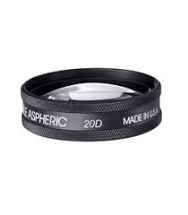
20D LENS

👓 Here’s more on a 20D lens:

  • Magnification: A +20D lens provides approximately 20x magnification.
  • Field of view: Offers a relatively wide field, useful for examining the retina.
  • Use: Commonly used in ophthalmology for:
    • Indirect ophthalmoscopy (with a slit lamp or head-mounted scope).
    • Examining the posterior segment (retina, macula, etc.).
  • Type: Typically a handheld, convex lens made of glass or acrylic.
  • Working distance: Around 5 cm (2 inches) from the patient’s eye.
BIFOCAL IOL

👓 Bifocal IOLs (Intraocular Lenses) are a type of lens implant used in cataract surgery to help restore vision at multiple distances. They’re designed to reduce dependence on glasses or contacts.

  • How they work: Bifocal IOLs have different zones for near and distance vision, allowing for clearer vision at multiple distances.
  • Types: Some common types include diffractive (e.g., Alcon ReSTOR) and refractive (e.g., AMO Array) lenses.
  • Benefits: Reduced need for glasses, improved vision at various distances.
  • Considerations: Potential for halos, glare, or decreased contrast sensitivity.

MONOFOCAL IOL

A monofocal IOL 👀 is a type of intraocular lens that focuses at one distance (near, intermediate, or far).

Key things

  • Single focus point: Usually set for distance vision (you’d use glasses for near tasks like reading).
  • Less dependence on glasses if monovision approach is used (e.g., one eye for distance, one for near).
  • Common and reliable: Predictable outcomes, often covered by insurance.

Pros

  • Sharp vision at chosen distance.
  • Lower risk of visual side effects (e.g., halos, glare) vs multifocal IOLs.

Cons

  • Glasses needed for other distances (unless monovision).
  • Less flexibility compared to multifocal/accommodating IOLs.

B – SCAN

A B-scan ultrasound 👀 is a diagnostic test that uses sound waves to create images of the eye’s internal structures, especially the posterior segment.

Key uses

  • Retinal detachment: Shows if the retina is detached or torn.
  • Vitreous hemorrhage: Visualizes blood in the vitreous.
  • Tumors: Helps identify and measure eye tumors.
  • Foreign bodies: Locates objects inside the eye.
  • Trauma assessment: Evaluates damage when the eye’s hard to examine.

How it works

  1. Probe placement: Gel is applied; the probe is placed on the eyelid (closed or open).
  2. Sound waves: Echoes bounce off structures, creating images.
  3. Interpretation: Images show structures like the retina, vitreous, and orbit.

Types of scans

  • Axial scan: Shows structures along the eye’s axis.
  • Longitudinal scan: Images are taken in different meridians.

Tips

  • Painless and non-invasive.
  • Coupling gel is used for better contact.
  • Results are immediate.

MIRROR TEST

The mirror test 🪞 is a sneaky way to check if someone’s faking vision loss in one eye (malingering).

How it works

  1. Patient claims blindness in one eye.
  2. Place a mirror in front of them, angled to show their “blind” eye.
  3. Ask them to look straight ahead.
  4. Check if they react to their own reflection (e.g., blink, move, etc.).

What it shows

  • If they react to their reflection, it suggests the “blind” eye can see.
  • If they don’t react, could be malingering… or really blind 😅.

Tips

  • Casual setup: Make it seem like a normal exam step.
  • Distract them: Talk about something else while doing the test.
  • Combine with other tests for stronger evidence.

FOGGING TEST

The fogging test 👀 is a clever way to uncover malingering (faking vision loss in one eye).

How it works

  1. Patient wears trial frame with +5.00 D lens over the “good” eye (blurs vision).
  2. Read the chart with “bad” eye (you’re checking if they can see better than claimed).
  3. If they suddenly read smaller lines, they’re likely malingering (using the “bad” eye all along).

Sneaky part

  • They think the “good” eye is being tested (because it’s fogged).
  • If they see better with the “bad” eye, it proves vision is actually better than claimed.

Tips

  • Don’t tip them off → act like you’re testing the “good” eye.
  • Quick switch lenses if needed to confirm findings.
  • Combine with other tests (e.g., stereoacuity) for stronger evidence.

Example

  • “Test” right eye (fogged with +5 D). Patient reads 20/20 with left eye → suggests left eye is actually seeing fine (malingering?).

Limitations

  • Not foolproof → some patients catch on.
  • Cooperation needed → won’t work if they refuse to read.

RED GLASS TEST

The red glass test 👀 is a simple way to check for diplopia (double vision) and figure out if it’s caused by a muscle weakness (like a cranial nerve palsy).

How it works

  1. Patient wears red glass over one eye (usually right eye → red lens OD).
  2. Look at a point light source (e.g., penlight) in front.
  3. Ask: “How many lights do you see? What color(s)?”

What it shows

  • Normal: Sees one pink light (colors blend).
  • Diplopia: Sees one red + one white light.
    • Horizontal separation → lateral/medial rectus issue (CN VI or CN III).
    • Vertical/oblique separation → other muscles (e.g., superior oblique CN IV, superior/inferior rectus CN III).
  • Image location → helps localize the weak muscle (e.g., red image on right → right lateral rectus weakness).

Example

  • Patient sees red light on right + white on left → right lateral rectus palsy (CN VI).
  • Image is tilted/diagonal → likely a cyclovertical muscle issue.

Tips

  • Control fixation: Make sure they’re looking straight at the light.
  • Check gaze positions: Repeat in different directions → helps map out weakness.
  • Cover-uncover test can help confirm tropia/phoria.

Limitations

  • Subjective: Relies on patient description.
  • Doesn’t pinpoint cause → need extra tests (e.g., cover test, motility).