Eagleview Eye Clinic

Tag eye pain

DISCIFORM SCAR

Disciform scar is the final scar stage of wet AMD or other causes of choroidal neovascularization (CNV). It’s basically the eye’s “healing” response after a bleed under the macula, but the scar damages central vision.

What it is

  • Definition: A gray-white, disc-shaped fibrous scar under the retina in the macular area
  • Size: Usually 1-5 mm wide, right where you need sharp vision
  • Tissue: Made of fibrous tissue, blood vessels, and pigment after a CNV membrane closes off

How it forms

  1. CNV develops: Abnormal blood vessels from the choroid break through Bruch’s membrane into the subretinal space
  2. Leakage and bleeding: Those vessels are fragile. They leak fluid and blood under the macula
  3. Inflammation + scarring: Your body tries to heal the bleed. Fibroblasts lay down collagen and the CNV becomes fibrotic
  4. RPE disruption: Retinal pigment epithelium clumps or dies, leaving pigment changes around the scar
  5. End stage: Active leakage stops, but the scar remains. This whole process takes weeks to months

Main causes

  • Wet age-related macular degeneration: Most common cause. Seen in patients 60+
  • Pathologic myopia: Can also end in a disciform scar, but in younger myopes it’s often called a Fuchs spot
  • Ocular histoplasmosis: POHS can cause CNV and scarring
  • Trauma or inflammation: Any CNV that bleeds can end this way if untreated

Appearance on exam

  • Color: Gray-white to yellow-white central lesion
  • Shape: Round or oval, “disc” like
  • Surrounding changes: Pigment clumps, atrophy, or lipid deposits at the edges
  • Size: Correlates with how bad vision loss is. Larger = worse

Symptoms

  • Central vision loss: Permanent blur or blank spot in the middle of vision
  • Distortion first: Before scar forms, patients report wavy lines from fluid. After scarring, it’s replaced by a fixed blind spot
  • Peripheral vision stays: You won’t go completely blind. Side vision is normal
  • Contrast loss: Reading and faces are hard even if acuity isn’t terrible

Diagnosis

  • Dilated fundus exam: Doctor sees the pale elevated scar
  • OCT scan: Shows hyperreflective subretinal material, loss of outer retinal layers, RPE disruption
  • Fluorescein angiography: Early CNV leaks. Late disciform scar stains but doesn’t leak because vessels are closed
  • History: Patient usually describes sudden vision drop months earlier from a bleed

Treatment

  • No reversing the scar: Once formed, the tissue is fibrotic and vision doesn’t return
  • Goal is prevention: Anti-VEGF injections like Avastin, Eylea, Vabysmo treat active wet AMD before it scars
  • Too late if scarred: Injections don’t help a mature disciform scar
  • Low vision rehab: Magnifiers, better lighting, eccentric viewing training to use peripheral retina

Disciform scar vs Fuchs spot
Feature Disciform scar Fuchs spot
Main cause Wet AMD Myopic CNV
Age 60+ usually 30s-50s
Color Gray-white fibrous Dark pigmented
Eye shape Normal axial length Long, >26.5 mm
Bilaterality Second eye at risk in 4-7 years Second eye at risk in 30-35%
Prognosis

  • Vision: Usually 6/60 or worse if the scar is subfoveal. If it’s off center, vision may be 6/12 to 6/24
  • Stability: Scar doesn’t grow, but geographic atrophy can develop around it
  • Other eye: High risk of wet AMD in fellow eye. Regular monitoring with Amsler grid and OCT is key

Bottom line: A disciform scar is the “tombstone” of wet AMD. Modern anti-VEGF therapy has made them much less common because we can shut down CNV before it bleeds and scars. That’s why sudden distortion or vision drop needs an urgent retina check.
FUCH’S SPOT

Fuchs spot = Fuchs’ spot. It’s a pigmented scar in the macula caused by bleeding from choroidal neovascularization (CNV). Almost always seen in people with pathologic myopia.

What it is

  • Location: Center of the macula, the part of your retina used for sharp central vision
  • Appearance: Round or oval dark spot. Color ranges from gray-black to reddish-brown depending on how old it is
  • Cause: End result of a subretinal bleed that healed. The blood gets replaced by scar tissue + pigment

How it forms

  1. High myopia stretches the eye: Eyeball gets too long, >26.5 mm
  2. Bruch’s membrane cracks: Lacquer cracks develop from the stretching
  3. CNV grows: New, fragile blood vessels from the choroid grow through the cracks
  4. Bleeding occurs: Those vessels leak or burst, causing subretinal hemorrhage under the macula
  5. Scar formation: As blood clears over weeks to months, fibrovascular tissue + RPE hyperpigmentation forms. That’s the Fuchs spot

Who gets it

  • Pathologic myopia: Main group. Usually -6.00D or worse
  • Age: Typically 30s to 50s, younger than regular AMD
  • Other names: Sometimes called Forster-Fuchs’ spot. Not related to Fuchs’ endothelial dystrophy of the cornea

Symptoms

  • Central vision loss: Blur or a dark/empty spot right in the middle of vision
  • Distortion: Straight lines look bent or wavy before the scar fully forms
  • Scotoma: Once scarred, you’ll have a permanent blind spot in the center
  • Often unilateral first: Can happen in the other eye later if myopia is severe in both

Diagnosis

  • Dilated fundus exam: Doctor sees a pigmented macular lesion
  • OCT scan: Shows subretinal scar tissue and disrupted retinal layers
  • Fluorescein/ICG angiography: Used early to find active CNV before it scars. Once it’s a Fuchs spot, the vessels are usually inactive
  • History: Patient usually reports a prior episode of sudden central vision drop from the bleed

Treatment

  • No reversal: A true Fuchs spot is a scar. Vision in that exact spot doesn’t come back
  • Goal is prevention: Treat the CNV before it bleeds and scars
    • Anti-VEGF injections: Avastin, Lucentis, Eylea injected into the eye if active CNV is caught
    • Photodynamic therapy: Rarely used now, but was an option before anti-VEGF
  • Low vision aids: If central vision is lost, magnifiers and rehab help with daily tasks

Prognosis

  • Vision impact: Depends on size and location. A small spot off-center may leave 6/12 vision. One dead center can drop to 6/60 or worse
  • Other eye risk: 30-35% chance of CNV in the second eye within 8 years if you have high myopia
  • Stability: Once scarred, it usually doesn’t grow. But new CNV can form at the edge

Fuchs spot vs other macular scars
Condition Cause Age group
Fuchs spot Myopic CNV bleed 30s-50s, high myopes
Disciform scar AMD CNV 60+, non-myopes
Toxoplasmosis scar Infection Any age, often kids/young adults
Bottom line: Fuchs spot is the “tombstone” left after a myopic CNV bleed. The key is catching CNV early with regular OCT scans if you’re a high myope, because once the spot forms, central vision loss is permanent.

LACQUER CRACKS

Lacquer cracks are breaks in Bruch’s membrane, a thin layer in the back of your eye. They’re mostly linked to high myopia but can show up in other conditions too.

What exactly breaks?

  • Location: Bruch’s membrane sits between the retinal pigment epithelium (RPE) and the choroid. It’s like the “basement membrane” for the retina
  • The crack: Think of paint on a wall. If the wall stretches too much, the paint develops hairline cracks. Same idea when the eyeball elongates in high myopia
  • Appearance: On eye exams, they look like yellowish, irregular lines in the back of the eye, often near the macula

Main causes

  • Pathologic myopia: Biggest cause. Eyes longer than 26.5 mm or stronger than -6.00D stretch Bruch’s membrane until it tears
  • Trauma: Blunt injury to the eye can cause acute cracks
  • Angioid streaks: Associated with systemic diseases like pseudoxanthoma elasticum, Ehlers-Danlos, Paget’s disease. Angioid streaks can develop lacquer cracks
  • Choroidal neovascularization: Sometimes new blood vessels form around the cracks

Symptoms

  • Often none early: Many people have lacquer cracks with no vision change
  • If macula involved: Blurred vision, distorted vision where straight lines look wavy, or a blind spot
  • Sudden vision drop: Usually means a complication like bleeding or CNV has started

Complications to watch for

  • Choroidal neovascularization (CNV): New, leaky blood vessels grow through the crack. This is the main threat to vision and can cause bleeding/scarring
  • Subretinal hemorrhage: Blood under the retina from CNV, causes sudden central vision loss
  • Fuchs’ spot: Pigmented scar that forms after a bleed heals. Leaves permanent central scotoma

How doctors diagnose

  • Dilated fundus exam: Doctor sees yellow lines
  • OCT scan: Shows the break in Bruch’s membrane and any fluid/blood
  • Fluorescein angiography: Dye test to check for CNV leaking through the crack
  • ICG angiography: Better for seeing deeper choroidal vessels

Treatment

  • No fix for the crack itself: Bruch’s membrane can’t be stitched back. Goal is to manage complications
  • If CNV develops: Anti-VEGF injections like Avastin, Lucentis, or Eylea into the eye to stop new vessels
  • Monitor: Regular OCT scans if you have lacquer cracks, especially with high myopia
  • Lifestyle: No proven way to prevent them, but controlling myopia progression in kids may help reduce future risk

Who’s at risk

  • High myopes: -6.00D or worse, or axial length >26.5 mm
  • Age: Usually appears in 20s-40s in myopic patients
  • Family history: Pathologic myopia runs in families

Bottom line: Lacquer cracks themselves don’t always hurt vision. The danger is when new blood vessels grow through them. If you have high myopia, get yearly dilated eye exams so any CNV gets caught early.

a WAVE and b WAVE

A-waves and B-waves are key components of the full-field ERG, reflecting retinal function:

  • A-wave: Initial negative deflection, generated by photoreceptors (rods and cones) responding to light. Its amplitude and timing indicate photoreceptor health.
  • B-wave: Positive deflection following A-wave, produced by inner retinal cells (bipolar and Müller cells). It shows how well signals from photoreceptors are processed.

Reduced A-waves suggest photoreceptor damage (e.g., retinitis pigmentosa), while reduced B-waves point to inner retinal issues (e.g., retinal vascular diseases).

P50 and N95

P50 and N95 are key waves in pattern ERG (PERG), reflecting retinal ganglion cell (RGC) function:

  • P50: Early positive wave, mainly from RGCs and inner retinal layers. Reduced amplitude or delayed timing suggests ganglion cell dysfunction, common in early glaucoma or optic neuropathies.
  • N95: Later negative wave, more specific to optic nerve health. A drop in N95 amplitude often signals optic nerve damage or axonal loss.

Both waves together help gauge severity and progression of optic nerve diseases. For example, in glaucoma, P50 might reduce first, then N95 drops as damage worsens.

FULL ERG

Full-field ERG tests the entire retina’s electrical response to light. You get electrodes on the cornea or skin, dark-adapt for ~20 mins, then flashes of light stimulate rods and cones. It records a-waves (photoreceptor activity) and b-waves (inner retinal response). Used to diagnose widespread retinal diseases like retinitis pigmentosa or Leber congenital amaurosis. Results show overall retinal function, not localized areas.

ORCAM

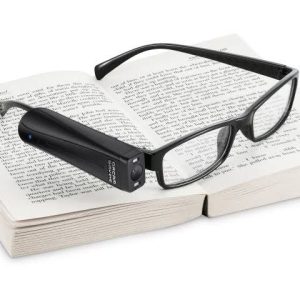
👓 OrCam MyEye is a small, AI-powered device that clips onto glasses and helps people with visual impairments by “reading” text and identifying objects, faces, and products aloud.

  • Key features:
    • Text reading: Reads printed and digital text from books, screens, signs, and labels.
    • Facial recognition: Learns and announces names of people.
    • Object and product identification: Recognizes everyday items and barcodes.
    • Color and money detection: Helps identify colors and currency notes.
    • Voice commands: Hands-free control for easy operation.
  • How it works: The device uses a smart camera and AI algorithms to interpret visual information and deliver it as audio through a tiny speaker.
  • Benefits:
    • Promotes independence for visually impaired users.
    • Portable and discreet.
    • Supports multiple languages.
CORNEA NEOVASCULARIZATION

👓 Corneal neovascularization is the growth of new blood vessels into the cornea, typically as a response to injury, infection, or hypoxia.

  • Causes: Contact lens wear, infections (e.g., herpes simplex keratitis), trauma, or inflammation.
  • Effects: Can lead to vision impairment, scarring, or lipid deposition.
  • Symptoms: May cause redness, discomfort, or vision changes.
  • Management: Treats underlying cause, steroids, or anti-VEGF therapy in some cases.

CONDITIONS THAT CAN OCCUR FROM CONTACT LENS USE

😊 Contact lens misuse can lead to various eye issues, including:

  • Infections: Bacterial (e.g., bacterial keratitis), fungal, or viral (e.g., adenovirus).
  • Irritation and allergies: Giant papillary conjunctivitis (GPC), allergic reactions to lens solutions.
  • Corneal issues: Abrasions, ulcers, neovascularization, or dellen.
  • Hypoxia-related problems: Corneal edema, neovascularization.
  • Other: Dry eye, discomfort, or lens-related complications.

AIR PUFF TONOMETER

👓 The air puff tonometer is a non-contact device that measures intraocular pressure (IOP) by blowing a quick puff of air onto the cornea.

  • How it works: The device measures the corneal deformation caused by the air puff.
  • Advantages: No direct contact with the eye, reducing infection risk.
  • Common use: Often used for glaucoma screening and routine eye exams.
  • Considerations: Can be less accurate than contact tonometers (e.g., Goldmann).