Eagleview Eye Clinic
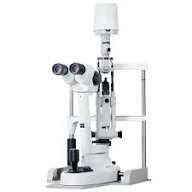
SLIT LAMP BIOMICROSCOPE

A slit lamp biomicroscope is an ophthalmic instrument used to examine the anterior segment of the eye, including the cornea, iris, lens, and anterior chamber. It provides a detailed, magnified view of these structures, allowing eye care professionals to diagnose and manage various eye conditions, such as cataracts, glaucoma, and corneal diseases. The slit lamp’s bright light source and adjustable slit allow for precise control over illumination, enabling detailed examination of the eye’s structures.

BRAILLE

Braille is a tactile writing system used by people who are blind or have low vision. It consists of raised dots that are read by touch, allowing individuals to access written information independently.

History of Braille

  • Developed by Louis Braille: In 1824, Louis Braille, a French educator, created the braille system as a means of communication for the blind.
  • Evolution of Braille: Over the years, braille has undergone changes and improvements, including the development of Grade 2 and Grade 3 braille.

How Braille Works

  • Braille Cells: Braille consists of cells with six raised dots, arranged in a 3×2 grid. Each cell represents a letter, word, or punctuation mark.
  • Reading Braille: Braille readers move their fingers over the raised dots to recognize and interpret the text.

Types of Braille

  • Grade 1 Braille: A basic, phonetic representation of text, often used for beginners.
  • Grade 2 Braille: A more advanced, contracted form of braille, used for everyday reading and writing.
  • Grade 3 Braille: A highly contracted form of braille, used for specialized purposes, such as academic or technical writing.

Braille in the Digital Age

  • Braille Displays: Electronic devices that raise and lower braille dots to display digital text.
  • Braille E-readers: Devices specifically designed for reading digital braille content.
  • Braille Translation Software: Programs that convert print text to braille, making it easier to produce and access braille materials.

Importance of Braille

  • Independence: Braille enables individuals who are blind or have low vision to read and write independently.
  • Literacy: Braille is essential for literacy and education, providing access to written information and knowledge.
  • Employment: Braille skills can enhance employment opportunities and career advancement.

Resources

  • World Blind Union: An organization that promotes braille literacy and accessibility worldwide.
  • Braille Institute: A resource center that provides braille materials, training, and support.
  • Braille Authority: An organization that sets standards for braille usage and provides guidance on braille best practices.
TYPES OF STRABISMUS

👓 Strabismus, also known as crossed eyes or squint, is a condition where the eyes don’t align properly. There are several types of strabismus based on the direction of the misalignment and other characteristics.

Types of Strabismus

  • Esotropia: One or both eyes turn inward toward the nose.
  • Exotropia: One or both eyes turn outward away from the nose.
  • Hypertropia: One eye turns upward relative to the other eye.
  • Hypotropia: One eye turns downward relative to the other eye.

Other Classifications

  • Concomitant strabismus: The amount of misalignment is the same in all directions of gaze.
  • Incomitant strabismus: The amount of misalignment varies with the direction of gaze.
  • Intermittent strabismus: The malignment occurs sometimes but not all the time.
MEDIAL CANTHUS

The medial canthus is a part of the eye’s anatomy. Key features:

  1. Location: The inner corner of the eye where the upper and lower eyelids meet.
  2. Function:
    • Helps with eyelid stability and movement.
    • Contains the lacrimal puncta (openings for tear drainage).
  3. Clinical significance:
    • Can be involved in conditions like medial canthal tendon issues or injuries.
    • Sometimes a focus in oculoplastic surgery.

The term “media canthi” seems to be a plural reference to the medial canthus areas of both eyes.

OPTIC RADIATION

The optic radiations are part of the visual pathway. Key features:

  1. Location: Extend from the lateral geniculate nucleus in the thalamus to the visual cortex in the occipital lobe.
  2. Function:
    • Carry visual information from the lateral geniculate nucleus to the visual cortex.
    • Help process visual data like shape, color, and movement.
  3. Importance:
    • Damage to optic radiations can cause visual field defects.
    • Lesions can lead to specific types of visual loss depending on location.

The optic radiations play a crucial role in transmitting visual information to the brain’s visual cortex.

TRABECULAE MESHWORK

The trabecular meshwork is a key structure in the eye. Key features:

  1. Location: Located near the base of the iris, in the angle of the anterior chamber.
  2. Function:
    • Drains aqueous humor from the eye
    • Regulates intraocular pressure by controlling outflow of aqueous humor
  3. Importance: Dysfunction or blockage of the trabecular meshwork can lead to increased intraocular pressure and conditions like glaucoma.

The trabecular meshwork plays a crucial role in maintaining healthy intraocular pressure.

ARGYLL ROBERTSON PUPIL

Argyll Robertson Pupil

Argyll Robertson pupil is a rare condition characterized by:

  • Bilateral small pupils that constrict when focusing on a near object (accommodation) but do not react to light
  • Often associated with neurosyphilis or other neurological conditions

Symptoms

  1. Pupil reaction: Lack of reaction to light, but normal reaction to accommodation
  2. Vision problems: None directly related to the pupil reaction

Causes

  1. Neurosyphilis: Tertiary syphilis infection affecting the nervous system
  2. Other neurological conditions: Such as diabetes, multiple sclerosis, or CNS damage

Diagnosis

  1. Pupil examination: Observing pupil reaction to light and accommodation
  2. Medical history: Evaluating for underlying conditions

Treatment

  1. Address underlying condition: Treating the underlying cause, such as syphilis
  2. Monitoring: Regular eye exams to track pupil reaction and overall eye health

If you suspect an Argyll Robertson pupil, consult an eye care professional or a neurologist for proper diagnosis and treatment.

POLYCORIA

Irritant Conjunctivitis

Irritant conjunctivitis is an inflammation of the conjunctiva (the thin membrane covering the white part of the eye and inside of the eyelids) caused by:

  • Exposure to irritants like chemicals, smoke, or dust
  • Allergens or foreign substances

Symptoms

  1. Redness: Pink or red eyes
  2. Itching or burning: Discomfort in the eyes
  3. Discharge: Watery or sticky discharge
  4. Sensitivity to light: Photophobia

Treatment

  1. Avoid irritants: Remove or minimize exposure
  2. Flush eyes: With water or saline solution
  3. Artificial tears: To lubricate and soothe
  4. Cool compresses: To reduce discomfort

If symptoms persist or worsen, consult an eye care professional for proper diagnosis and treatment.

SIMPLE SELF EYE TEST

Every morning on waking up you should cover your left eye with your left palm and look at something far away with your right eye for 30 seconds.

After that switch and cover your right eye with your right palm while looking at something far away with your left eye for 30 Seconds.

This simple test will expose any declining visual function on any of the eye before it becomes a huge mess.