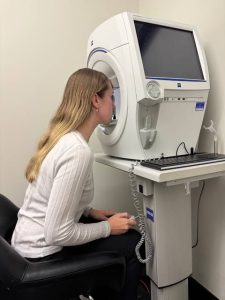
A Visual Field Analyzer is a medical device used to assess the sensitivity and coverage of a patient’s visual field. It maps out the field of vision, detecting any defects or abnormalities, particularly in peripheral vision.
Key Features:
- Visual Field Testing: Measures the sensitivity of the retina in different locations.
- Diagnostic Capabilities: Detects conditions like glaucoma, age-related macular degeneration, and other neurological disorders.
- Variety of Tests: Offers different testing strategies, such as threshold and screening tests.
Types of Visual Field Analyzers:
- Humphrey Field Analyzer 3 (HFA 3): Considered the gold standard, featuring Guided Progression Analysis and SITA Faster testing.
- ObjectiveFIELD Analyzer: Uses multifocal pupillographic objective perimetry (mfPOP) for completely objective visual field assessment.
- PalmScan VF2000: A wearable, portable analyzer with gaze tracking and customizable reports.
- Easyfield VR: Utilizes virtual reality technology for visual field screenings and threshold exams.
- Kowa AP-7000: Offers advanced diagnostic capabilities and high accuracy ¹ ² ³ ⁴.
Benefits:
- Early Detection: Identifies visual field defects and conditions at an early stage.
- Accurate Results: Provides reliable and reproducible results.
- Patient Comfort: Some devices offer features like automated verbal instructions and gaze tracking for improved patient experience.
When selecting a Visual Field Analyzer, consider factors such as ⁵:
- Measurement Accuracy: Look for devices with high accuracy and reliability.
- Testing Strategies: Choose a device that offers a range of testing options.
- Patient Comfort: Consider devices with features that improve patient experience.
- Data Management: Ensure the device allows for easy data storage and analysis.