Eagleview Eye Clinic

Tag eye Examination

GENE THERAPY

Gene therapy for Leber congenital amaurosis (LCA) delivers a functional copy of a mutated gene to retinal cells, usually using an adeno-associated virus (AAV) vector injected under the retina. The first FDA-approved treatment, Luxturna, targets RPE65 mutations and has shown improved night vision and visual fields in many patients.

  • Process: A tiny surgical incision allows subretinal injection of the viral vector carrying the healthy gene.
  • Outcome: Can restore some visual function, especially in dim light, but not full sight.
  • Limitations: Effective only for certain mutations; benefits vary, and it’s not a cure.
  • Risks: Includes inflammation, retinal detachment, or increased eye pressure.
  • Research: Ongoing trials for other genes like CEP290 and GUCY2D.
LEBER CONGENITAL AMAUROSIS

Leber congenital amaurosis (LCA) is a rare, inherited retinal disorder present at birth or early infancy, causing severe vision loss.

  • Genetics: Autosomal recessive, with mutations in genes like RPE65, CEP290, GUCY2D.
  • Symptoms: Profound visual impairment, nystagmus (involuntary eye movement), sluggish or absent pupillary response, and often “ Franceschetti’s oculodigital sign” (eye poking).
  • Pathology: Disrupts photoreceptor function in the retina, stopping light from being processed into vision.
  • Diagnosis: Clinical exam, electroretinography (ERG shows little/no response), and genetic testing.
  • Treatment: No cure yet, but gene therapy (e.g., Luxturna for RPE65 mutations) has shown promise. Low-vision aids, mobility training, and early intervention help quality of life.

ORCAM

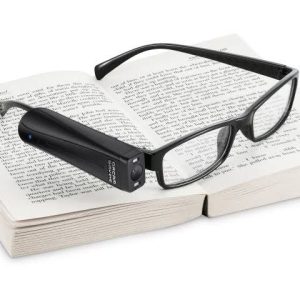
👓 OrCam MyEye is a small, AI-powered device that clips onto glasses and helps people with visual impairments by “reading” text and identifying objects, faces, and products aloud.

  • Key features:
    • Text reading: Reads printed and digital text from books, screens, signs, and labels.
    • Facial recognition: Learns and announces names of people.
    • Object and product identification: Recognizes everyday items and barcodes.
    • Color and money detection: Helps identify colors and currency notes.
    • Voice commands: Hands-free control for easy operation.
  • How it works: The device uses a smart camera and AI algorithms to interpret visual information and deliver it as audio through a tiny speaker.
  • Benefits:
    • Promotes independence for visually impaired users.
    • Portable and discreet.
    • Supports multiple languages.
CONDITIONS THAT CAN OCCUR FROM CONTACT LENS USE

😊 Contact lens misuse can lead to various eye issues, including:

  • Infections: Bacterial (e.g., bacterial keratitis), fungal, or viral (e.g., adenovirus).
  • Irritation and allergies: Giant papillary conjunctivitis (GPC), allergic reactions to lens solutions.
  • Corneal issues: Abrasions, ulcers, neovascularization, or dellen.
  • Hypoxia-related problems: Corneal edema, neovascularization.
  • Other: Dry eye, discomfort, or lens-related complications.

PERKINS TONOMETER

👓 The Perkins tonometer is a handheld, portable device used to measure intraocular pressure (IOP).

  • Type: Applanation tonometer, similar to Goldmann tonometer.
  • Use: Commonly used in ophthalmology and optometry for glaucoma screening and monitoring.
  • How it works: Uses a small probe to gently touch the cornea, measuring IOP.
  • Advantages: Portable, easy to use, and provides accurate readings.

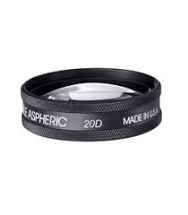
20D LENS

👓 Here’s more on a 20D lens:

  • Magnification: A +20D lens provides approximately 20x magnification.
  • Field of view: Offers a relatively wide field, useful for examining the retina.
  • Use: Commonly used in ophthalmology for:
    • Indirect ophthalmoscopy (with a slit lamp or head-mounted scope).
    • Examining the posterior segment (retina, macula, etc.).
  • Type: Typically a handheld, convex lens made of glass or acrylic.
  • Working distance: Around 5 cm (2 inches) from the patient’s eye.
BIFOCAL IOL

👓 Bifocal IOLs (Intraocular Lenses) are a type of lens implant used in cataract surgery to help restore vision at multiple distances. They’re designed to reduce dependence on glasses or contacts.

  • How they work: Bifocal IOLs have different zones for near and distance vision, allowing for clearer vision at multiple distances.
  • Types: Some common types include diffractive (e.g., Alcon ReSTOR) and refractive (e.g., AMO Array) lenses.
  • Benefits: Reduced need for glasses, improved vision at various distances.
  • Considerations: Potential for halos, glare, or decreased contrast sensitivity.

RED GLASS TEST

The red glass test 👀 is a simple way to check for diplopia (double vision) and figure out if it’s caused by a muscle weakness (like a cranial nerve palsy).

How it works

  1. Patient wears red glass over one eye (usually right eye → red lens OD).
  2. Look at a point light source (e.g., penlight) in front.
  3. Ask: “How many lights do you see? What color(s)?”

What it shows

  • Normal: Sees one pink light (colors blend).
  • Diplopia: Sees one red + one white light.
    • Horizontal separation → lateral/medial rectus issue (CN VI or CN III).
    • Vertical/oblique separation → other muscles (e.g., superior oblique CN IV, superior/inferior rectus CN III).
  • Image location → helps localize the weak muscle (e.g., red image on right → right lateral rectus weakness).

Example

  • Patient sees red light on right + white on left → right lateral rectus palsy (CN VI).
  • Image is tilted/diagonal → likely a cyclovertical muscle issue.

Tips

  • Control fixation: Make sure they’re looking straight at the light.
  • Check gaze positions: Repeat in different directions → helps map out weakness.
  • Cover-uncover test can help confirm tropia/phoria.

Limitations

  • Subjective: Relies on patient description.
  • Doesn’t pinpoint cause → need extra tests (e.g., cover test, motility).

MALINGERER

A malingerer 😏 is someone who fakes or exaggerates symptoms (like vision problems) to avoid work, get compensation, or achieve another goal. In eye care, malingerers might claim blindness or poor vision in one eye to get glasses, avoid duties, or scam insurance.

Why it matters

  • Misdiagnosis risk: They might fool clinicians into unnecessary tests/treatments.
  • Resource drain: Wastes time/money on unneeded care.
  • Legal implications: Can lead to fraud investigations if deception is intentional.

How to spot it

  • Inconsistent test results (e.g., wildly different acuity on repeat checks).
  • Refusing simple vision checks (e.g., pinhole test).
  • Overly cooperative or hostile behavior (trying too hard to prove symptoms).
  • Secondary gain motive (e.g., avoiding work, seeking meds/compensation).

Tests for malingering

  • Fogging test: Blur vision in the “good” eye → forces use of the “bad” eye.
  • Red glass test: Assess inconsistencies in double-vision reporting.
  • Mirror test: Check if they “accidentally” react to seeing themselves.
  • Stereoacuity checks: Good stereopsis suggests better vision than claimed.

Management

  • Non-confrontational approach: Focus on function, not “you’re faking it.”
  • Behavioral observation: Look for inconsistencies over time.
  • Document carefully: Note subjective vs. objective findings.
  • Refer if needed: To a neuro-ophthalmologist or psychiatrist if underlying psych issues suspected.
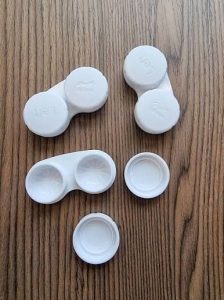
CONTACT LENS CASE

A contact lens case 👓 is a must-have for storing and caring for your lenses. It’s used to hold your lenses in solution when you’re not wearing them. Here are some things to consider:

  • Type: Look for a case that’s easy to open, clean, and dry. Some cases have separate wells for each lens, while others have a single compartment.
  • Material: Most cases are made of plastic, but some are designed to be more hygienic or have antimicrobial properties.
  • Size: Choose a case that’s compact enough to fit in your bag or purse.

Some popular features include:

  • Screw-top or snap-on lids: Easy to use and secure.
  • Labelled compartments: Helps you keep track of which lens is which.
  • Ventilation: Some cases have vents to help dry the lenses or reduce bacterial growth.