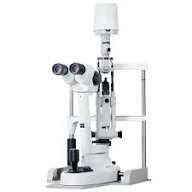
A slit lamp biomicroscope is an ophthalmic instrument used to examine the anterior segment of the eye, including the cornea, iris, lens, and anterior chamber. It provides a detailed, magnified view of these structures, allowing eye care professionals to diagnose and manage various eye conditions, such as cataracts, glaucoma, and corneal diseases. The slit lamp’s bright light source and adjustable slit allow for precise control over illumination, enabling detailed examination of the eye’s structures.
World Sight Day is an annual global event held on the second Thursday of October to raise awareness about blindness and vision impairment. It’s a call to action for individuals, organizations, and governments to prioritize eye health and ensure accessible, available, and affordable eye care services for everyone.
The day emphasizes the importance of regular eye exams, proper eye care, and timely interventions to prevent vision loss. It also highlights the need for global cooperation to address vision-related issues, such as cataracts, glaucoma, and diabetic retinopathy, which are leading causes of preventable blindness.
Key Objectives:
Raise Awareness: Educate people about eye health and the importance of regular eye exams
Promote Accessibility: Advocate for accessible, available, and affordable eye care services worldwide
Prevent Blindness: Support initiatives that prevent avoidable blindness and vision impairment
When: Second Thursday of October every year Theme: Varies annually (e.g., “Love Your Eyes” for 2025) Organizer: International Agency for the Prevention of Blindness (IAPB) ¹ ²
Ophthalmoscopy is a medical examination technique used to visualize the interior of the eye, particularly the retina, optic nerve, and macula. It involves using an ophthalmoscope to shine a light into the eye and magnify the reflected image, allowing healthcare professionals to assess the health of the eye and detect various eye conditions.
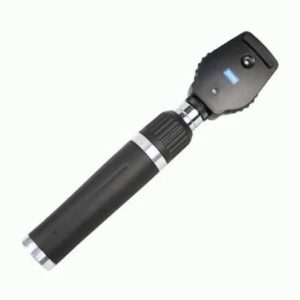
An ophthalmoscope is a medical device used to examine the interior of the eye, particularly the retina, optic nerve, and macula. It allows healthcare professionals to visualize the internal structures of the eye and diagnose various eye conditions.
Key Features of an Ophthalmoscope
Magnification: Ophthalmoscopes provide magnified views of the eye’s internal structures.
Illumination: They use a light source to illuminate the eye, allowing for clear visualization.
Adjustable settings: Many ophthalmoscopes have adjustable settings for different pupil sizes, refractive errors, and examination techniques.
Uses of an Ophthalmoscope
Eye exams: Ophthalmoscopes are essential tools for comprehensive eye exams.
Diabetic retinopathy screening: They help detect and monitor diabetic retinopathy.
Retinal disease diagnosis: Ophthalmoscopes aid in diagnosing and monitoring various retinal diseases, such as age-related macular degeneration.
Optic nerve evaluation: They allow for examination of the optic nerve head and detection of conditions like glaucoma.
Types of Ophthalmoscopes
Direct ophthalmoscope: A handheld device that provides a direct view of the retina.
Indirect ophthalmoscope: Uses a condensing lens to provide a wider view of the retina.
Fundus camera: A specialized camera that captures images of the retina and other internal eye structures.
Ophthalmoscopes are crucial tools for eye care professionals, enabling them to diagnose and manage various eye conditions.
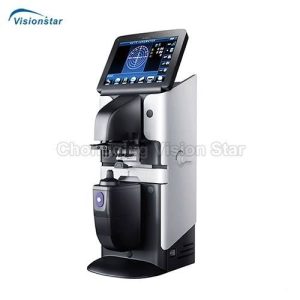
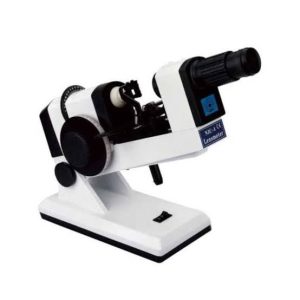
A lens meter, also known as a lensometer or focimeter, is an optical instrument used to measure the power and prescription of eyeglass lenses. It helps determine the correct lens power, axis, and other parameters for accurate vision correction.
Key Features of a Lens Meter
Lens Power Measurement: Measures the spherical, cylindrical, and axis powers of a lens.
Prescription Verification: Verifies the accuracy of a lens prescription.
Lens Identification: Identifies the type of lens, including single vision, bifocal, or progressive.
Quality Control: Checks for lens defects, such as scratches or distortions.
Types of Lens Meters
Manual Lens Meters: Require manual adjustment and reading of measurements.
Automatic Lens Meters: Use computerized technology for faster and more accurate measurements.
Digital Lens Meters: Display measurements digitally, often with additional features like data storage and analysis.
Applications of Lens Meters
Optometry and Ophthalmology: Used by eye care professionals to measure and verify lens prescriptions.
Optical Laboratories: Used to quality control and verify lenses before shipping to customers.
Research and Development: Used to test and develop new lens materials and designs.
Benefits of Lens Meters
Accurate Measurements: Ensures accurate lens prescriptions and minimizes errors.
Efficient Workflow: Streamlines the lens measurement process, saving time and increasing productivity.
Improved Patient Care: Enhances patient care by providing accurate and reliable lens prescriptions.
A lens blanc factory produces high-quality, white lenses for various applications, including eyeglasses, sunglasses, and industrial uses. These lenses can be made from different materials, such as polycarbonate, Trivex, or glass, and often feature additional coatings for enhanced functionality.
Types of Lens Blanc Factories
Optical Lens Manufacturers: Companies specializing in producing prescription lenses for eyeglasses, including single vision, bifocal, and progressive lenses.
Sunglasses and Eyewear Brands: Factories that create lenses for sunglasses and other eyewear products, often with added features like UV protection, polarization, or blue light blocking.
Industrial Lens Suppliers: Manufacturers that provide lenses for industrial applications, such as laser cutting, welding, or machine vision systems ¹ ² ³.
Notable Lens Blanc Factory Features
Advanced Materials and Coatings: Factories may use innovative materials and coatings to enhance lens performance, such as anti-reflective coatings, scratch-resistant coatings, or photochromic technology.
Customization Options: Some factories offer customization services, allowing customers to choose from various lens materials, coatings, and designs to suit their specific needs.
Quality Control and Assurance: Reputable factories implement rigorous quality control measures to ensure lenses meet international standards and customer expectations.
Examples of Lens Blanc Factories
Lens Factory: A company offering replacement prescription lenses for glasses, with a focus on quality, affordability, and customer satisfaction.
ZEISS: A well-known manufacturer of high-quality optical lenses, including single vision, bifocal, and progressive lenses, designed for various applications.
Hongchen: A Chinese company producing 1.56 blue block photogray SHMC optical lenses, featuring photochromic technology and UV protection ⁴ ³ ¹.
Braille is a tactile writing system used by people who are blind or have low vision. It consists of raised dots that are read by touch, allowing individuals to access written information independently.
History of Braille
Developed by Louis Braille: In 1824, Louis Braille, a French educator, created the braille system as a means of communication for the blind.
Evolution of Braille: Over the years, braille has undergone changes and improvements, including the development of Grade 2 and Grade 3 braille.
How Braille Works
Braille Cells: Braille consists of cells with six raised dots, arranged in a 3×2 grid. Each cell represents a letter, word, or punctuation mark.
Reading Braille: Braille readers move their fingers over the raised dots to recognize and interpret the text.
Types of Braille
Grade 1 Braille: A basic, phonetic representation of text, often used for beginners.
Grade 2 Braille: A more advanced, contracted form of braille, used for everyday reading and writing.
Grade 3 Braille: A highly contracted form of braille, used for specialized purposes, such as academic or technical writing.
Braille in the Digital Age
Braille Displays: Electronic devices that raise and lower braille dots to display digital text.
Braille E-readers: Devices specifically designed for reading digital braille content.
Braille Translation Software: Programs that convert print text to braille, making it easier to produce and access braille materials.
Importance of Braille
Independence: Braille enables individuals who are blind or have low vision to read and write independently.
Literacy: Braille is essential for literacy and education, providing access to written information and knowledge.
Employment: Braille skills can enhance employment opportunities and career advancement.
Resources
World Blind Union: An organization that promotes braille literacy and accessibility worldwide.
Braille Institute: A resource center that provides braille materials, training, and support.
Braille Authority: An organization that sets standards for braille usage and provides guidance on braille best practices.
Legal blindness is a term used to describe a level of visual impairment that meets specific criteria, often used for legal or administrative purposes. The definition may vary slightly depending on the country or region, but generally, it refers to a visual acuity of 20/200 or worse in both eyes with corrective lenses, or a visual field of 20 degrees or less in the better eye.
Key Aspects of Legal Blindness
Visual Acuity: A visual acuity of 20/200 means that an individual can see objects clearly at 20 feet away that a person with normal vision can see at 200 feet away.
Visual Field: A visual field of 20 degrees or less means that an individual’s field of vision is significantly restricted, making it difficult to see objects or movement outside of a narrow range.
Corrective Lenses: The definition of legal blindness takes into account the use of corrective lenses, such as glasses or contacts, to improve visual acuity.
Implications of Legal Blindness
Disability Benefits: Individuals who are legally blind may be eligible for disability benefits, such as Social Security Disability Insurance (SSDI) or Supplemental Security Income (SSI).
Assistive Technology: Legally blind individuals may use assistive technology, such as screen readers, braille displays, or magnifiers, to access information and perform daily tasks.
Rehabilitation Services: Legally blind individuals may be eligible for rehabilitation services, such as orientation and mobility training, to help them adapt to their visual impairment.
Living with Legal Blindness
Adaptation: Many individuals who are legally blind adapt to their visual impairment by developing new skills and strategies for daily living.
Support: Support from family, friends, and community resources can play a significant role in helping individuals who are legally blind maintain their independence and quality of life.
Technology: Advances in technology, such as artificial intelligence and wearable devices, are continually improving the lives of individuals who are legally blind.
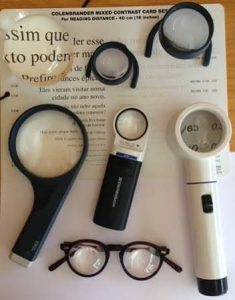
Low vision magnifiers are devices designed to help individuals with visual impairments maximize their remaining vision. These tools can significantly enhance daily life by providing clear and manageable information.
Types of Low Vision Magnifiers
Handheld Magnifying Glasses: Portable and lightweight, these magnifiers are ideal for reading small print, labels, and menus. They come in various magnification strengths (2x to 10x) and are suitable for individuals with macular degeneration, cataracts, or general low vision.
Desktop Electronic Magnifiers: These stationary devices project enlarged images onto a screen, allowing users to read documents, view photos, and see objects with enhanced clarity. They’re perfect for extended reading sessions and can help individuals with macular degeneration, diabetic retinopathy, and glaucoma.
Wearable Magnifying Glasses: Hands-free magnification makes these glasses ideal for tasks requiring precision, such as hobbies or cooking. They’re customizable and provide consistent magnification, enabling users to engage in everyday activities with confidence.
Digital Portable Magnifiers: Compact and lightweight, these devices are perfect for on-the-go reading and writing. They often feature adjustable zoom and color contrast options, making them suitable for individuals with various visual impairments.
Electronic Magnifiers: These high-tech devices incorporate digital enhancements like contrast adjustment, brightness control, and text-to-speech features. They’re designed to assist individuals with severe visual impairments and can be used for reading, writing, and other daily tasks.
Benefits of Low Vision Magnifiers
Low vision magnifiers can ¹ ² ³:
Enhance visual clarity and readability
Increase independence and confidence
Facilitate daily tasks, such as reading, writing, and cooking
Improve overall quality of life
Popular Brands and Products
Some notable brands and products include ⁴ ⁵ ⁶:
Vision Buddy: A wearable magnifying device with a high-resolution display and hands-free design
Amigo Portable Low Vision Electronic Magnifier: A simple-to-use device with a 6.5-inch viewing screen and adjustable magnification
Pebble HD: A compact and lightweight portable magnifier with a 4.3-inch screen
Zoomax Luna: A portable video magnifier with a range of magnification options and high-definition display
HumanWare Prodigi: An all-in-one PC with electronic video magnification capabilities
Where to Find Low Vision Magnifiers
You can find low vision magnifiers at specialized stores, online marketplaces, or through low vision services and resource centers. It’s essential to consult with a low vision specialist to determine the best type of magnifier for your specific needs
👓 Strabismus can impact various aspects of an individual’s quality of life, depending on factors like the severity of the condition, age of onset, and how it’s managed.
Potential Effects on Quality of Life
Vision and depth perception: Strabismus can affect how well the eyes work together, potentially impacting depth perception, visual clarity, or causing double vision in some cases.
Self-esteem and social interactions: Especially in children or teens, noticeable eye misalignment might affect self-confidence or interactions with peers.
Daily activities: Depending on the severity, strabismus might impact activities like reading, driving, or tasks requiring precise eye coordination.
Treatment and management: Some individuals might need glasses, patches, exercises, or surgery, which can influence daily routines or emotional well-being.
Varied Experiences
Adaptation and coping: Many people adapt to strabismus or learn to manage its effects on their daily lives.
Treatment outcomes: With proper management or treatment, many individuals with strabismus lead lives with minimal impact on their overall quality of life