Eagleview Eye Clinic

Tag eye health

CORNEA EPITHELIUM

The corneal epithelium is the outermost layer of the cornea. Key features:

  1. Barrier function: Protects the eye from external factors like dust, bacteria, and other foreign particles.
  2. Non-keratinized stratified squamous epithelium: Composed of multiple layers of flat cells that are tightly packed.
  3. Rapid regeneration: The corneal epithelium has a high capacity for regeneration, helping to maintain the integrity of the cornea.
  4. Smooth surface: Contributes to the clarity and smoothness of the cornea, essential for clear vision.

The corneal epithelium plays a crucial role in maintaining corneal health and clarity, and its integrity is vital for protecting the eye and supporting vision.
RETINA

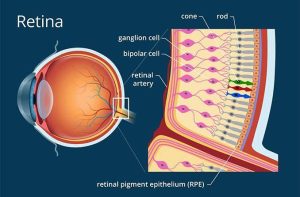
The retina is a complex neural tissue lining the inner surface of the eye. It’s responsible for converting light into electrical signals, which are then transmitted to the brain, enabling us to perceive visual information.

Key components:

  1. Photoreceptors (rods and cones): Convert light into electrical signals.
  2. Bipolar cells: Transmit signals from photoreceptors to ganglion cells.
  3. Ganglion cells: Send signals to the brain via the optic nerve.
  4. Retinal pigment epithelium (RPE): Supports photoreceptors and maintains retinal health.

The retina plays a vital role in vision, and its health is crucial for maintaining visual acuity and function.

ORA SERRATA

The ora serrata is the serrated, anterior (front) edge of the retina, marking the transition from the non-photosensitive area of the eye to the photosensitive area. It is located near the junction of the ciliary body and the retina.

Key features:

  1. Anatomical location: The ora serrata is situated at the boundary between the retina and the ciliary body.
  2. Serrated appearance: It has a distinctive serrated or jagged edge.
  3. Transition zone: The ora serrata marks the transition from the non-photosensitive ciliary body to the photosensitive retina.

The ora serrata is an important anatomical landmark in the eye, and its location is relevant in various ophthalmic procedures and diagnoses.

CHOROID

The choroid is a complex vascular layer in the eye, situated between the sclera and retina. It consists of blood vessels, melanocytes, and fibroblasts.

Key characteristics:

  1. Blood supply: The choroid is richly vascularized, supplying the retina with oxygen and nutrients.
  2. Location: It’s situated between the sclera (outer layer) and retina (inner layer).
  3. Melanin content: The choroid contains melanin, which helps absorb excess light.

Functions:

  1. Nutrient supply: Provides the retina with essential nutrients and oxygen.
  2. Waste removal: Helps remove waste products from the retina.
  3. Light absorption: The melanin in the choroid absorbs excess light, reducing scatter and improving vision.

The choroid plays a vital role in maintaining the health and function of the retina, supporting clear vision and overall eye health.

CILIARY BODY

The ciliary body is a ring-shaped structure in the eye, located behind the iris. It’s a crucial part of the eye’s anatomy, responsible for:

  1. Aqueous humor production: The ciliary body produces the clear fluid (aqueous humor) that fills the anterior and posterior chambers of the eye.
  2. Lens accommodation: The ciliary muscles control the shape of the lens, allowing it to focus on near or far objects.
  3. Lens suspension: The ciliary body is connected to the lens via zonular fibers, which suspend the lens in place.

The ciliary body consists of two main parts:

  1. Ciliary muscles: These muscles contract and relax to change the lens shape for focusing.
  2. Ciliary processes: These are finger-like extensions that produce aqueous humor.

The ciliary body plays a vital role in maintaining the eye’s health and function, and any issues with it can lead to vision problems or eye diseases.

PUPIL

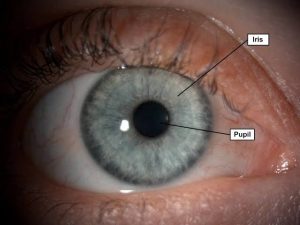
The pupil is the circular opening in the center of the iris, the colored part of the eye. It plays a crucial role in regulating the amount of light that enters the eye.

Key characteristics:

  1. Location: The pupil is located in the center of the iris.
  2. Function: The pupil:
    • Regulates light entry into the eye
    • Adjusts size to control light intensity
    • Helps maintain optimal vision
  3. Size adjustment: The pupil:
    • Constricts (gets smaller) in response to:
      • Bright light
      • Near vision
      • Certain medications
    • Dilates (gets larger) in response to:
      • Low light
      • Emotional arousal
      • Certain medications or substances
  4. Control: The pupil’s size is controlled by the autonomic nervous system, specifically the:
    • Parasympathetic nervous system (constriction)
    • Sympathetic nervous system (dilation)

Importance: The pupil’s ability to regulate light entry is essential for maintaining optimal vision, protecting the retina, and responding to changes in lighting conditions.

CONJUNCTIVA

The conjunctiva is a thin, transparent, mucous membrane that covers the anterior (front) part of the eye and the inside of the eyelids. It plays a crucial role in maintaining eye health and function.

Key characteristics:

  1. Location: The conjunctiva covers:
    • The sclera (white part of the eye)
    • The inside of the upper and lower eyelids (palpebral conjunctiva)
    • The fornices (areas where the eyelids meet the eye)
  2. Function: The conjunctiva:
    • Produces mucus to lubricate the eye and facilitate smooth movement
    • Helps protect the eye from infection and foreign particles
    • Aids in maintaining the health of the cornea
  3. Structure: The conjunctiva consists of:
    • Epithelial cells
    • Substantia propria (a layer of connective tissue)
  4. Importance: The conjunctiva is essential for:
    • Maintaining eye comfort and moisture
    • Preventing infection and inflammation
    • Supporting the overall health of the eye

Common conditions: Conjunctivitis (pink eye), allergies, and dry eye syndrome can affect the conjunctiva, causing symptoms such as redness, itching, discharge, and discomfort.

TRABECULECTOMY

Trabeculectomy is a surgical procedure used to treat glaucoma by creating a new drainage pathway for fluid to leave the eye, reducing intraocular pressure (IOP). The goal is to:

  • Lower IOP to prevent further damage to the optic nerve
  • Preserve vision
  • Slow disease progression

During the procedure:

  • A small section of tissue is removed from the eye
  • A new drainage channel is created
  • A bleb (fluid reservoir) forms under the conjunctiva

Trabeculectomy is often considered for patients with:

  • Advanced glaucoma
  • Uncontrolled IOP despite medication or laser treatment

Post-operative care includes:

  • Monitoring for complications (e.g., infection, scarring)
  • Managing IOP and inflammation
  • Follow-up appointments for recovery assessment.

FRONTALIS SLING

A frontalis sling is a surgical procedure used to:

  1. Treat ptosis: Correct droopy eyelids by suspending the eyelid from the frontalis muscle.
  2. Improve eyelid elevation: Enhance eyelid movement and symmetry.

The procedure involves:

  1. Sling material: Using a material (e.g., silicone, fascia lata) to connect the eyelid to the frontalis muscle.
  2. Customized approach: Tailored to individual needs and anatomy.

Frontalis sling surgery can significantly improve eyelid function and appearance.

MULLERECTOMY

Mullerectomy is a surgical procedure that involves the removal or resection of a portion of the Müller’s muscle in the eyelid. It’s often performed to:

  1. Treat ptosis: Correct droopy eyelids by strengthening the eyelid’s lifting mechanism.
  2. Improve eyelid function: Enhance eyelid elevation and symmetry.

The procedure is typically done by an oculoplastic surgeon and can be tailored to individual needs.